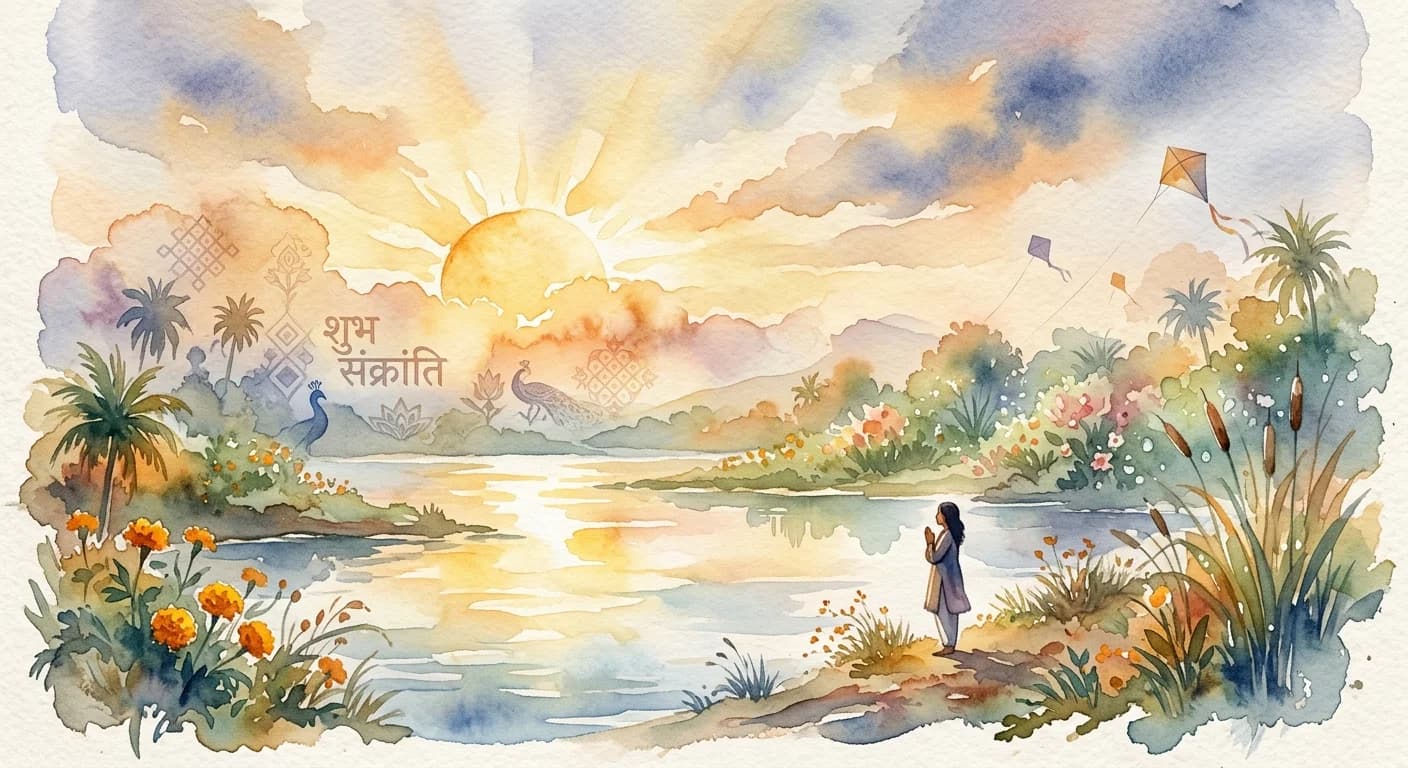
Makar Sankranti
/MAH-kar SHAHN-krahn-tee/
Meaning
Makar Sankranti is a vibrant Hindu solar festival marking the Sun's auspicious entry into the zodiac sign of Capricorn (Makar Rashi), signifying the northward journey of the Sun (Uttarayan). This pivotal astronomical event heralds the end of winter, the lengthening of days, and the commencement of the harvest season in many parts of India. It's a profound celebration of nature's cyclical renewal, spiritual awakening, and the life-giving energy of the Sun God, Surya, fostering collective joy, gratitude, and hopeful anticipation for abundance.
Literal Translation
Makar (Capricorn) Sankranti (Transition)
The Story Behind the Word
Makar Sankranti's roots delve deep into ancient Vedic traditions, where the Sun was revered as the source of light, life, and knowledge. Its transition into Capricorn is astrologically significant, marking a period considered highly auspicious for spiritual practices, charity, and new ventures. The festival embodies a fundamental Hindu worldview that sees humanity intrinsically connected to cosmic rhythms and natural phenomena. It underscores the importance of dharma (righteous conduct), karma (action), and the interconnectedness of all life. The diverse regional celebrations, from the bonfires of Lohri to the elaborate rangolis and sweet dishes, reflect a pan-Indian cultural unity in celebrating renewal, agricultural prosperity, and community bonding, revealing a society deeply attuned to both celestial mechanics and earthly cycles of sustenance.
Experience It
Family Kite Flying
The crisp winter air on Makar Sankranti morning was filled with excited shouts as young Rohan and his grandfather skillfully maneuvered their colorful kites. 'Higher, Dada, higher!' Rohan cheered, feeling the tug of the string, a symbol of freedom and aspiration against the bright blue sky, as families across the rooftops engaged in friendly aerial battles.
Harvest Feast Sharing
In a village square, women gathered around, sharing freshly made 'til-gud' (sesame and jaggery sweets) and other seasonal delicacies. 'Til gud ghya, ani goad goad bola!' (Eat sesame and jaggery, and speak sweet words!) they exchanged, reinforcing bonds of community and goodwill, giving thanks for the bountiful harvest and praying for continued prosperity.
The Deeper Meaning
Makar Sankranti encapsulates a profound philosophical understanding of time as cyclical and interconnected with cosmic forces. It symbolizes the triumph of light over darkness, knowledge over ignorance, and the continuous journey of the soul towards spiritual enlightenment. The act of offering gratitude to the Sun reflects a worldview where divinity is perceived in natural elements, encouraging a harmonious relationship with the environment and an acceptance of life's inevitable, rejuvenating transitions.
Did You Know?
Did you know that Makar Sankranti is one of the few Hindu festivals observed according to the solar cycle, meaning its date (January 14th or 15th) remains largely constant year after year, unlike most other festivals tied to the lunar calendar?
How It's Used
Celebrated annually on January 14th or 15th, Makar Sankranti is observed across India with regional variations in name and customs, such as 'Lohri' in Punjab or 'Pongal' in Tamil Nadu. It's a time for families to come together, perform religious rituals, share festive foods, and engage in activities like kite flying and bonfires.