Marae
/MAH-rye/
Meaning
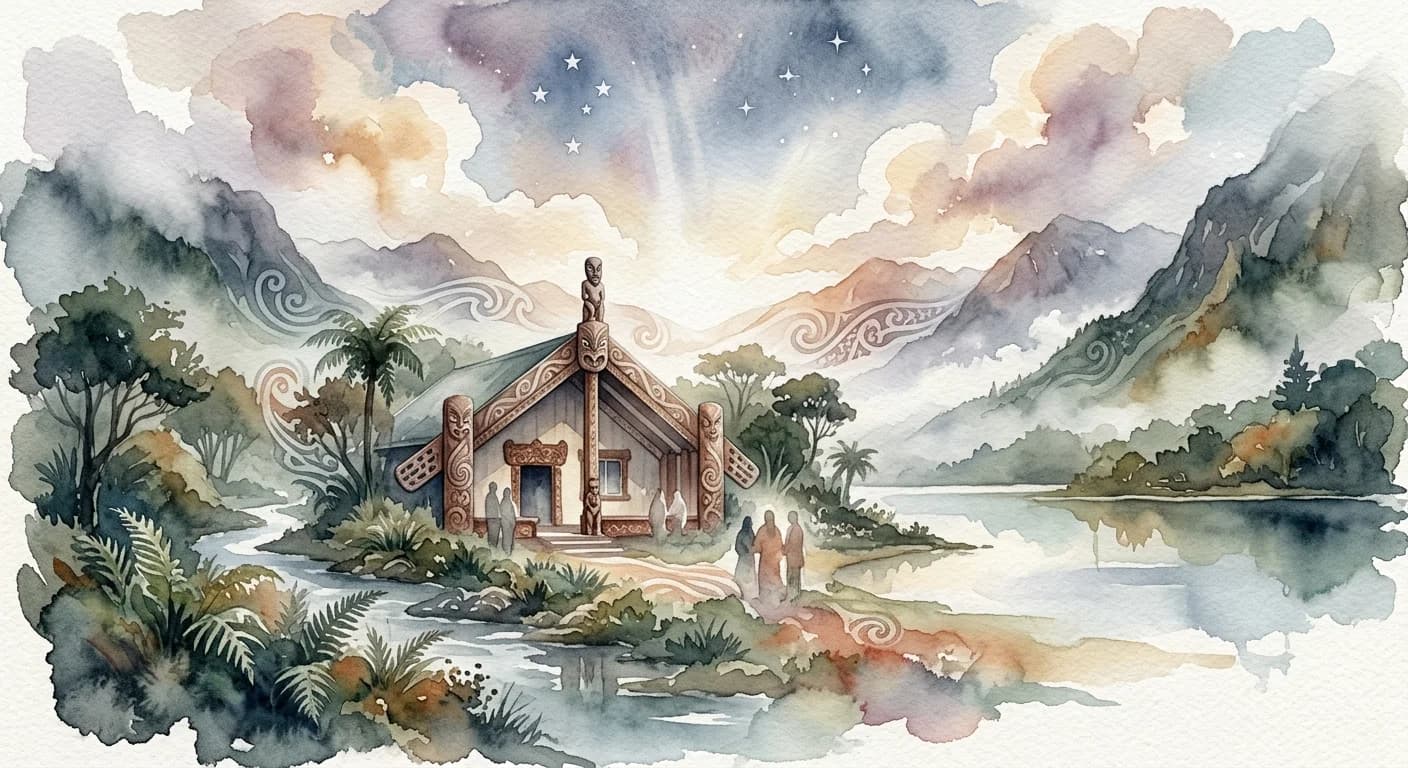
The marae is the vibrant heart of Māori life, a sacred ancestral domain where the past, present, and future converge. It is a communal sanctuary comprising the meeting grounds, the intricately carved ancestral meeting house (wharenui), and the communal dining hall (wharekai). Far beyond a mere physical space, the marae embodies the collective identity, spiritual essence, and unbroken lineage of a people, serving as the essential stage for pivotal ceremonies, profound discussions, and joyous celebrations that bind generations.
Literal Translation
meeting ground
The Story Behind the Word
The marae is foundational to Māori identity, rooted in ancestral traditions and the concept of 'mana whenua' (authority over land). Its existence reflects a worldview where community, genealogy (whakapapa), and spiritual connection to ancestors are paramount. Each marae is typically linked to a specific iwi (tribe) or hapū (sub-tribe) and is often named after a significant ancestor, whose spirit is believed to reside within the wharenui. It's a living embodiment of 'tūrangawaewae' – a place to stand, a place to belong, where one's roots are firmly planted. The rituals performed, from pōwhiri (welcome ceremonies) to tangihanga (funerals), reinforce social structures, cultural protocols (tikanga), and the enduring spiritual bond between the living and their forebears. The marae ensures the continuity of Māori language, customs, and values, acting as a crucial intergenerational bridge.
Experience It
Pōwhiri Welcome
A group of visitors approaches the marae atea (courtyard). Heralded by a karanga (call) from a kuia (elderly woman), they are formally welcomed onto the sacred ground with speeches, waiata (songs), and hongi (pressing of noses), signifying the merging of breaths and spirits. This elaborate pōwhiri ceremony underscores the marae's role in establishing respectful connection and hospitality.
Tangihanga - Farewell
Inside the wharenui, a community gathers around a loved one who has passed, lying in state on the marae. For days, family and friends share stories, sing laments, and offer comfort, observing strict protocols. The marae provides the sacred space for collective grieving and farewells, reaffirming the enduring bonds of kinship and community in a time of loss.
The Deeper Meaning
The marae embodies the Māori philosophy of 'whanaungatanga' (kinship and belonging) and 'manaakitanga' (hospitality and care). It reflects a holistic worldview where individuals are inextricably linked to their collective, their ancestors, and the land. The marae teaches that identity is not solitary but woven into the fabric of community and heritage, emphasizing collective responsibility and the enduring power of tradition for future generations.
Did You Know?
Many marae feature intricate carvings on their wharenui that depict ancestors and deities, effectively telling the history and whakapapa (genealogy) of the hapū or iwi in a visual narrative.
How It's Used
Used to refer to the traditional meeting grounds and buildings of Māori communities, essential for important gatherings, ceremonies, and discussions.