Mela
/MEH-laa/
Meaning
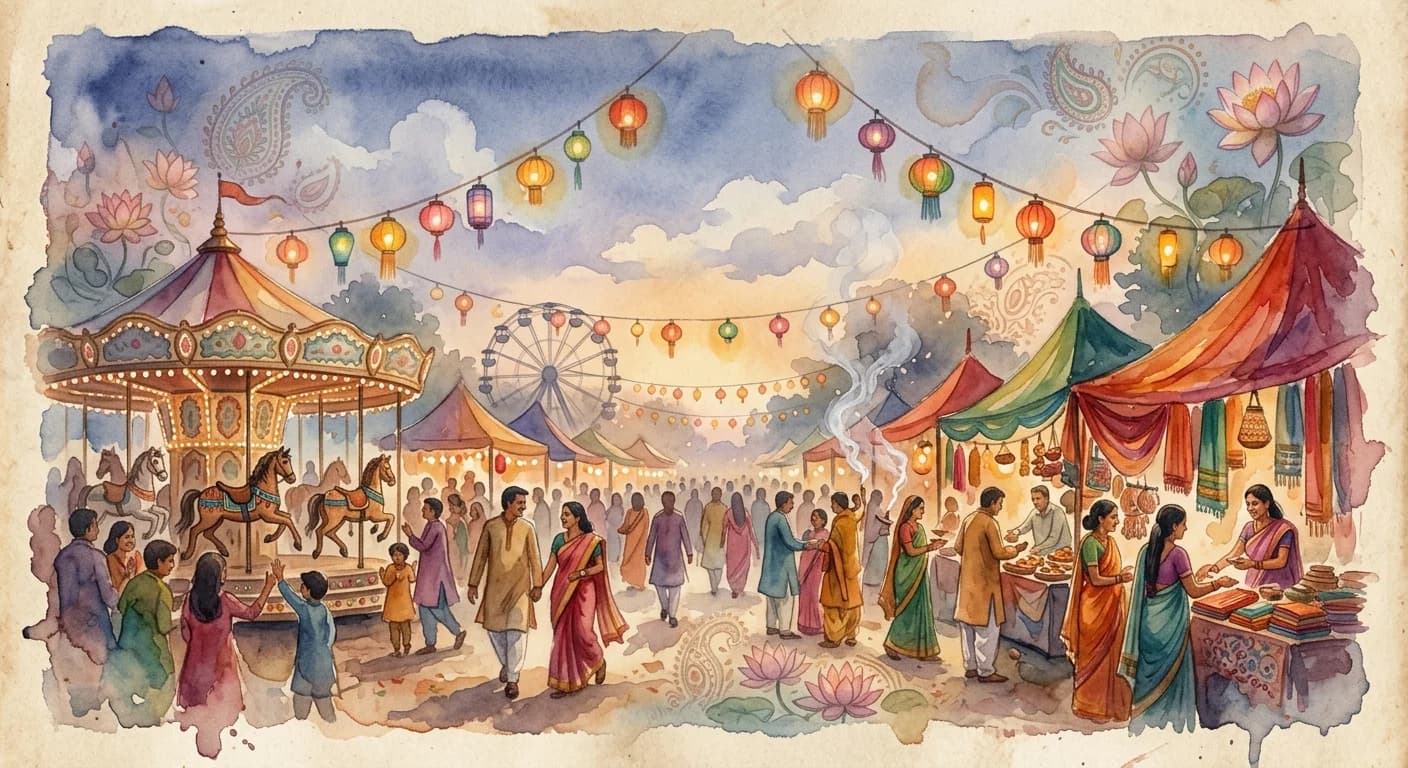
A 'Mela' in Hindi transcends a simple fair or festival; it is a kaleidoscopic celebration of community, tradition, and sensory delight. It's an immersive experience where the air buzzes with folk music, the aroma of street food mingles with incense, and vibrant colors explode from stalls selling handicrafts, toys, and garments. Often tied to religious events or seasonal harvests, a mela serves as a vital social nexus, fostering collective joy, commerce, and a profound sense of shared cultural identity.
Literal Translation
Fair, festival, gathering
The Story Behind the Word
The concept of a mela is deeply embedded in India's socio-religious fabric, dating back centuries to ancient trade routes and pilgrimage sites. Historically, melas were crucial for economic exchange, social interaction, and the dissemination of religious teachings. They embody a worldview that prioritizes collective experience, cyclical time (through seasonal and religious observances), and the integration of the sacred with the mundane. The continuous vibrant existence of melas reveals a cultural emphasis on community bonding, spiritual rejuvenation, and the celebration of life's rhythms, acting as living repositories of folk art, music, and storytelling. They are not merely events but vital arteries of cultural transmission and societal cohesion, reflecting India's enduring spirit of festivity and communal belonging.
Experience It
Village Harvest Mela
As the sun dipped, the village grounds transformed into a bustling mela. Farmers, having reaped their bountiful harvest, gathered with their families, enjoying rides, watching street performers, and bargaining for new tools amidst the joyous chaos.
Religious Pilgrimage Mela
Devotees, having completed their arduous pilgrimage, found solace and celebration at the temple mela. They lit lamps, offered prayers, and shared meals, their spiritual journey culminating in a vibrant communal gathering filled with hymns and laughter.
The Deeper Meaning
The mela reflects a philosophical understanding of life as a cyclical journey marked by celebration, renewal, and community. It underscores the belief that spiritual and social well-being are intertwined, and that collective joy and shared experience are fundamental to human existence. It's a testament to the idea that life's deeper meanings are often found in vibrant, communal participation rather than solitary contemplation.
Did You Know?
The Kumbh Mela, held every few years at four rotating sites, is the largest peaceful gathering in the world, attracting tens of millions of pilgrims, making it visible from space!
How It's Used
Used to describe fairs, festivals, and large public gatherings, often with religious or seasonal significance.