Ofrendas
/oh-fren-dahs/
Meaning
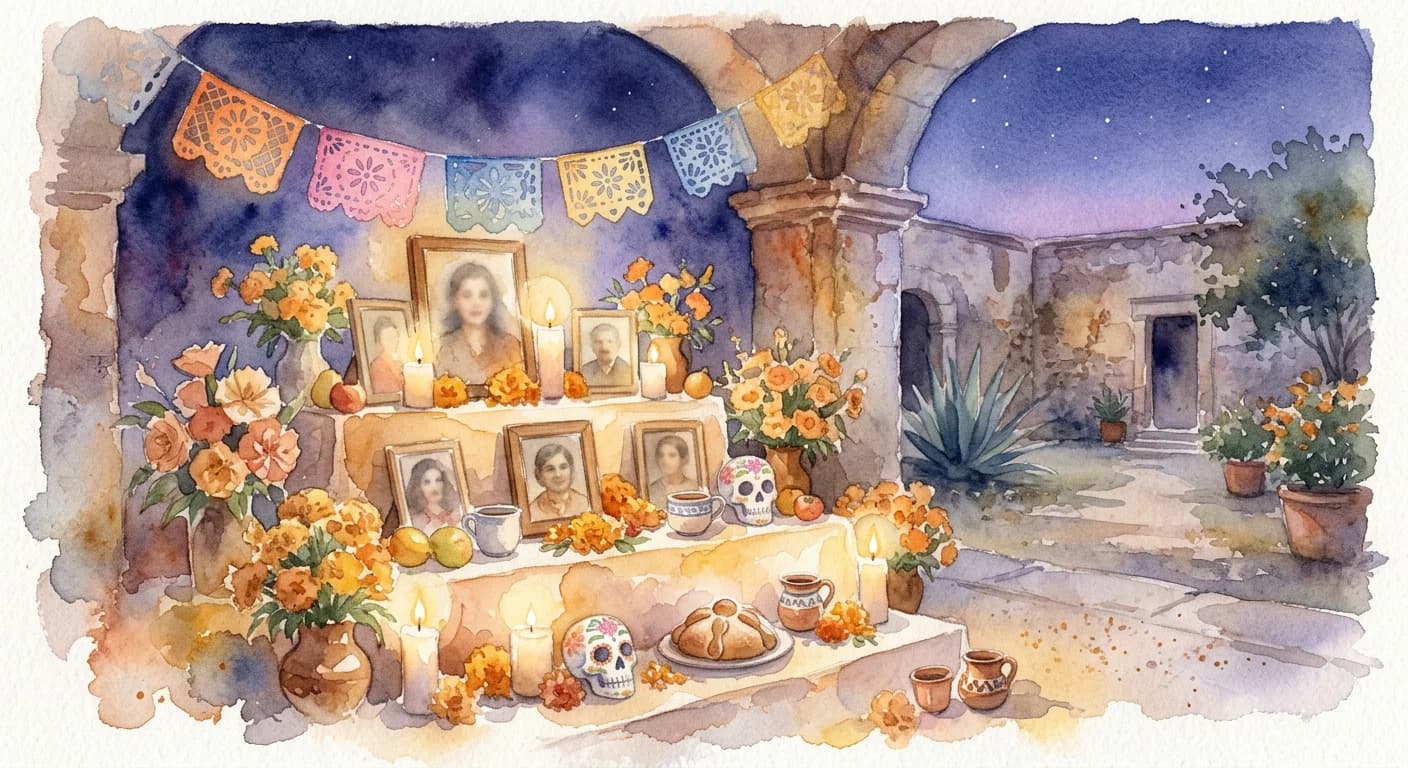
An 'ofrenda' is far more than a simple memorial; it's a meticulously crafted, sensory-rich altar built to lovingly beckon and welcome the spirits of deceased family members back to the earthly realm for a joyous, albeit brief, reunion. Adorned with vibrant marigolds, cherished photographs, favorite foods and drinks, and personal mementos, it serves as a tangible expression of enduring connection, a bridge between worlds. Each element is carefully chosen, transforming grief into a vibrant act of remembrance, love, and a profound celebration of life that transcends death.
Literal Translation
Offerings
The Story Behind the Word
The 'ofrenda' is deeply rooted in pre-Hispanic traditions, particularly Aztec and Mayan beliefs, which held a cyclical view of life and death, seeing death not as an end but as a transition. When merged with Catholic practices brought by the Spanish, these indigenous beliefs evolved into the contemporary Día de Muertos. The ofrenda reflects a unique cultural philosophy where death is not feared but embraced as a natural part of existence, and ancestors are revered as ongoing members of the family structure. It embodies the Mexican understanding that the departed are not truly gone as long as they are remembered, and that their spirits return annually to share in the warmth and festivity of their living relatives. This practice underscores a profound respect for heritage and an active, communal relationship with the spiritual world.
Experience It
Family Ofrenda Assembly
Abuela carefully places a framed photo of her late husband on the highest tier of the ofrenda. Her grandchildren eagerly arrange his favorite pan dulce and a small bottle of tequila, understanding that these offerings will guide and comfort his spirit on its journey home, creating a tangible link across generations.
Public Plaza Ofrenda
In the town square, a massive public ofrenda is erected, dedicated to community members lost throughout the year. Visitors leave small candles and notes of remembrance, the collective aroma of copal incense and cempasúchil flowers filling the air, signifying a shared act of communal grieving and celebration.
The Deeper Meaning
The 'ofrenda' encapsulates a profound philosophical stance on mortality, transforming death from a source of fear into an occasion for loving reunion and celebration. It reflects a worldview where the veil between life and death is thin, allowing for a cyclical interaction with ancestors. This practice underscores the belief that memory sustains existence, asserting that to be remembered is to continue to live, fostering a deep, intergenerational continuity of family and cultural identity.
Did You Know?
The iconic cempasúchil (marigold) flowers are believed to guide spirits home with their vibrant color and strong scent, creating a fragrant path for the departed.
How It's Used
Used primarily in the context of the Day of the Dead (Día de Muertos) celebrations, particularly in Mexico, to describe the altar or offering set up in homes and public spaces. It can also refer to offerings made in other religious or cultural contexts, but its strongest association is with honoring ancestors.