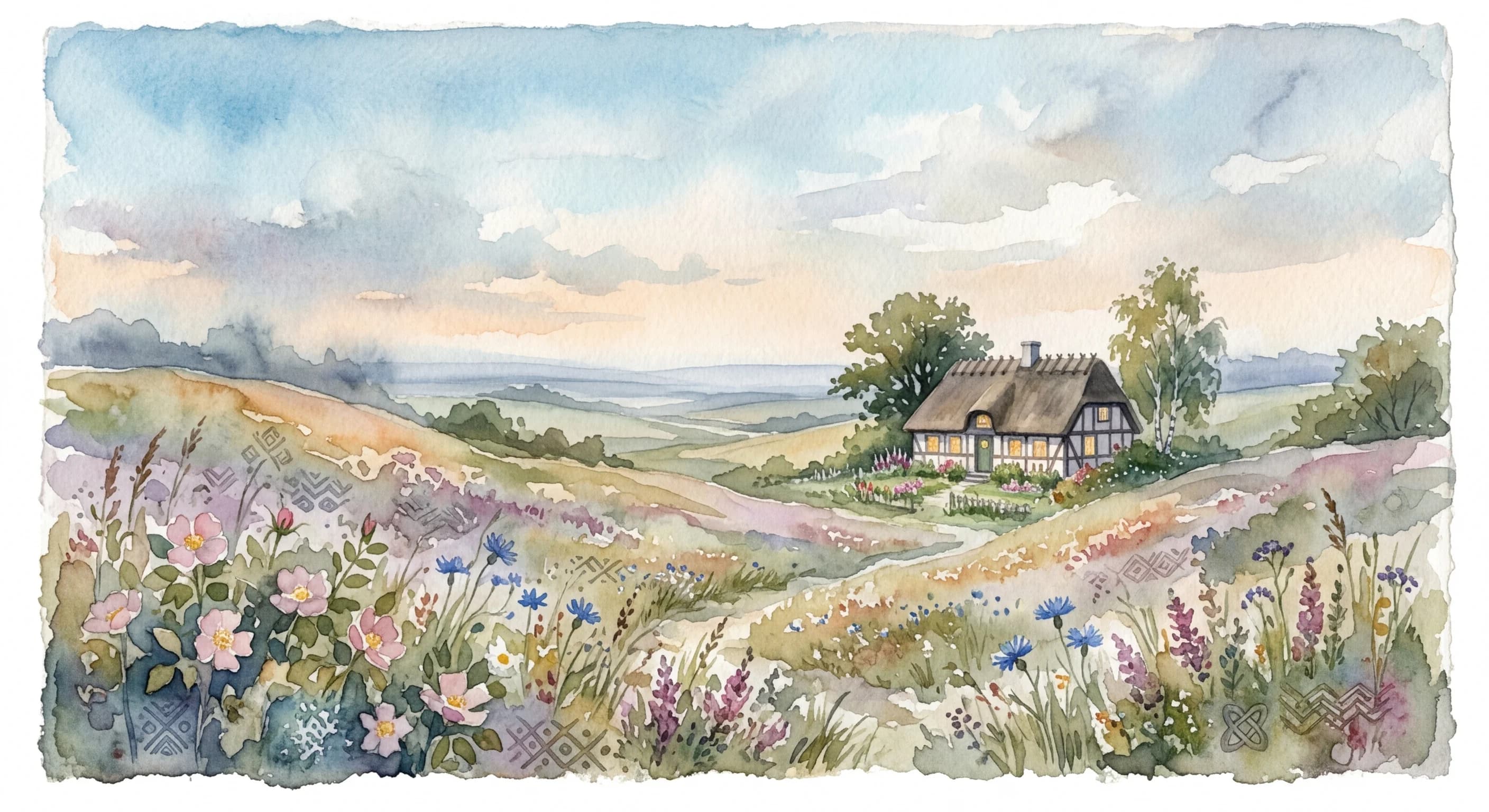
Hjemstavn
/HYEM-stow-n/
Meaning
Hjemstavn is far more than just a birthplace; it's the sacred geography of one's soul, the ancestral landscape deeply etched into one's identity. It represents a profound, almost spiritual, tether to the land, culture, and collective memories of where one truly belongs. This connection evokes a complex tapestry of comfort, identity, and a gentle, persistent yearning that transcends mere nostalgia, suggesting that a fundamental part of one's being remains forever rooted there, regardless of physical distance.
Literal Translation
Home-place
The Story Behind the Word
The concept of 'hjemstavn' is deeply embedded in Danish culture, reflecting centuries of close-knit communities, strong regional identities, and a profound connection to the land. Historically, Denmark was an agrarian society where people lived and died in the same village, fostering a deep, almost filial, bond with their local environment. This term gained significant traction during the Romantic Nationalism period in the 19th century, as Denmark sought to define its national identity through its unique landscapes, folklore, and regional characteristics. It speaks to a cultural value that emphasizes belonging, rootedness, and the idea that one's personal identity is intrinsically linked to the specific place they call home. It highlights a worldview where community, nature, and heritage are not just surroundings but integral components of the self.
Experience It
Return to the Island
After decades abroad, Lars returned to the small island where he grew up. As his feet touched the familiar soil and the salty air filled his lungs, a profound sense of peace washed over him, a feeling of being utterly himself again, back in his true hjemstavn.
A City Dweller's Yearning
Even in the bustling capital, Sofie often found her thoughts drifting to the rolling hills and quiet fjords of Jutland where her family had lived for generations. It wasn't just memories; it was a deep, almost physical ache for her hjemstavn, a yearning for the landscape that shaped her.
The Deeper Meaning
This word reveals a philosophy where identity is not merely individualistic but deeply intertwined with geographical and historical roots. It suggests that true self-understanding and belonging are found in recognizing one's place within a continuous lineage of land, culture, and community. It underscores the profound human need for an anchor, a spiritual home that provides stability and meaning in an ever-changing world.
Did You Know?
The Danish 'hjemstavnsbevægelse' (homeland movement) in the early 20th century actively worked to preserve local dialects, traditions, and natural environments, highlighting the deep cultural importance of 'hjemstavn'.
How It's Used
Used to describe the place one considers their true home or ancestral land, often invoked when discussing identity, belonging, or nostalgia for one's roots.