Rebetiko
/reh-beh-TEE-koh/
Meaning
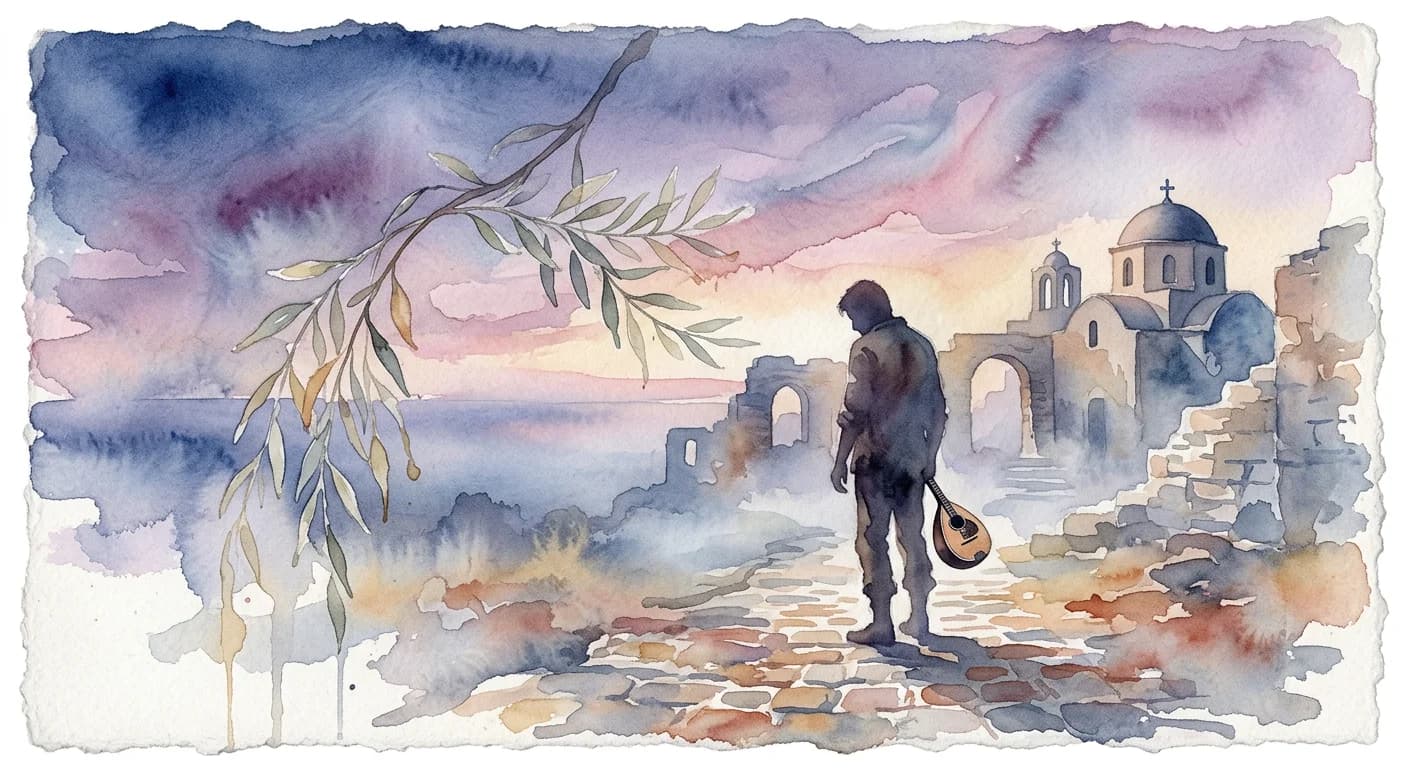
Rebetiko is the raw, soulful soundtrack of early 20th-century Greek urban life, born from the crucible of forced migration and social marginalization. It's a defiant lament, weaving together tales of love, loss, poverty, and exile with a haunting melody that resonates with the collective memory of struggle and resilience. More than just music, it embodies a specific ethos of authenticity and survival, a profound expression of shared suffering and enduring spirit among the working class and displaced.
Literal Translation
The word 'rebetiko' is derived from 'rebetis' (μάγκας), a term for a member of the urban subculture associated with the music, often implying a figure of street wisdom and defiance.
The Story Behind the Word
Rebetiko emerged from the smoky hashish dens and back alleys of port cities like Piraeus and Thessaloniki, primarily after the 1922 Asia Minor Catastrophe, which brought over a million Greek refugees to mainland Greece. These displaced populations, often impoverished and disoriented, found solace and voice in Rebetiko. It was initially an underground culture, expressing dissent against societal norms and the establishment, celebrated by the 'rebetes' – figures of street wisdom, often associated with a bohemian, sometimes illicit, lifestyle. The music's themes of existential angst, longing for home, and defiant pleasure in the face of hardship reflect a worldview shaped by profound loss and a determination to endure. It reveals a Greek psyche that finds beauty and truth in melancholy, where struggle is not just endured but transformed into art, and community is forged in shared adversity.
Experience It
Taverna's Soulful Echo
In a dimly lit taverna, an old man with a bouzouki closes his eyes, his voice cracking with emotion as he sings a rebetiko. The patrons, mostly older, nod slowly, some wiping away tears, lost in the song's narrative of love and betrayal that mirrors their own life stories.
Refugee's Lullaby
A young refugee, newly arrived in Athens, listens to rebetiko on a worn-out radio. The mournful melodies and lyrics about faraway homes and lost loves bring a bittersweet comfort, connecting him to a shared history of displacement and the resilience of his people.
The Deeper Meaning
Rebetiko embodies a profound philosophy of 'meraki' (doing something with soul, creativity, or love) and 'kefi' (joy, high spirits, often expressed through dance and music), even amidst profound 'kaimos' (grief, longing). It suggests that true human experience encompasses both deep sorrow and an unyielding capacity for joy and defiance, finding meaning and dignity in the raw, unfiltered realities of life, rather than escaping them.
Did You Know?
Rebetiko was once banned in Greece during various periods, including the Metaxas dictatorship in the 1930s, due to its perceived subversive themes and associations with the urban underworld.
How It's Used
Rebetiko refers to a specific genre of Greek music and the subculture that grew around it, often played in tavernas or clubs.