U.
HomeRegionsLanguagesEmotionsCollections
Find Your Word

“The limits of my language mean the limits of my world.”

— Ludwig Wittgenstein, Philosopher

Untranslatable

A curated collection of the world's most beautiful expressions—words that remind us language is humanity's greatest invention.

  • Home
  • Collections
  • Regions
  • Countries
  • Emotions
  • Tags
  • Contexts
  • Finder
  • Europe
  • Asia
  • Americas
  • Africa
  • Middle East
  • About
  • Contact
  • Privacy Policy
  • Terms of Service

2026 © Untranslatable. All rights reserved.

    /
    /
    1. Home
    2. /
    3. Asia
    4. /
    5. Rangoli
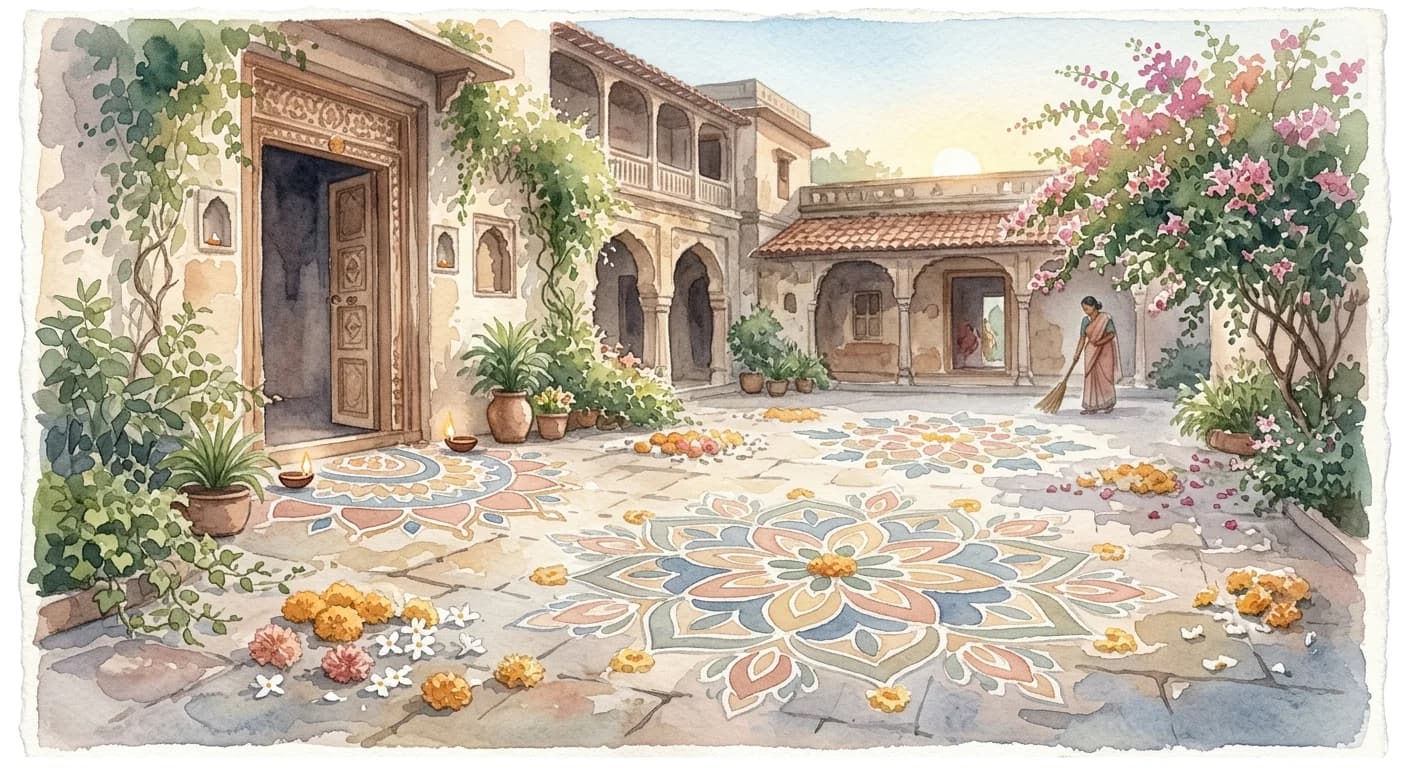
    Artistic representation of Rangoli
    Hindi•
    🇮🇳India

    Rangoli

    /RAHN-goh-lee/

    Meaning

    Rangoli is a captivating floor art from the Indian subcontinent, where intricate patterns are meticulously crafted using vibrant colored powders, rice, sand, or flower petals. More than mere decoration, these ephemeral designs are sacred greetings, believed to invite prosperity, ward off evil, and welcome deities and guests into the home during festive occasions. Their transient beauty, often swept away by nature, profoundly symbolizes the impermanence of existence and the preciousness of each fleeting moment.

    Literal Translation

    The etymology is debated, but it is often linked to the Sanskrit word 'rangavalli,' meaning 'a row of colors' or 'colored line.'

    The Story Behind the Word

    The practice of Rangoli is deeply embedded in ancient Hindu traditions, intertwined with concepts of purity, auspiciousness, and welcoming divine energy. Historically, it was a daily ritual for women, cleansing the entrance of homes and marking the threshold between the sacred domestic space and the outside world. The geometric and floral patterns often echo Vedic symbols, mandalas, and natural motifs, representing cosmic order, fertility, and abundance. Its existence reveals a culture that imbues everyday actions with spiritual significance and finds profound meaning in the cycles of nature and the ephemeral beauty of life. It emphasizes community, artistry, and the idea that beauty, even transient, can elevate the spirit and invite blessings.

    Experience It

    Diwali Morning Rangoli

    As the first light of Diwali dawns, a grandmother and her granddaughter sit on the porch, carefully sifting vibrant powders to create a large lotus Rangoli. The intricate petals unfurl across the entryway, a dazzling welcome for Lakshmi, the goddess of wealth, and a bright symbol of hope for the new year.

    Community Temple Offering

    During a temple festival, a group of women collaborate on a massive, intricate Rangoli encircling the deity's shrine. Each adds her touch, creating a collective masterpiece of color and devotion, a shared offering to the divine and a vibrant tapestry for the entire community to admire.

    The Deeper Meaning

    Rangoli embodies a profound philosophy of impermanence and the beauty found in transient creation. Its deliberate ephemeral nature teaches detachment, reminding practitioners and observers alike that all things, however beautiful or meticulously crafted, are subject to change and eventual dissolution, encouraging an appreciation for the present moment and the joy of creation itself, rather than its enduring form.

    Did You Know?

    Some traditional Rangoli designs are not just decorative; they are also believed to have magnetic fields that attract positive energy and create a sense of calm and well-being for those who view them.

    How It's Used

    Rangoli is typically created on the ground, especially at the entrance of homes, courtyards, or temples, during auspicious occasions like Diwali, Pongal, Onam, and other festive events. It is a communal activity, often involving women and children, and is also used to decorate stages and public spaces for celebrations.

    Emotions
    gratitude,joy,wonder
    Contexts
    celebration,family,greeting,seasons
    🇮🇳India

    by Annelise Dubois·Written Mar 14, 2026·Updated Apr 3, 2026

    Related Words

    Explore more
    Wabi-sabiJapanese

    Wabi-sabi is the profound appreciation for the ephemeral, the imperfect, and the incomplete aspects of existence. It is about discovering beauty in the subtle textures of age, the unique character of flaws, and the gentle decay that marks the passage of time. This philosophy encourages a quiet acceptance of impermanence and a mindful connection to the natural world, finding elegance in simplicity and authenticity.

    IkigaiJapanese

    Ikigai is more than just a reason to get out of bed; it's a deeply personal and evolving sense of purpose that brings genuine fulfillment and joy to one's life. It represents the sweet spot where your passions, talents, needs of the world, and what you can be paid for beautifully converge. Discovering your ikigai often leads to a life lived with intentionality, resilience, and a profound connection to one's contributions. It's the intrinsic motivation that fuels a meaningful existence, regardless of external circumstances.

    NunchiKorean

    Nunchi is the sophisticated, almost telepathic, ability to instantly grasp the unspoken dynamics of any social situation, anticipating others' thoughts and feelings, and then responding with impeccable grace and timing. It's an acute form of social intuition, allowing one to navigate complex interpersonal landscapes by reading subtle cues like body language, tone, and context. Possessing good nunchi means effortlessly understanding the underlying emotional currents and adjusting one's behavior to maintain harmony and effectiveness, often without a single word exchanged.

    JugaadHindi

    Jugaad is more than just a quick fix; it embodies the spirit of resourceful, ingenious improvisation in the face of scarcity or systemic challenges. It's the art of bending rules, repurposing materials, and thinking outside the box to achieve a desired outcome, often with limited financial or technological resources. This approach celebrates clever workarounds and innovative adaptations, turning constraints into catalysts for creative problem-solving. It's about making do and making something work, brilliantly.