U.
HomeRegionsLanguagesEmotionsCollections
Find Your Word

“The limits of my language mean the limits of my world.”

— Ludwig Wittgenstein, Philosopher

Untranslatable

A curated collection of the world's most beautiful expressions—words that remind us language is humanity's greatest invention.

  • Home
  • Collections
  • Regions
  • Countries
  • Emotions
  • Tags
  • Contexts
  • Finder
  • Europe
  • Asia
  • Americas
  • Africa
  • Middle East
  • About
  • Contact
  • Privacy Policy
  • Terms of Service

2026 © Untranslatable. All rights reserved.

    /
    /
    1. Home
    2. /
    3. Europe
    4. /
    5. Concuñada
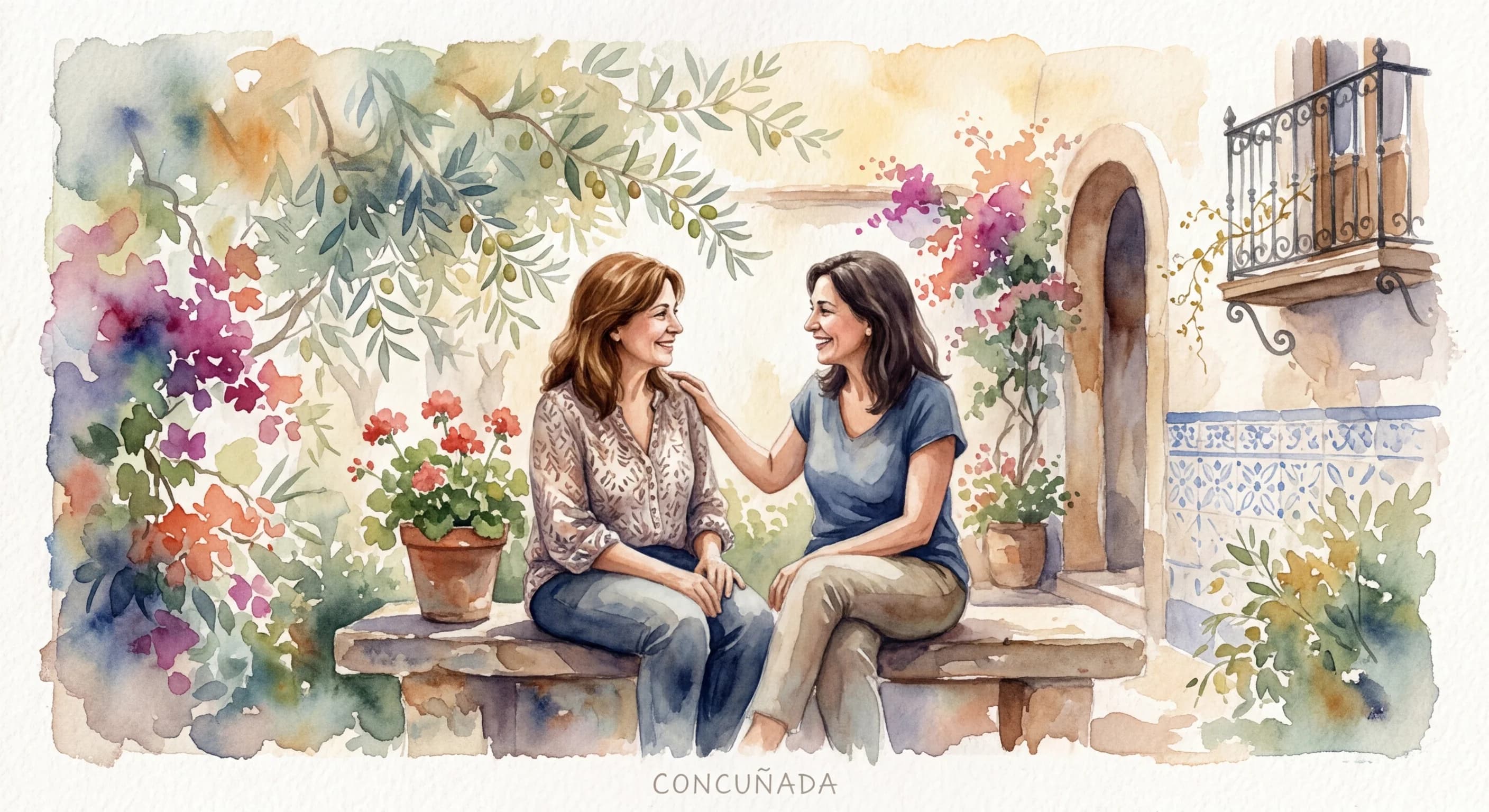
    Artistic representation of Concuñada
    Spanish•
    🇦🇷Argentina🇧🇴Bolivia🇨🇱Chile🇨🇴Colombia🇨🇷Costa Rica🇨🇺Cuba🇩🇴Dominican Republic🇪🇨Ecuador🇸🇻El Salvador🇬🇹Guatemala🇭🇳Honduras🇲🇽Mexico🇳🇮Nicaragua🇵🇦Panama🇵🇾Paraguay🇵🇪Peru🇵🇷Puerto Rico🇪🇸Spain🇺🇾Uruguay🇻🇪Venezuela

    Concuñada

    /kon-koo-NYAH-dah/

    Meaning

    Concuñada transcends the simple English "sister-in-law," denoting a profound familial connection embedded in Spanish culture. It refers specifically to the sister of one's spouse, implying a shared journey into an extended family network where mutual support and understanding are paramount. This term signifies an integral bond, often characterized by a warmth and familiarity that extends beyond mere formality, solidifying one's place within the broader kinship system through shared celebrations, traditions, and emotional ties.

    Literal Translation

    Co-niece (literally, but referring to sister-in-law)

    The Story Behind the Word

    The existence of 'concuñada' highlights the profound importance of extended family in Spanish-speaking cultures. Unlike cultures where marital ties primarily link two individuals, Spanish tradition views marriage as the merging of two entire families. This word, alongside terms like 'consuegros' (co-parents-in-law), underscores a worldview where kinship is not just biological but also meticulously constructed and maintained through marriage. It reflects a societal structure where family provides the primary social safety net and emotional support system, demanding specific terminology to delineate these crucial relationships. The investment in such precise familial labels reveals a culture that values collective identity and intergenerational bonds above strict individualism, emphasizing the lifelong commitment to one's spouse's family as much as one's own.

    Experience It

    Wedding Day Support

    During her wedding, María felt a wave of calm as her husband's sister, her soon-to-be concuñada, adjusted her veil. It was a silent gesture of acceptance and welcome into the family, promising a future of shared laughter and support.

    Holiday Traditions

    Every Christmas, Ana looks forward to cooking with her concuñada, Elena. They navigate the bustling kitchen together, sharing old family recipes and creating new memories, their bond deepening with each shared holiday feast.

    The Deeper Meaning

    This word encapsulates a philosophy of expansive kinship, where marriage extends one's family rather than merely adding an individual. It reflects a worldview that values collective belonging and intricate social weaving, suggesting that personal identity is deeply intertwined with one's position within a larger, interconnected family unit. The emphasis is on building and maintaining these extensive relational networks as foundational to a fulfilling life.

    Did You Know?

    While 'concuñada' is for the sister of one's spouse, the corresponding term for the brother of one's spouse is 'cuñado,' and for the spouse of one's sibling, it's also 'cuñado' or 'cuñada' depending on gender!

    How It's Used

    Used to refer to the sister of one's husband or wife within family contexts.

    Emotions
    belonging,warmth
    Contexts
    celebration,dining,family
    🇦🇷Argentina🇧🇴Bolivia🇨🇱Chile🇨🇴Colombia🇨🇷Costa Rica🇨🇺Cuba🇩🇴Dominican Republic🇪🇨Ecuador🇸🇻El Salvador🇬🇹Guatemala🇭🇳Honduras🇲🇽Mexico🇳🇮Nicaragua🇵🇦Panama🇵🇾Paraguay🇵🇪Peru🇵🇷Puerto Rico🇪🇸Spain🇺🇾Uruguay🇻🇪Venezuela

    by Annelise Dubois·Written Mar 10, 2026·Updated Apr 3, 2026

    Related Words

    Explore more
    HyggeDanish

    Hygge is more than mere coziness; it's a holistic embrace of comfort, warmth, and belonging that nourishes the soul. It describes the intentional creation of an intimate atmosphere where simple pleasures, genuine connection, and mindful presence converge, fostering a profound sense of contentment and well-being. It's about finding joy and peace in the small, everyday moments, often shared with loved ones.

    SaudadePortuguese

    Saudade encapsulates a profound, melancholic longing for something or someone cherished that is absent, often with the bittersweet knowledge that it may never return. It's a deep emotional state tinged with nostalgia, evoking a sense of loss for past experiences, places, or people, yet also holding a tender appreciation for the beauty of what once was. This yearning is not merely sadness, but a complex tapestry of desire, memory, and a poignant acceptance of absence, holding the beloved in a warm, persistent embrace within the heart.

    GezelligDutch

    Gezellig encapsulates a profound sense of warmth, belonging, and convivial comfort, extending beyond mere coziness to embrace the social and emotional atmosphere. It's the feeling of being truly at ease, surrounded by good company, laughter, and a shared sense of contentment. This untranslatable term describes not just a physical space, but a holistic experience where time seems to slow down, fostering genuine connection and a deep sense of well-being.

    Dolce far nienteItalian

    Dolce far niente captures the profound joy and effortless pleasure derived from simply existing without obligation or purpose. It's the art of savoring moments of pure, unadulterated idleness – lying in the sun, watching the clouds drift, or enjoying a leisurely coffee – not as a break from work, but as a valuable state in itself. This 'sweetness of doing nothing' is a conscious embrace of stillness and contentment, allowing the soul to breathe and the senses to fully engage with the present.