Romería
/roh-meh-REE-ah/
Meaning
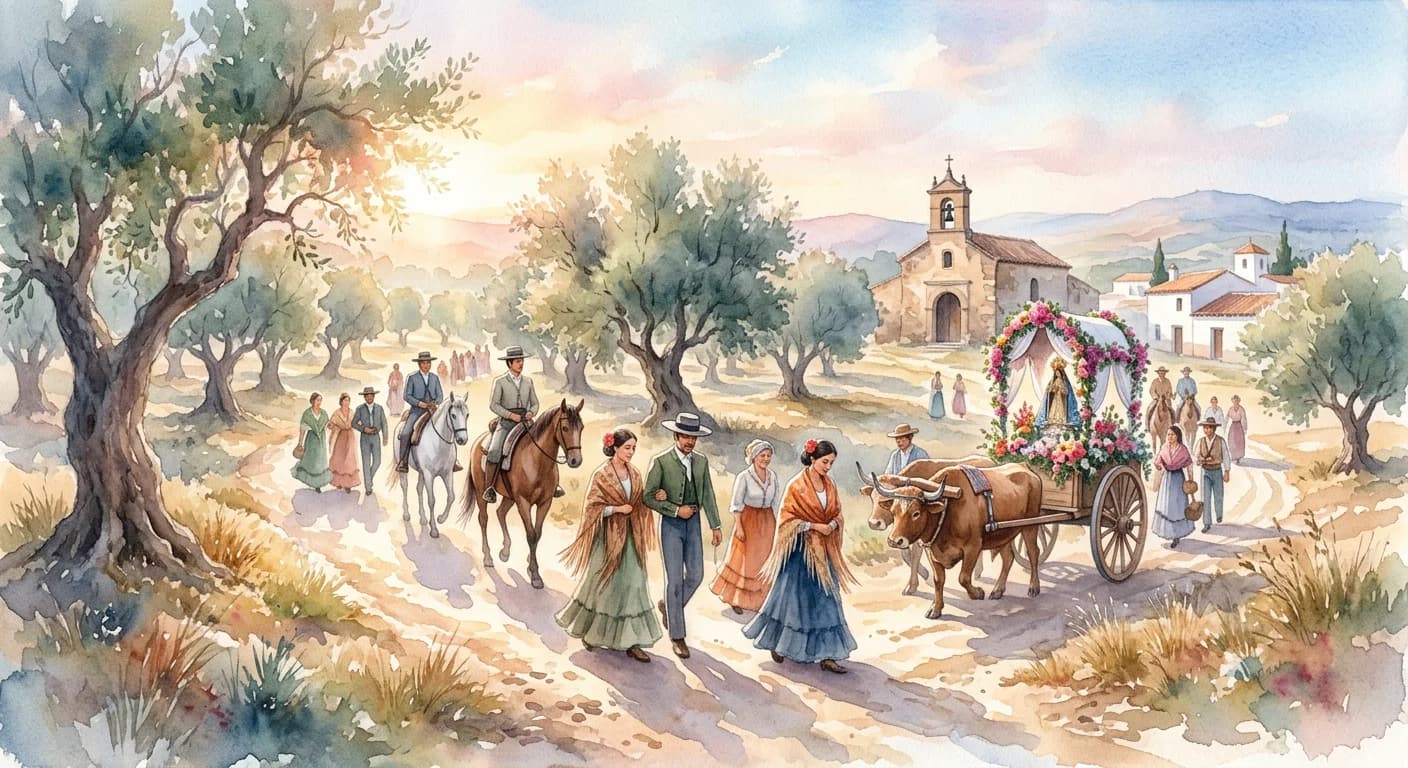
A "romería" is far more than a simple religious pilgrimage; it's a vibrant, multi-sensory journey of collective faith and joyous celebration, deeply embedded in Spanish culture. Participants, often adorned in traditional attire, embark on foot, sometimes for days, towards a revered shrine or sanctuary, transforming the arduous trek into a moving feast of song, dance, and shared sustenance. This communal endeavor artfully weaves together solemn devotion with boisterous festivity, creating a profound sense of belonging and spiritual renewal that culminates in heartfelt veneration.
Literal Translation
pilgrimage
The Story Behind the Word
The "romería" is a living testament to Spain's deep-rooted Catholic heritage and its unique way of integrating spirituality with communal life. Originating in medieval times as a penitential act or a plea for divine intervention, it evolved to incorporate pre-Christian, pagan elements of celebration and nature worship, particularly around agricultural cycles. This word exists because it encapsulates a worldview where faith is not a solitary endeavor but a shared, embodied experience, celebrated through movement, music, and food. It reveals a culture that sees the sacred not just in solemn rituals, but also in the boisterous joy of community, the beauty of the landscape, and the endurance of the human spirit. It's a quintessential expression of Spanish popular religiosity, where the divine is approached with both reverence and exuberant human spirit.
Experience It
El Rocío Pilgrimage
Thousands of 'rocieros' from Andalusia and beyond set off in decorated wagons and on horseback, singing 'sevillanas' and sharing fino wine. Their arduous journey through dusty paths culminates in an emotional, all-night vigil before the Virgen del Rocío, a powerful display of faith and tradition.
Local Village Romería
The villagers, dressed in their finest, carry the statue of their patron saint from the church to a hermitage in the countryside. Along the way, families picnic, children play, and elders recount tales, blurring the lines between sacred procession and festive family outing.
The Deeper Meaning
The "romería" embodies a philosophy where spiritual devotion is not passive contemplation but an active, communal, and often physically demanding journey. It suggests that true faith is strengthened through shared hardship, collective joy, and a deep connection to both the divine and the earth. It highlights the belief that the sacred is found not only in the destination but profoundly in the transformative process of the journey itself, fostering resilience and solidarity.
Did You Know?
Some of the oldest "romerías" in Spain have been continuously celebrated for over 700 years, making them enduring traditions that predate many modern nations.
How It's Used
Used to describe a pilgrimage, especially one that includes a festive, communal aspect.