Juerga
/HWER-gah/
Meaning
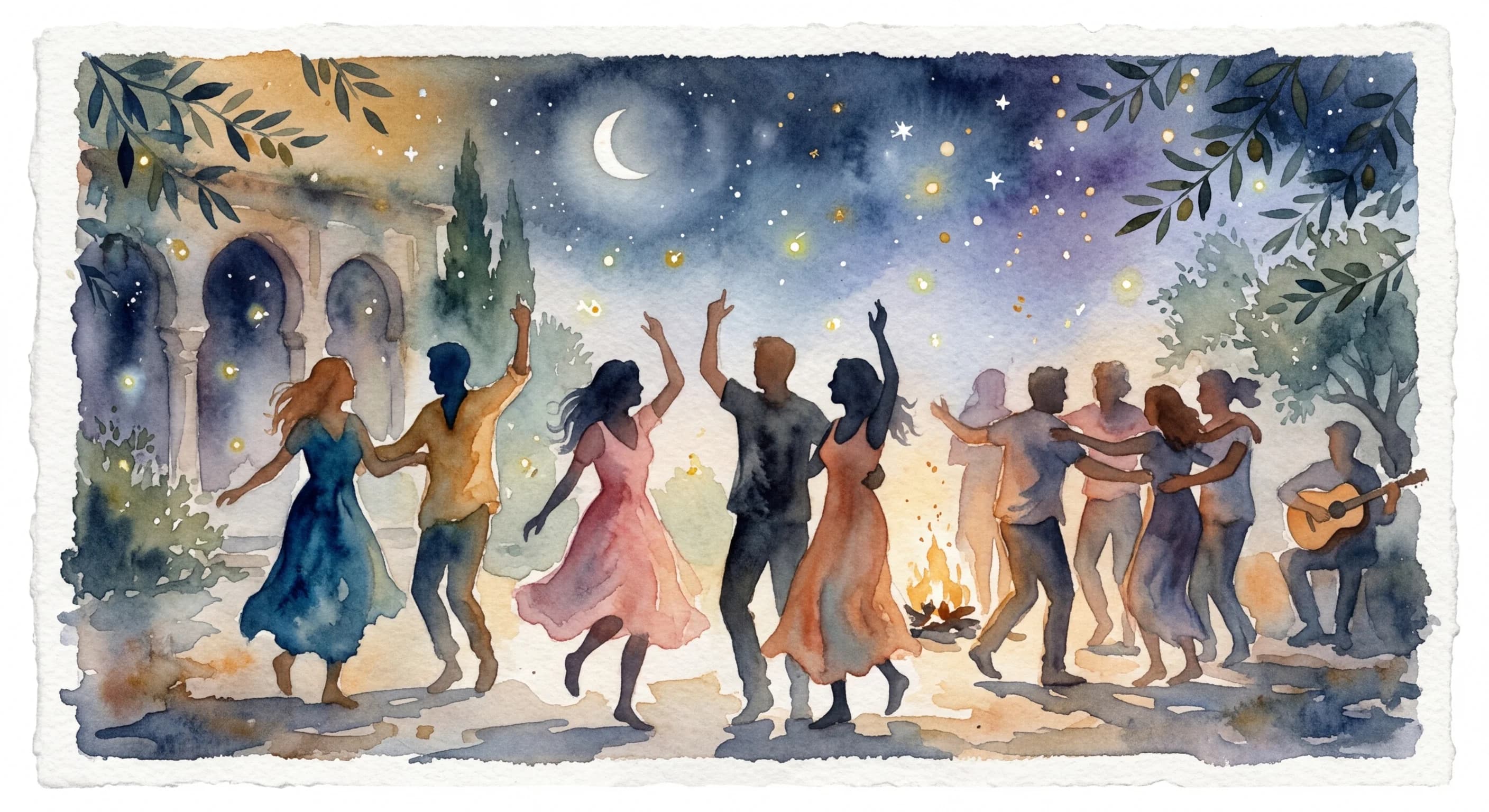
Juerga embodies a spontaneous, uninhibited revelry, a deep dive into an evening (or morning) of collective euphoria. It's an immersive experience where music, dance, and camaraderie intertwine, often stretching until dawn. More than just a party, a juerga signifies a complete surrender to the moment, a vibrant outburst of shared joy where worries are cast aside, and the present is fully embraced with boisterous enthusiasm.
Literal Translation
Spree, revelry, party
The Story Behind the Word
The concept of 'juerga' is deeply rooted in Spanish social fabric, particularly in Andalusian culture from which it originates, often associated with flamenco's spontaneous, passionate expression. It reflects a cultural emphasis on living in the present, valuing human connection, and finding joy in collective celebration. In a society that historically experienced periods of hardship, the 'juerga' offered a vital outlet for catharsis, community bonding, and a defiant embrace of life's pleasures. It's not merely about having fun; it's about forging bonds, expressing emotion, and reaffirming cultural identity through shared experience, often impromptu and extending beyond conventional hours.
Experience It
Spontaneous Flamenco Night
After a late dinner, Juan and his friends stumbled upon a small bar where a guitarist started playing. Soon, someone was singing, another clapping, and before they knew it, they were in the midst of an impromptu juerga, dancing and singing until the sun peeked through the windows.
Village Festival Aftermath
The official town festivities had ended, but a group of locals refused to let the energy die. They gathered in the main square, sharing wine and laughter, their voices echoing into the night as their juerga continued, fueled by the lingering festive spirit.
The Deeper Meaning
Juerga encapsulates a profound Spanish philosophy of 'carpe diem' – seizing the day, or rather, the night. It highlights the importance of human connection, spontaneous joy, and the cathartic release found in shared revelry. It suggests that true living involves moments of unbridled passion and a willingness to fully immerse oneself in the present, letting go of future anxieties and past regrets for the sake of collective happiness.
Did You Know?
The word 'juerga' is thought to have roots in Andalusian Romani (Caló), reflecting its strong connection to the spontaneous, passionate celebrations often associated with flamenco culture.
How It's Used
Used to describe a lively party, a night out with friends, or a festive spree.