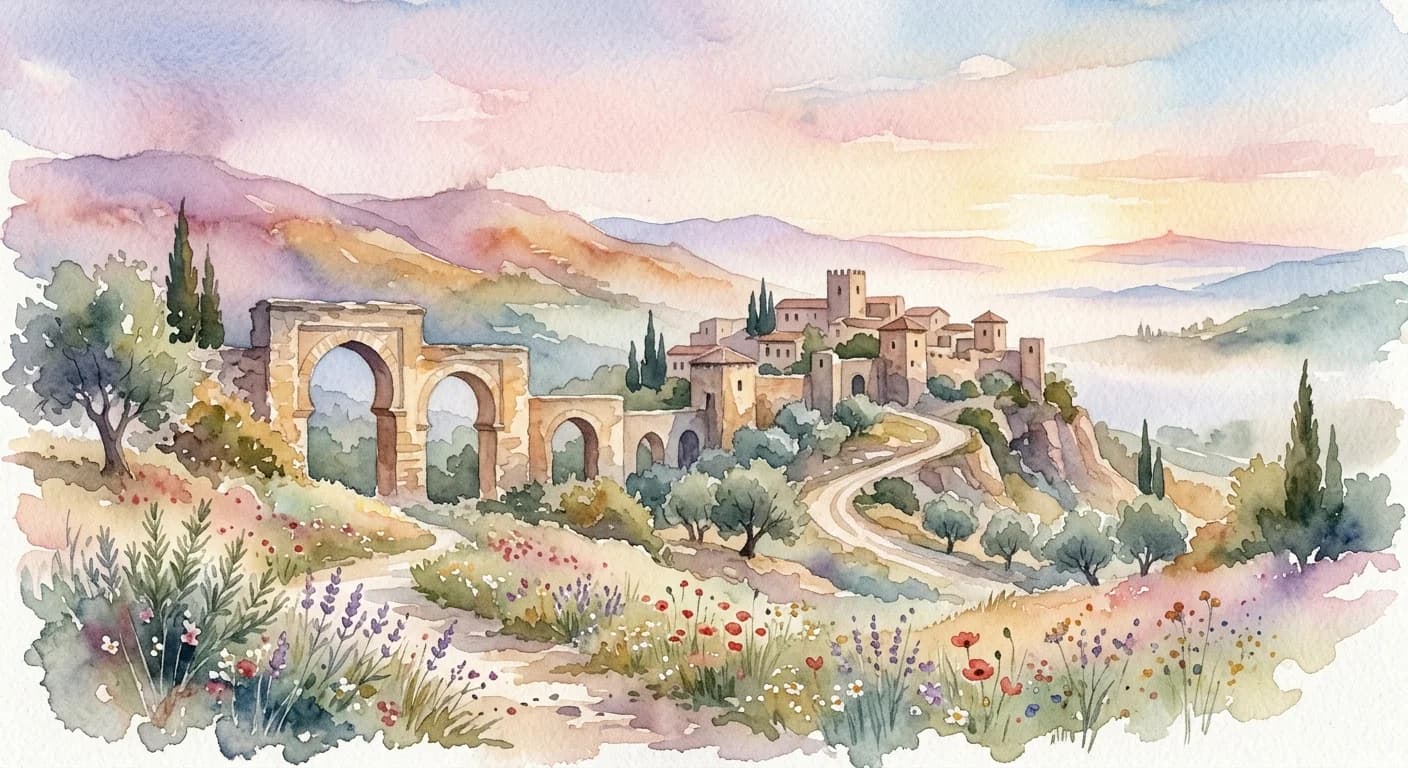
Son
/SON/
Meaning
In Spanish, 'son' (from 'ser') transcends a simple statement of existence; it is a declaration of inherent essence, an unchangeable truth about a person or thing. It defines what something fundamentally 'is' at its core, articulating identity, origin, and permanent characteristics. This verb form delineates the very being, distinguishing it sharply from temporary states or fleeting conditions. To use 'son' is to articulate a foundational, defining quality.
Literal Translation
he/she/it is
The Story Behind the Word
The distinction between 'ser' and 'estar' is a cornerstone of Spanish linguistic and philosophical thought, reflecting a worldview that carefully categorizes existence into essential versus circumstantial. 'Ser' (and thus 'son') speaks to an ontological understanding of the world, where things possess an intrinsic, immutable nature. This duality likely stems from ancient philosophical traditions, perhaps even influenced by a more static, essentialist view of identity prevalent in some classical thought. It reveals a culture that values understanding the fundamental 'whatness' of things, rather than just their current 'howness,' leading to a more profound and layered way of describing reality and identity. This grammatical structure encourages a deeper reflection on permanence versus transience.
Experience It
Defining a Nation
A Spanish historian lectures on the origins of Spain. She proclaims, 'España son sus pueblos, sus lenguas, su historia milenaria.' (Spain is its peoples, its languages, its millennia-old history.) She uses 'son' to emphasize these elements as intrinsic, unchangeable components of the nation's identity, not just temporary attributes.
Identifying a Friend
At a family gathering, a child points to a woman and asks, '¿Quién es ella?' (Who is she?) The mother responds, 'Ella es mi hermana, tu tía.' (She is my sister, your aunt.) The use of 'es' (related to 'son') firmly establishes an inherent, familial relationship, a permanent bond of kinship.
The Deeper Meaning
The existence of 'ser' (and its conjugations like 'son') alongside 'estar' in Spanish reflects a deep philosophical distinction between essence and accident. It suggests a worldview that perceives inherent, unchanging truths about identity and nature, contrasted with transient states or conditions. This duality encourages a more nuanced understanding of reality, where 'what something is' is fundamentally different from 'how something is at this moment.' It's a linguistic embodiment of essentialism.
Did You Know?
The 'ser' vs. 'estar' distinction is so fundamental that a famous Spanish proverb states: 'No es lo mismo ser que estar,' meaning 'It's not the same to be (essentially) as to be (temporarily).'
How It's Used
Used to describe a person's profession, nationality, inherent traits, or relationships. For example, 'Él es doctor' (He is a doctor), 'Ella es mi hermana' (She is my sister), 'El cielo es azul' (The sky is blue).