Tangata whenua
/TAHN-gah-tah FAY-noo-ah/
Meaning
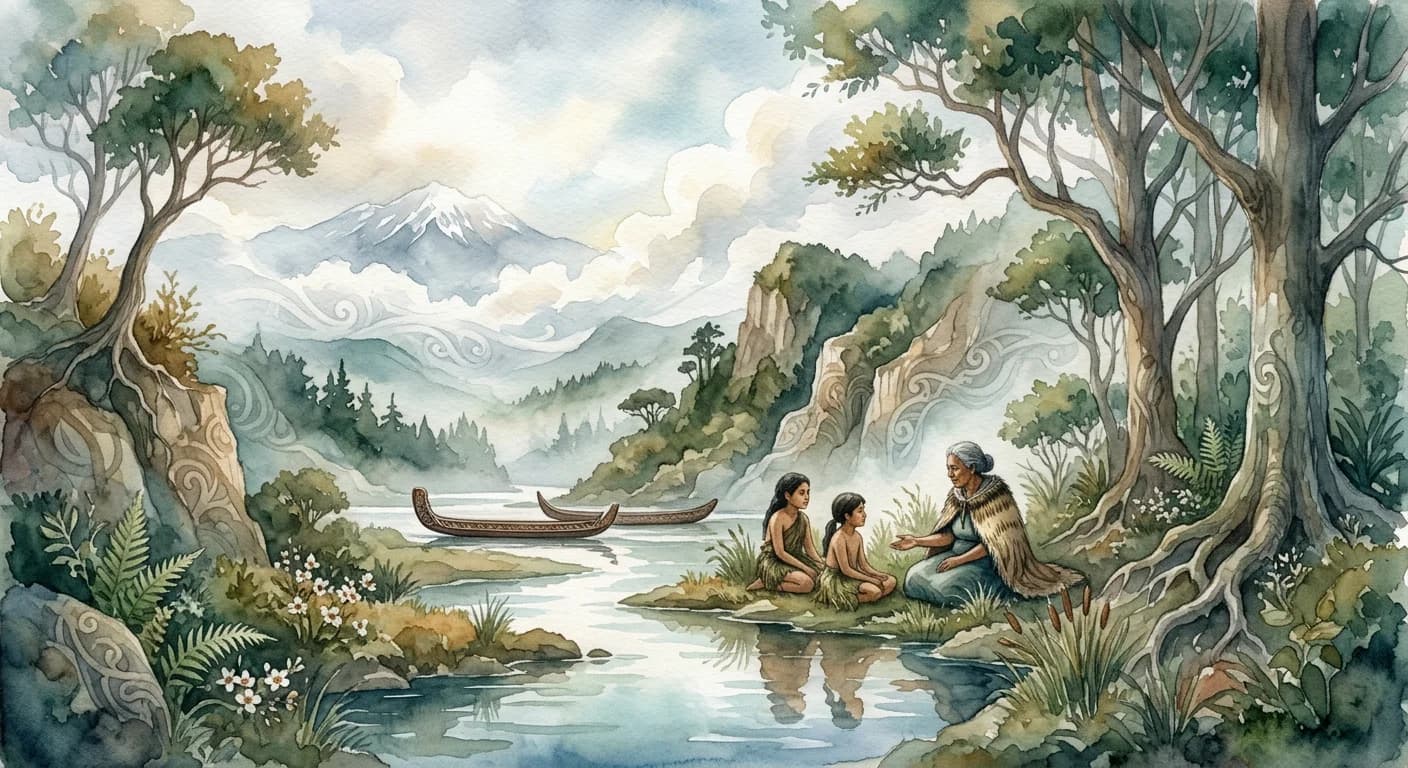
Tangata whenua transcends a mere demographic description; it embodies the profound, spiritual, and ancestral connection of the Māori people to Aotearoa (New Zealand). It signifies an unbroken lineage of guardianship, a sacred bond where the land is not just owned but is an extension of identity and being. This term encapsulates a reciprocal relationship, where the people are intrinsically woven into the fabric of the land's history, ecology, and spirit, holding an inherent right and responsibility as its original custodians.
Literal Translation
People of the land
The Story Behind the Word
The concept of tangata whenua is fundamental to Māori worldview, stemming from a rich oral tradition and deep spiritual connection to the natural world. It articulates a cosmology where humans descend from the land and sky, making them integral parts of the environment rather than separate entities. This term underpins the concept of 'mana whenua' (authority over land) and 'kaitiakitanga' (guardianship), revealing a society structured around collective responsibilities to people, land, and ancestors. The existence of this word reflects a culture that sees identity, history, and well-being inextricably linked to the ancestral land, emphasizing belonging, reciprocity, and a sacred duty to protect and nurture it for future generations. It's a testament to a worldview where land is kin, not commodity.
Experience It
Welcome to Our Marae
During a pōwhiri (Māori welcome ceremony) at a marae, the elder orator stood, acknowledging the visitors. He began, 'Nau mai, haere mai ki te marae o ngā tangata whenua o tēnei rohe,' signifying that the visitors were entering the ancestral home of the indigenous people of that area, who held the inherent right and responsibility to host them there.
Land Claim Discussion
In a contemporary discussion about land rights, a Māori representative asserted, 'As tangata whenua, our connection to this whenua (land) is not merely historical; it is living, spiritual, and forms the core of our identity and future.' This statement underscored their inherent right to the land, rooted in their ancestral and spiritual ties, beyond legal definitions of ownership.
The Deeper Meaning
This word reveals a profound ecological and spiritual philosophy where humanity is not separate from nature but an integral, reciprocal part of it. It challenges anthropocentric views by positing a worldview where identity, ancestry, and future are interwoven with the land, fostering a deep sense of custodianship and intergenerational responsibility rather than mere ownership or exploitation.
Did You Know?
The 'whenua' in 'tangata whenua' also means 'placenta' and 'land,' highlighting the deep metaphorical connection between birth, belonging, and the earth, signifying that one is born from the land itself.
How It's Used
The term is used to refer to the indigenous Māori people of New Zealand, emphasizing their ancestral rights and connection to the land. It is often used in formal contexts, legal discussions, and when discussing cultural identity and heritage.