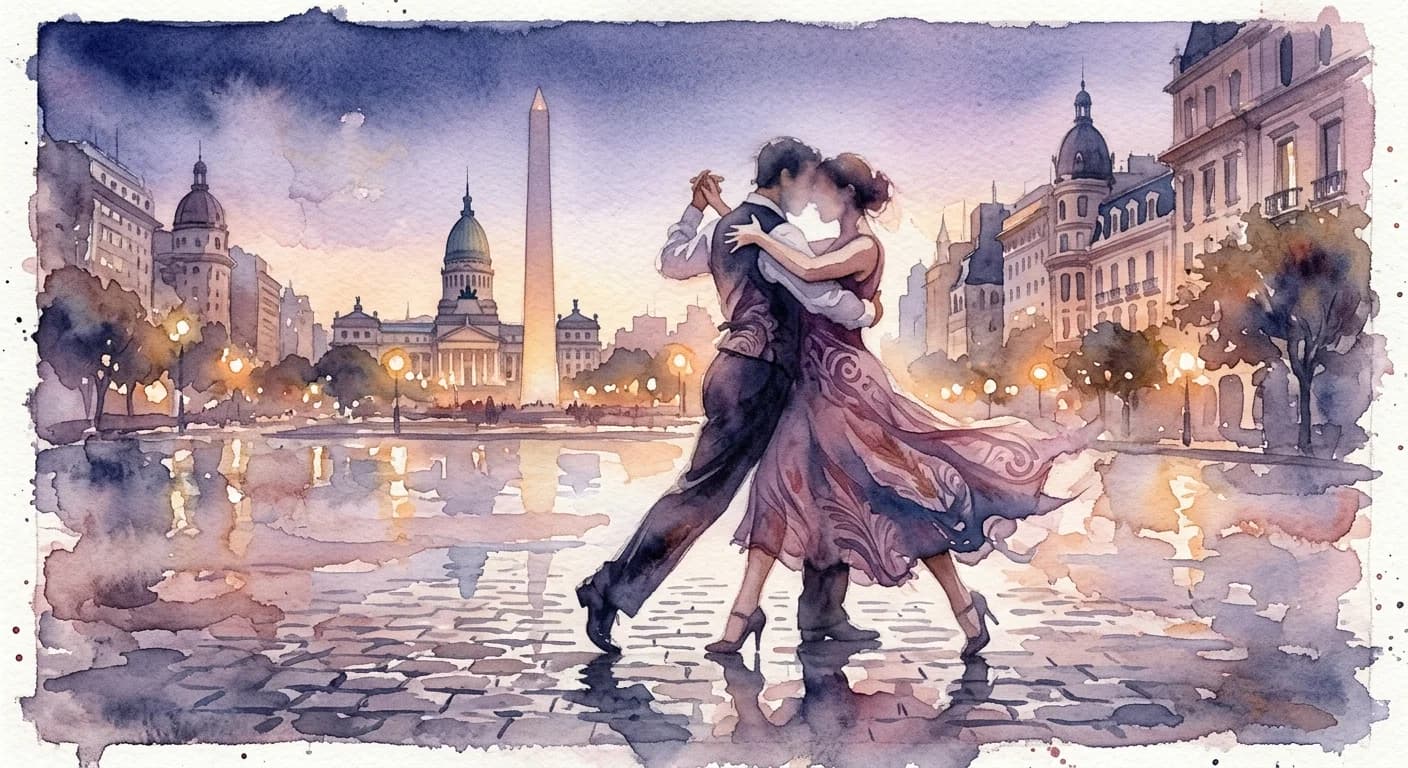
Tango
/TAHN-goh/
Meaning
Tango is a raw, evocative embrace between two souls, navigating a complex choreography of push and pull, surrender and resistance. It's a living dialogue where bodies articulate unspoken narratives of longing, memory, and the fleeting beauty of connection. This dance embodies a profound melancholy, a bittersweet reflection on life's inevitable sorrows and joys, finding solace and expression in shared movement and music.
Literal Translation
The origin of the word 'tango' is uncertain, but it is believed to have African roots, possibly related to the Bantu word 'tunda' (to dance) or 'tango' (drum). In Spanish, it evolved to describe a style of music and dance.
The Story Behind the Word
Born from the melting pot of late 19th-century Buenos Aires and Montevideo, tango emerged from the marginalized communities of immigrants, working-class people, and former slaves. It was a dance of the dispossessed, a way to express the hardships, loneliness, and hopes of a new life in a foreign land. The music, rich with bandoneon, piano, and strings, often tells stories of unrequited love, lost fortunes, and the 'arrabal' (slums) from which it sprang. Tango reveals a culture that values passionate expression, a stoic romanticism, and an acceptance of life's inherent melancholy, finding beauty in its struggles and connections.
Experience It
Milonga Night
Under the dim lights of a milonga, an elderly couple glides effortlessly across the floor. Their tango isn't flashy; it's a quiet conversation of decades, each step imbued with shared history, a poignant testament to enduring love and loss, understood without a single word.
First Embrace
A young dancer hesitantly steps onto the floor, her hand finding her partner's. As the bandoneon swells, their initial awkwardness melts into a tentative, then confident, embrace. In that moment, the tension and thrill of a new connection, a burgeoning story, unfolds with every synchronized movement.
The Deeper Meaning
Tango embodies a philosophy of 'being in the moment' while carrying the weight of the past. It speaks to the human need for connection amidst isolation, expressing profound emotions – love, sorrow, desire – through physical dialogue. It reveals a worldview that finds beauty in melancholy, resilience in vulnerability, and truth in the intricate dance of life's dualities.
Did You Know?
Early tango was often danced between two men, not only for practice but also because of the scarcity of women in the port cities and the dance's initial association with brothels and lower-class establishments.
How It's Used
Used to refer to the dance, the music, and the cultural phenomenon originating from the Río de la Plata region.