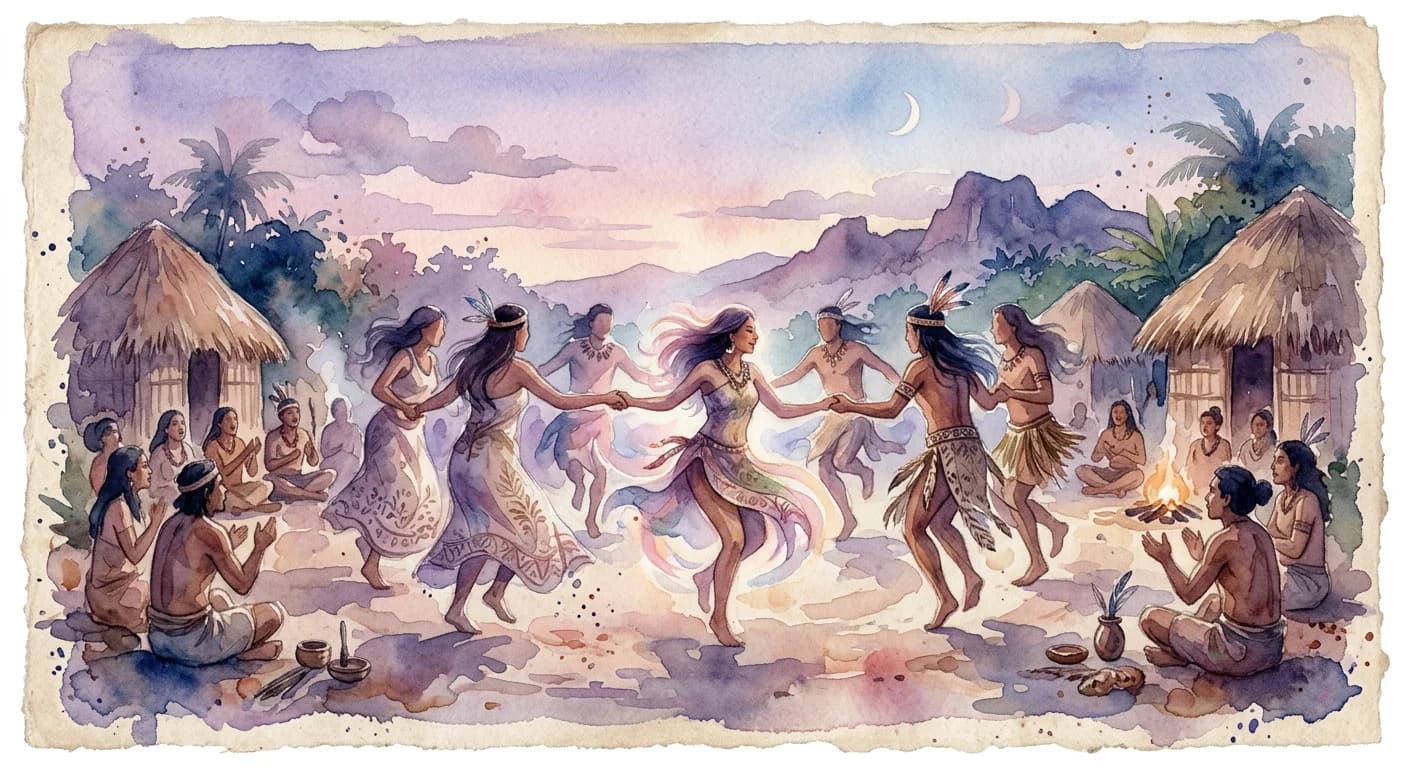
Areito
/ah-reh-EE-toh/
Meaning
Areito was a profound Taíno communal ceremony, far exceeding mere performance. It was a vibrant tapestry woven from rhythmic dancing, hypnotic singing, epic storytelling, and sacred rituals, often accompanied by musical instruments. These gatherings were the very heartbeat of Taíno society, serving as crucial vehicles for ancestral memory, spiritual connection, and the reinforcement of collective identity. Areito embodied the holistic integration of art, history, and spirituality, binding the community together in a shared, living experience.
Literal Translation
N/A
The Story Behind the Word
The Areito was central to Taíno cosmology and social structure, reflecting a worldview where the sacred and the secular were inextricably linked. It was the primary means by which history, myths, and religious beliefs were transmitted across generations, ensuring cultural continuity in a pre-literate society. Through the Areito, the Taíno people not only celebrated life and community but also communicated with their gods (cemíes) and ancestors, sought guidance, and solidified their relationship with the natural world. Its existence reveals a people who valued collective memory, spiritual reverence, and the power of shared experience above all else, seeing their identity and survival deeply rooted in these communal expressions.
Experience It
Honoring the Harvest
As the moon ascended, the village gathered in the ceremonial plaza. The cacique led the Areito, voices rising in ancient chants celebrating the abundant manioc harvest, each rhythmic step echoing generations of gratitude to Yucahú, the spirit of fertility.
Recounting Ancestral Tales
Around the central fire, the elder began to sing of the creation of the islands and the first humans. Younger Taínos swayed, absorbing every word and gesture, the Areito ensuring the foundational myths of their people were etched into their collective memory and spirit.
The Deeper Meaning
The Areito reveals a Taíno philosophy deeply rooted in the cyclical nature of life, the interconnectedness of past, present, and future, and the power of communal expression. It underscores a worldview where individual identity is inseparable from collective memory and spiritual heritage, emphasizing harmony, reverence for ancestors, and the sacredness of shared experience as cornerstones of existence.
Did You Know?
Archaeologists have found evidence of 'batey' plazas, specially prepared flat areas, where Areitos would have taken place, sometimes featuring carved stone markers that might have guided the dances or rituals.
How It's Used
Used to describe the traditional communal gatherings of the Taíno people, which included singing, dancing, storytelling, and rituals.