Afoxé
/ah-foh-SHEH/
Meaning
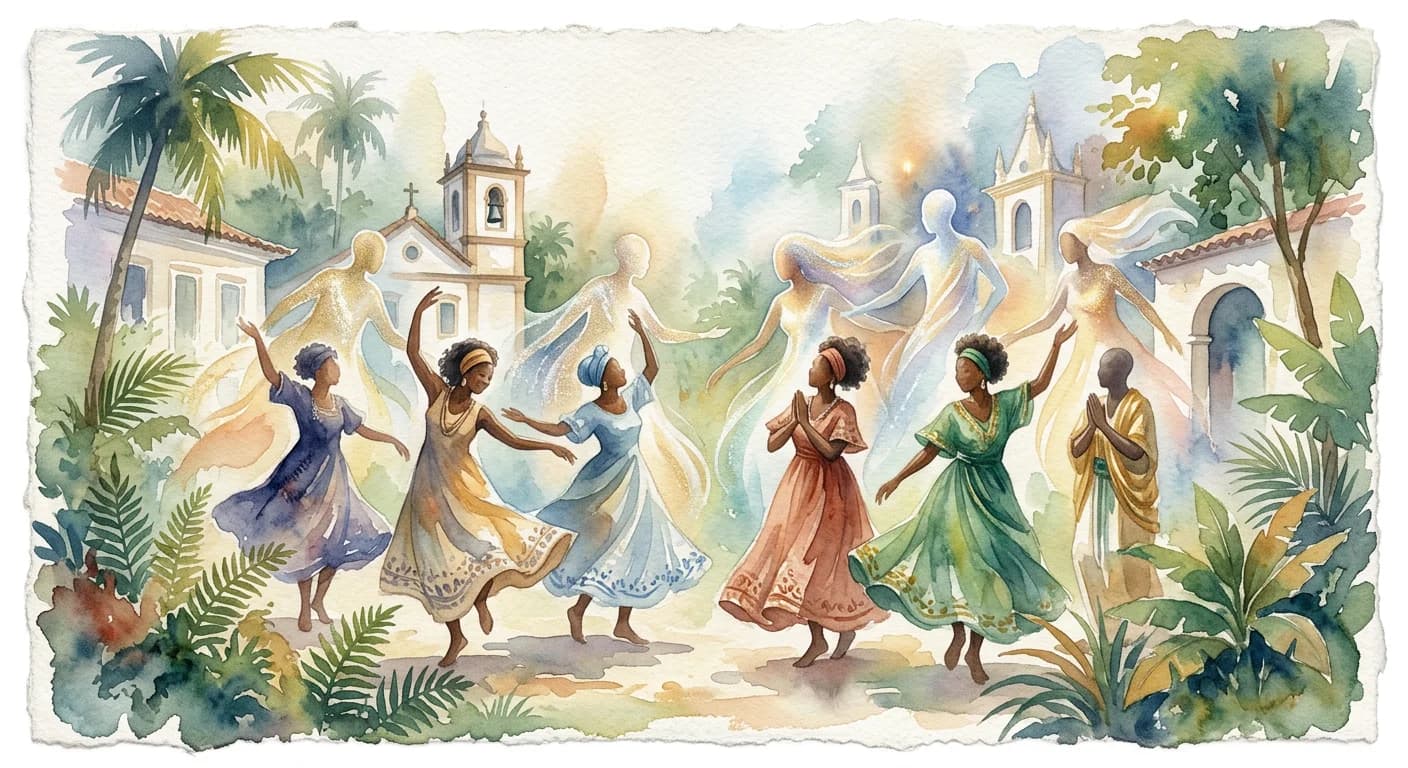
Afoxé transcends mere musical performance; it is a profound spiritual awakening, an ecstatic blend of rhythmic drumming, chanting, and dance that channels the vibrant energy of the Orixás. It is a living prayer, a communal celebration where ancestral spirits commune with the present, fostering a powerful sense of belonging and joyous reverence. More than sound, it's a dynamic manifestation of faith and heritage, deeply rooted in the heart of Afro-Brazilian culture.
Literal Translation
The literal meaning in Yoruba is not directly translatable as a single word, but it is associated with the concept of 'talking' or 'speaking' in a spiritual or performative context.
The Story Behind the Word
Afoxé emerged from the fusion of Yoruba religious traditions brought by enslaved Africans to Brazil, particularly in Bahia, with local cultural expressions. It served as a vital form of resistance and cultural preservation, allowing enslaved and later freed Africans to maintain their spiritual practices and identity under the guise of secular carnival groups. The word itself, though not having a direct single-word Yoruba translation, evokes the spiritual 'speaking' or 'calling forth' of the Orixás through music and dance. Its existence reveals a culture that views spirituality as intrinsically linked to communal expression, where the sacred is not confined to temples but actively performed and celebrated in public spaces, embodying resilience, faith, and the enduring power of ancestral memory.
Experience It
Carnival Street Procession
The streets of Salvador pulsed with life as the Afoxé Filhos de Gandhy procession moved, a sea of white and blue. Drummers beat out an intoxicating rhythm, their voices rising in chants to Oxalá, drawing thousands into a collective dance of peace and spiritual joy. It was more than a parade; it was a moving sacred space.
Temple Celebration
Inside the Candomblé terreiro, the air thickened with incense and the insistent beat of atabaques. An Afoxé ensemble played, their music guiding the faithful into a trance, inviting the Orixás to descend. The power of the music was palpable, transforming the space into a direct conduit to the divine.
The Deeper Meaning
Afoxé embodies a philosophical worldview where the material and spiritual realms are not separate but constantly interweaving. It reveals a belief in the power of collective energy, music, and embodied ritual to invoke and interact with the divine. This perspective emphasizes community, ancestral reverence, and the transformative potential of celebratory expression as a path to spiritual connection and cultural identity, illustrating that faith is a lived, dynamic experience, not merely an abstract concept.
Did You Know?
The most famous afoxé group, Filhos de Gandhy, founded in 1949, was originally formed by dockworkers in Salvador and became a symbol of peace, often parading in white and blue in honor of Oxalá.
How It's Used
Used to refer to a specific type of Afro-Brazilian music and dance, often associated with religious festivals and parades, particularly in Bahia, Brazil. It also refers to the musical group or ensemble that performs this music.