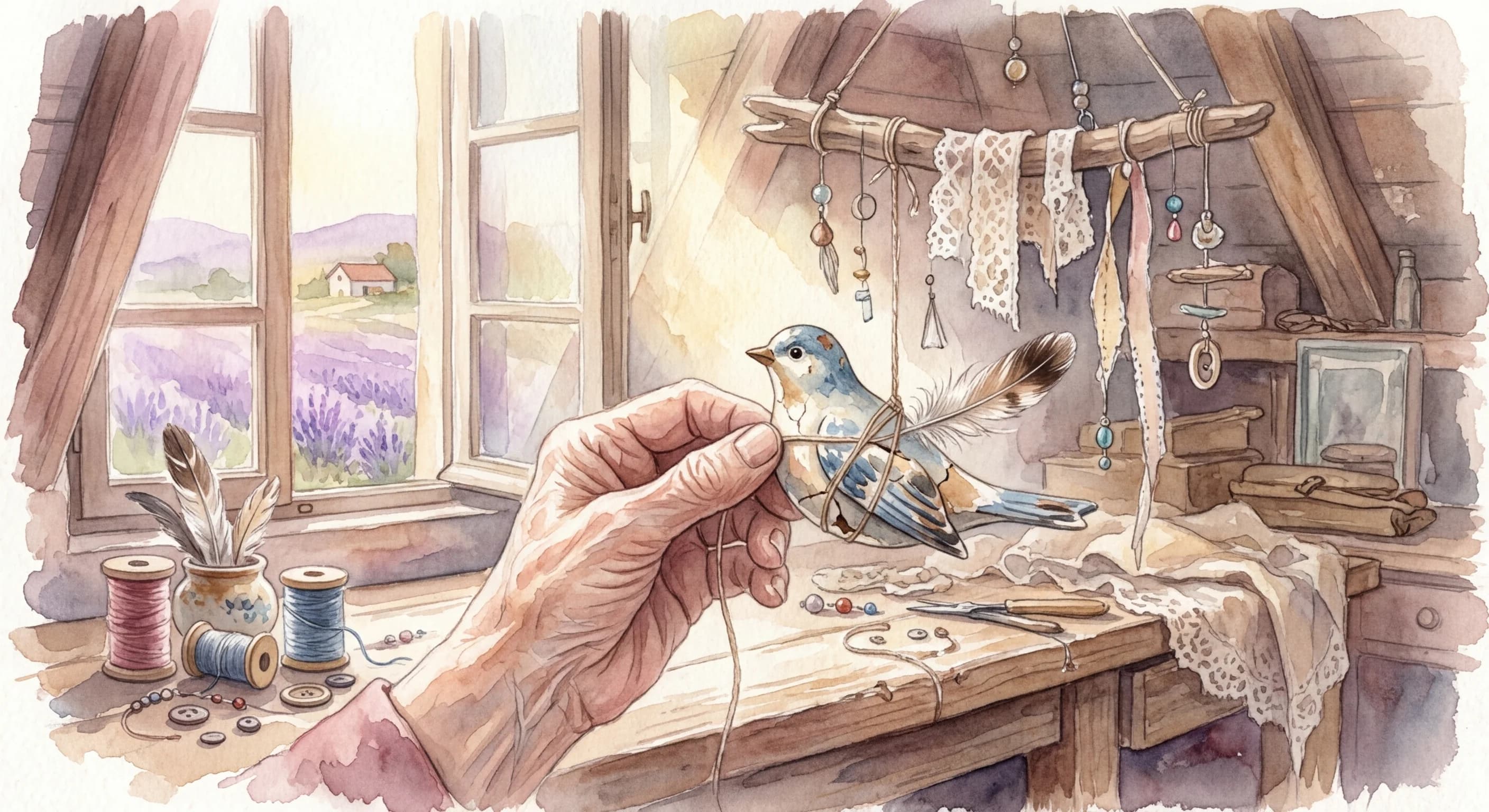
Bricoler
/bree-koh-leh/
Meaning
Bricoler encapsulates the quintessentially French art of improvisational creation and repair, where resourcefulness trumps perfection. It's the spirited act of mending, crafting, or assembling something functional or delightful using whatever materials are at hand, often in a wonderfully unconventional manner. This embodies a playful, hands-on ingenuity, transforming limitations into opportunities for creative problem-solving and finding immense satisfaction in the process of making things work, rather than striving for professional finish.
Literal Translation
To tinker, to fix, to do odd jobs
The Story Behind the Word
The concept of "bricoler" is deeply woven into the fabric of French everyday life, reflecting a cultural appreciation for ingenuity, self-reliance, and a certain charming imperfection. It stems from a historical context where resources might have been scarce, fostering a pragmatic approach to problem-solving and a distrust of overly specialized or disposable goods. It's not just about fixing; it's about a philosophical stance against wastefulness and an embrace of the creative process. This ethos reveals a society that values practical skills, adaptability, and the personal touch over mass-produced uniformity, seeing beauty in the handmade and the 'made-do'. It speaks to a national character that finds joy and pride in personal agency and the ability to navigate life's small challenges with wit and a toolkit, however rudimentary.
Experience It
Weekend Garden Project
Jean-Pierre decided to build a small compost bin for his garden. Instead of buying a kit, he spent the afternoon 'bricolant' with old wooden pallets, rusty nails, and some chicken wire he found in the shed, fashioning a perfectly functional, if rustic, solution.
Improvised Dinner Fix
Isabelle was hosting a dinner party when her old stand mixer suddenly stopped working. Rather than panic, she 'bricolé' a makeshift whisking device using a drill and a bent coat hanger, saving the dessert with a laugh and a flourish.
The Deeper Meaning
Bricoler reflects a profound anti-consumerist philosophy, celebrating resourcefulness and the intrinsic value of making and mending over buying new. It embodies a pragmatic humanism, asserting that agency and creativity are found in adapting to circumstances, transforming limitations into opportunities. This worldview cherishes the process, the hands-on engagement, and the satisfaction of personal accomplishment, fostering a sense of connection to objects and the environment through thoughtful intervention.
Did You Know?
The term "bricolage" (the act of bricoler) was famously used by anthropologist Claude Lévi-Strauss to describe the mythical thought process, where existing cultural elements are rearranged to create new meanings.
How It's Used
Used to describe the act of repairing, assembling, or crafting something using available materials, often in a non-professional or improvised manner. It can apply to anything from fixing a leaky faucet with tape to building furniture from scrap wood.