Algarabía
/AL-gah-rah-BEE-ah/
Meaning
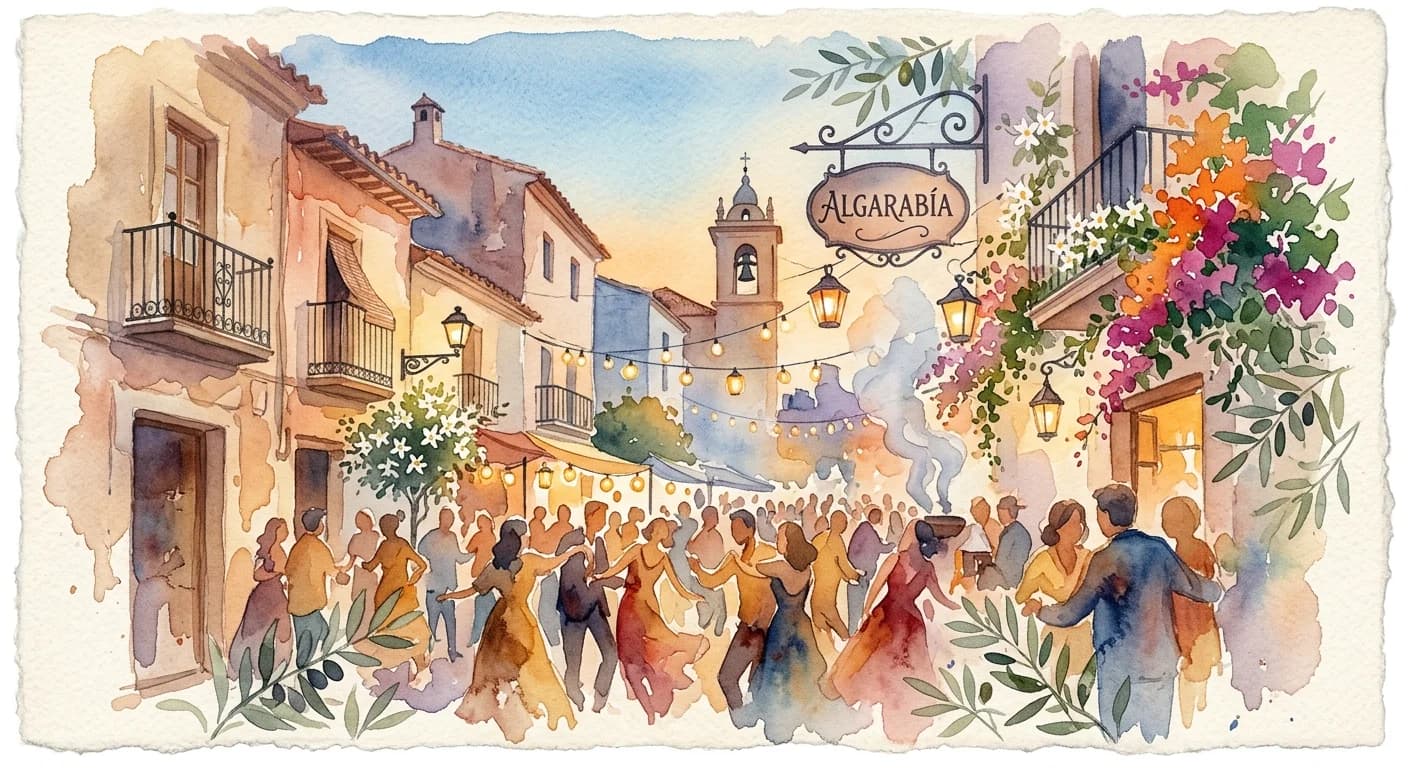
Algarabía captures the vibrant, often chaotic, symphony of human voices and sounds that merge into an unintelligible yet deeply atmospheric whole. It's the boisterous din of a bustling market, a lively fiesta, or a passionate family gathering where individual words dissolve into a rich tapestry of energy, laughter, and shared experience. Far from mere noise, it evokes a sense of joyful, unbridled life, a potent auditory expression of collective human vivacity where the feeling conveyed transcends specific meaning.
Literal Translation
From Arabic 'al-'arabiyyah' meaning 'the Arabic language', used pejoratively by medieval Christians to refer to Arabic speech, which they found unintelligible. Over time, it evolved to mean any unintelligible speech or a noisy hubbub.
The Story Behind the Word
The evolution of 'algarabía' from its Arabic root ('al-'arabiyyah') is a fascinating linguistic journey that mirrors Spain's complex cultural history. Initially a pejorative term used by medieval Christians to describe the incomprehensible Arabic language spoken by the Moors, it reflects a period of cultural friction and the 'othering' of a dominant, yet foreign, culture. Over centuries, as Arabic influence became intertwined with Spanish identity, the word shed its overtly negative connotation, transforming to describe any vibrant, confused clamor. This transformation highlights a Spanish cultural embrace of lively, expressive communication, where a certain level of joyful pandemonium is not just tolerated but celebrated as a sign of life, passion, and community. It speaks to a society that values shared, boisterous interaction over quiet contemplation, finding beauty in the collective sonic landscape of its social gatherings.
Experience It
Marketplace Morning
As the sun climbed, the central plaza filled with the algarabía of vendors hawking their wares, children laughing, and neighbors exchanging greetings. It was impossible to discern any single conversation, yet the overall sound was undeniably the heartbeat of the town waking up.
Family Fiesta
During the annual family reunion, the living room was a delightful algarabía of overlapping stories, clinking glasses, and bursts of laughter from every corner. No one could hear themselves think, but everyone felt completely at home in the joyful chaos.
The Deeper Meaning
Algarabía reveals a cultural comfort with, and even appreciation for, the beautiful messiness of human interaction. It suggests a worldview where perfect order and individual clarity are less vital than the vibrant, often overlapping, energy of collective life. This word encapsulates the idea that meaning isn't always found in precise articulation, but often in the shared, resonant atmosphere of community and connection, even if it's a glorious cacophony.
Did You Know?
The word 'algarabía' directly descends from the Arabic word for 'the Arabic language,' illustrating how linguistic encounters shaped the Spanish lexicon during centuries of Moorish presence.
How It's Used
Used to describe loud, confused, or unintelligible speech or sounds, often in a lively or chaotic setting.