Bayanihanihan
/bah-yah-NEE-hah-neen/
Meaning
Bayanihanihan embodies the enduring spirit of communal unity and collective effort, deeply woven into the fabric of Filipino culture. It describes not just an isolated act, but an ongoing, intensified commitment where neighbors and community members repeatedly come together, pooling their resources and labor to help someone in significant need. This often involves monumental tasks, such as literally relocating a house, or providing sustained support to a family facing prolonged hardship, showcasing a profound, almost ritualistic, dedication to mutual aid.
Literal Translation
From 'Bayanihan', meaning 'community spirit' or 'heroism', with a reduplication indicating a more intense or ongoing form of the action.
The Story Behind the Word
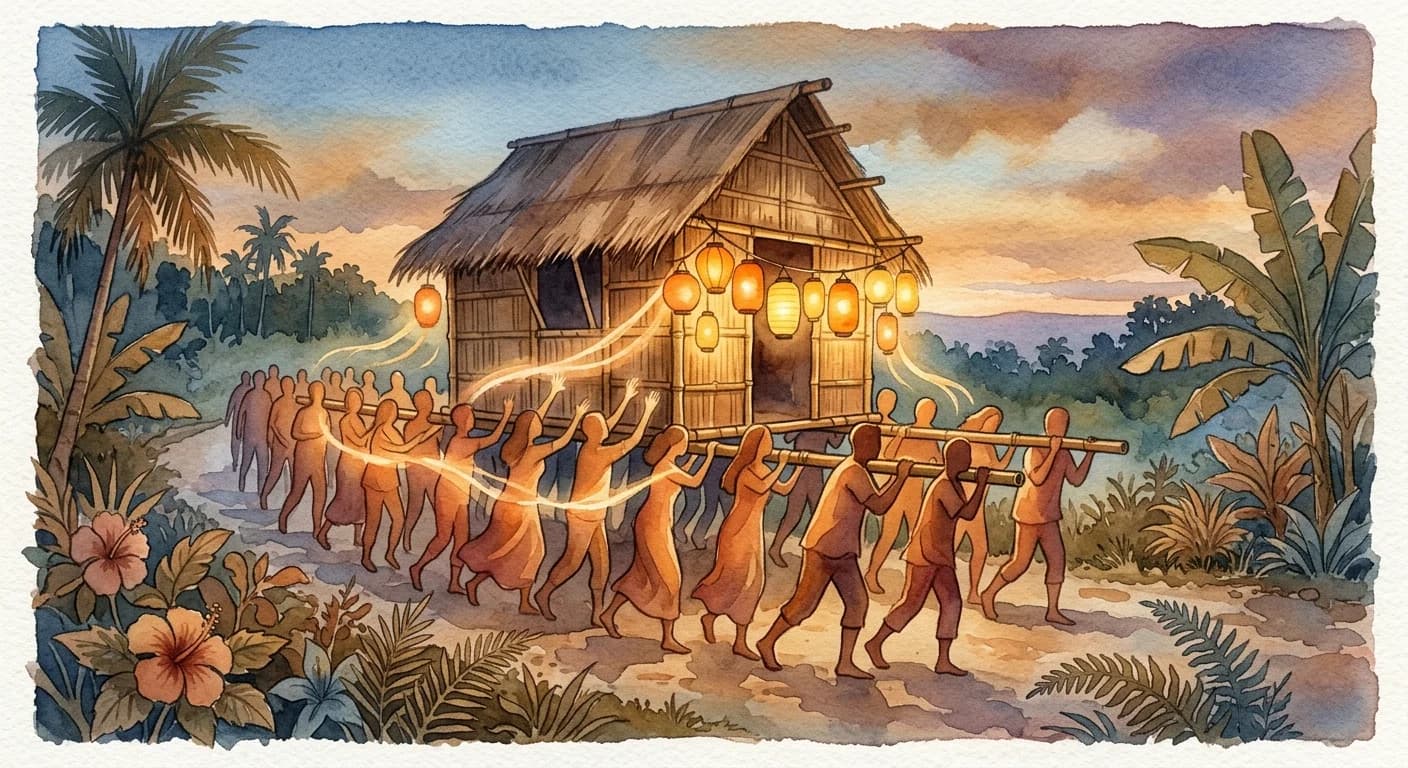
The concept of Bayanihanihan is deeply rooted in the pre-colonial communal living structures of the Philippines, where survival and prosperity were intrinsically linked to collective action. Historically, communities would literally lift and move a 'bahay kubo' (nipa hut) to a new location for a neighbor, a spectacle of concerted effort that cemented social bonds. This word exists because Filipino society, traditionally agrarian and village-based, necessitated interdependence. It reveals a worldview where individual well-being is inseparable from the community's welfare, emphasizing harmony, reciprocity (utang na loob), and a strong sense of belonging. It's a testament to the idea that no one should face overwhelming challenges alone, fostering resilience through shared burdens and triumphs.
Experience It
House Relocation Effort
When Aling Nena's house needed to be moved to higher ground before the monsoon season, dozens of men from the village arrived at dawn. They lifted the entire structure onto their shoulders, coordinating their steps with rhythmic shouts, a true Bayanihanihan in action.
Post-Typhoon Rebuilding
After the super typhoon devastated the coastal town, the Bayanihanihan spirit surged. Families whose homes were spared shared food and shelter, while others organized daily, sustained work parties to clear debris and rebuild damaged houses, ensuring everyone had a roof over their heads again.
The Deeper Meaning
Bayanihanihan reflects a profound communitarian philosophy where collective flourishing takes precedence over individualistic pursuits. It underscores the belief that human dignity is upheld through mutual support and shared responsibility, emphasizing 'pakikipagkapwa-tao' – the Filipino concept of shared humanity. This sustained communal effort isn't just about charity; it's an intrinsic cultural value that reinforces social cohesion and resilience in the face of adversity, proving that strength lies in unity.
Did You Know?
The iconic image of men carrying a nipa hut on their shoulders is often depicted in Filipino art and currency, symbolizing the Bayanihanihan spirit. This physical act of moving a house is one of the most vivid historical examples of the concept.
How It's Used
Used to describe acts of voluntary cooperation and mutual support within a community.