Barangay
/bah-RAHNG-guy/
Meaning
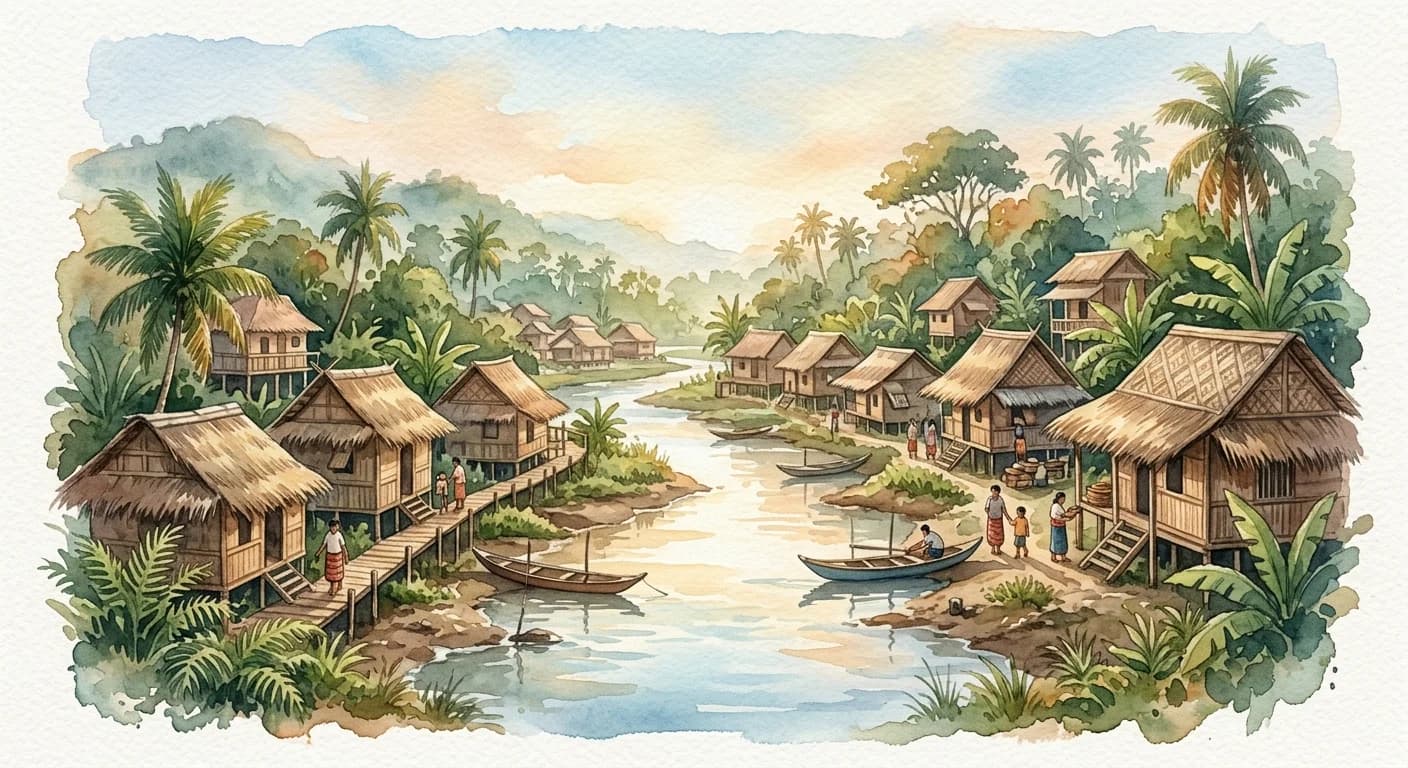
A 'barangay' is more than just the smallest administrative division in the Philippines; it is the vibrant heartbeat of Filipino community life. It represents a deeply rooted, pre-colonial social structure emphasizing collective identity, mutual support, and shared responsibility among neighbors. This concept signifies a close-knit village where people not only know but actively help each other, forming the bedrock of societal interaction and local governance.
Literal Translation
The term 'barangay' historically referred to a type of boat used by early Austronesian immigrants, and by extension, the community that traveled and settled together.
The Story Behind the Word
The word 'barangay' itself carries the weight of ancient Filipino migration and settlement. Historically, it referred to the 'balangay,' a large wooden boat used by Austronesian peoples to traverse oceans and establish new communities. Thus, the original 'barangay' was not just a vessel, but the entire group of families, kin, and their possessions that journeyed and settled together, forming the nucleus of a new society. This origin story imbues the modern 'barangay' with a profound sense of shared destiny and collective endeavor. It reveals a worldview where community is paramount, built on kinship and a shared journey. Before colonization, these independent barangays were self-governing units, often led by a 'datu,' and their survival depended on cooperation and mutual aid. This historical legacy continues to shape the Filipino psyche, emphasizing bayanihan (communal unity) and a strong sense of belonging, where one's identity is inextricably linked to their barangay.
Experience It
Barangay Fiesta Preparations
During fiesta season, the entire barangay mobilizes. Families contribute food, decorations are put up collectively, and neighbors volunteer their time to ensure a vibrant celebration, showcasing the strong community spirit and shared effort.
Community Aid During Crisis
After a typhoon, residents of a barangay immediately organize relief efforts. Neighbors share resources, help rebuild damaged homes, and offer comfort, demonstrating the inherent system of mutual support and collective resilience.
The Deeper Meaning
The 'barangay' embodies the Filipino philosophy of 'kapwa' – the shared inner self or interconnectedness with others. It suggests that one's well-being is intrinsically tied to the well-being of the community. This collectivist ethos fosters a sense of responsibility not just for oneself, but for the entire 'barangay,' emphasizing harmony, empathy, and collective advancement over individualistic pursuits.
Did You Know?
The word 'barangay' comes from 'balangay,' an ancient Austronesian boat. So, essentially, every Filipino local government unit today is named after a boat!
How It's Used
Used to refer to the smallest local government unit in the Philippines, encompassing a group of households. It's also used to describe the community itself and the social bonds within it.