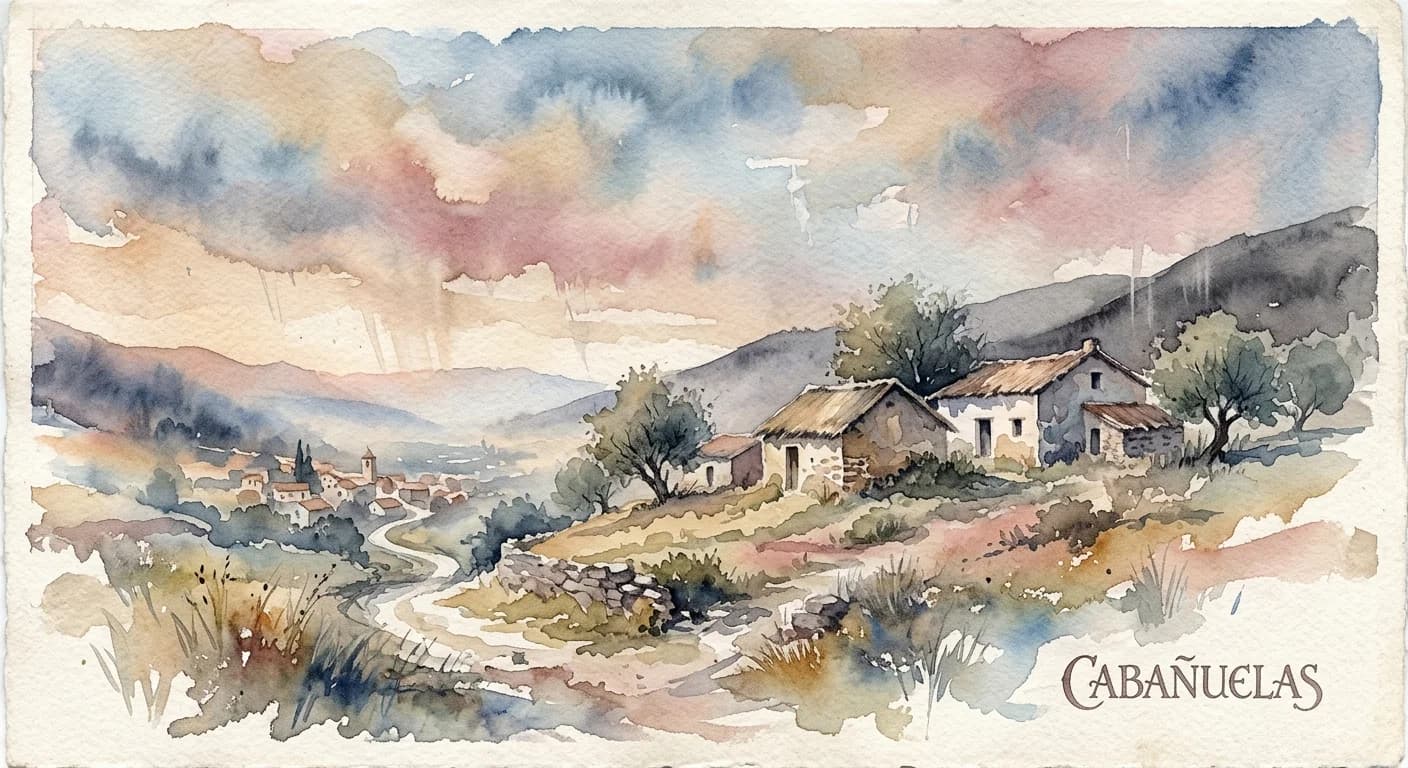
Cabañuelas
/kah-bah-NYEH-lahs/
Meaning
Cabañuelas encapsulates an ancient, intuitive art of weather prognostication deeply embedded in the rural Spanish psyche. It involves meticulously observing atmospheric conditions during specific days – typically the first twelve of August or January – with each day corresponding to a month in the coming year. This generational wisdom, passed down through whispers and lived experience, transforms fleeting weather patterns into a predictive tapestry, guiding agricultural decisions and shaping community expectations for the seasons ahead. It's a hopeful dialogue with nature, blending empirical folk science with a touch of ancestral magic.
Literal Translation
little huts
The Story Behind the Word
The existence of Cabañuelas speaks volumes about a society historically tethered to the land and its unpredictable rhythms. Before modern meteorology, farmers and villagers relied on keen observation and inherited knowledge to navigate the agricultural year, where a good harvest meant survival. This practice is not merely about predicting rain or sun; it's a testament to humanity's enduring quest for control and understanding in the face of natural uncertainty. It fosters a deep connection to the environment, encouraging a holistic view where every gust of wind or drop of dew holds meaning. Cabañuelas reveals a culture that values ancestral wisdom, community interdependence, and a patient, cyclical understanding of time, where the past informs the future through the subtle language of nature.
Experience It
Grandfather's Forecast
Old Man Pedro sat on his porch every August morning, eyes scanning the sky. "Day five, that's May," he'd muse, noting the crispness of the air and the direction of the breeze. His Cabañuelas observations were the talk of the village, influencing planting schedules and the timing of the grape harvest.
Planning the Harvest
María consulted her grandmother's Cabañuelas notes from January. "Looks like a dry September," she informed her brother, deciding to accelerate the olive picking. This ancient forecast, handwritten in a worn notebook, was as crucial to their planning as any satellite image.
The Deeper Meaning
Cabañuelas embodies a philosophy of deep attunement to the natural world, suggesting that humans are not separate from, but intimately woven into, the fabric of ecological cycles. It highlights an ancestral wisdom that prioritizes observation, pattern recognition, and a patient, cyclical understanding of time over linear, immediate gratification. This practice reveals a worldview where the environment is a living, communicative entity, and humans are its interpreters, seeking harmony and predictability through careful listening.
Did You Know?
The word 'Cabañuelas' (little huts) is thought to derive from the temporary shelters built by shepherds during transhumance, where they would observe weather patterns, or from the Jewish Feast of Tabernacles (Sukkot), which also involves observing weather.
How It's Used
Used to describe the folk practice of predicting the weather for the coming year by observing the weather of the first twelve days of August (or January), with each day corresponding to a month.