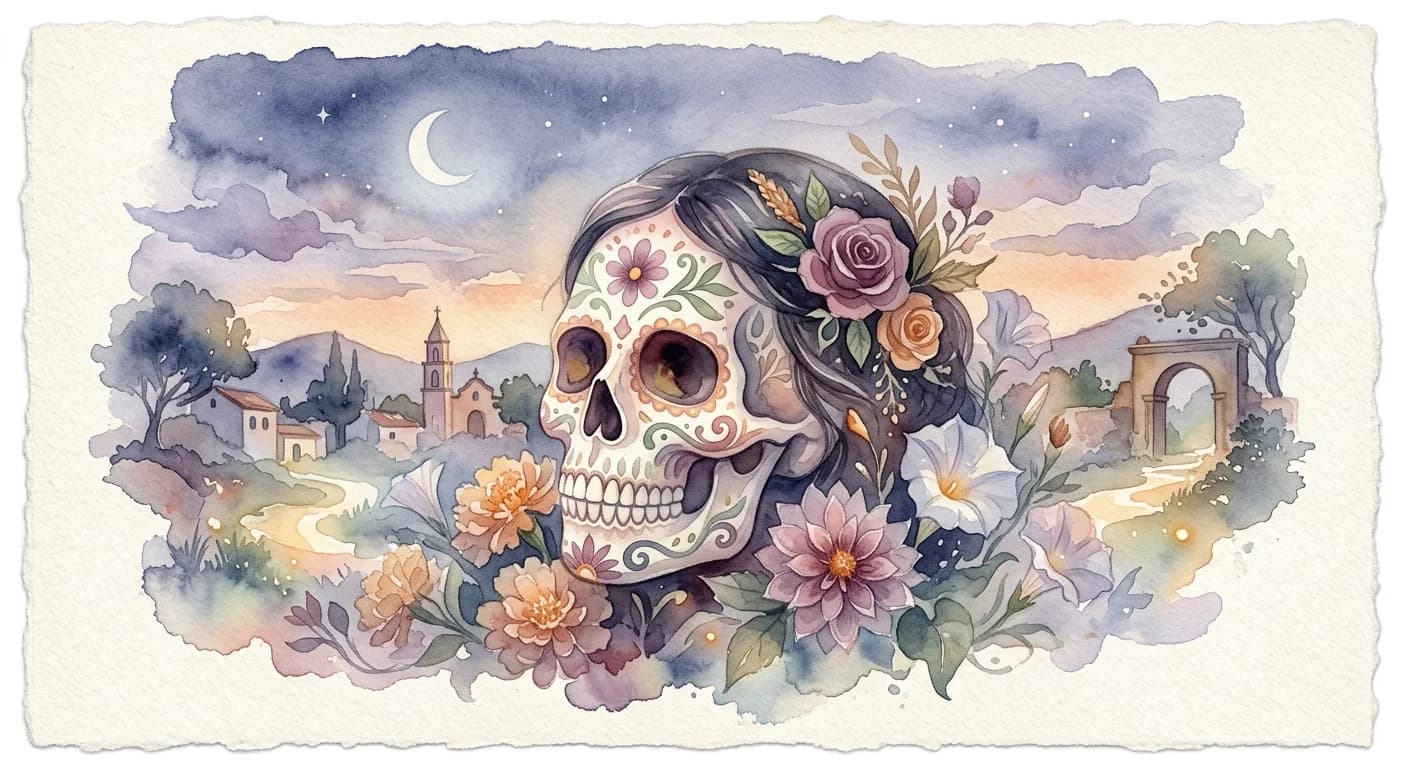
Calavera
/kah-lah-VEH-rah/
Meaning
While literally meaning 'skull,' 'calavera' in Mexico is a vibrant symbol that transcends morbidity, embodying the festive spirit of Día de Muertos. It represents death not as an end, but as a colorful, playful, and accepted part of life's continuous cycle. These artistic renditions, whether in sugar, clay, or poetic verse, celebrate the departed and remind the living to embrace mortality with joy and remembrance, integrating ancestors into the present.
Literal Translation
skull
The Story Behind the Word
The concept of 'calavera' is deeply rooted in Mexico's pre-Hispanic past, where indigenous cultures like the Aztecs viewed death as a transformative journey, not an end. This worldview merged with Catholic traditions brought by the Spanish, culminating in Día de Muertos. 'Calaveras' exist because Mexican culture embraces a unique duality: a profound respect for life intertwined with a familiar, even humorous, relationship with death. They reveal a people who see death not as something to fear or deny, but as an integral, celebrated stage of existence, allowing for a healthy, ongoing connection with ancestors and a vibrant acknowledgment of the human condition.
Experience It
Sugar Skull Dedication
On the family altar, little Sofía carefully placed a vibrant sugar 'calavera' with her grandmother's name etched on its forehead. Its bright colors and sweet scent were a loving invitation for Nana to visit, a joyful reminder that she was still part of their celebrations.
Poetic Jest
During a Día de Muertos gathering, Uncle Miguel recited a 'calavera literaria' playfully mocking his own quirks, imagining Death itself coming to take him away in a humorous, rhyming verse. Everyone laughed, appreciating the lighthearted acknowledgment of their shared mortality.
The Deeper Meaning
The 'calavera' embodies a profound philosophical acceptance of impermanence and the cyclical nature of existence. It suggests that life and death are not opposing forces but two sides of the same coin, encouraging a worldview where grief is balanced with celebration, and remembrance becomes an active, joyful engagement with those who have passed on, diminishing the fear of death itself.
Did You Know?
The iconic 'Catrina,' a elegantly dressed female skeleton, is one of the most famous calaveras, originally created by cartoonist José Guadalupe Posada to satirize Mexican high society's embrace of European styles.
How It's Used
The term 'calavera' is used to refer to skulls, skeletal imagery, and specifically the decorative sugar skulls or literary/poetic verses (calaveras literarias) that are part of Mexican traditions, especially during Día de Muertos.