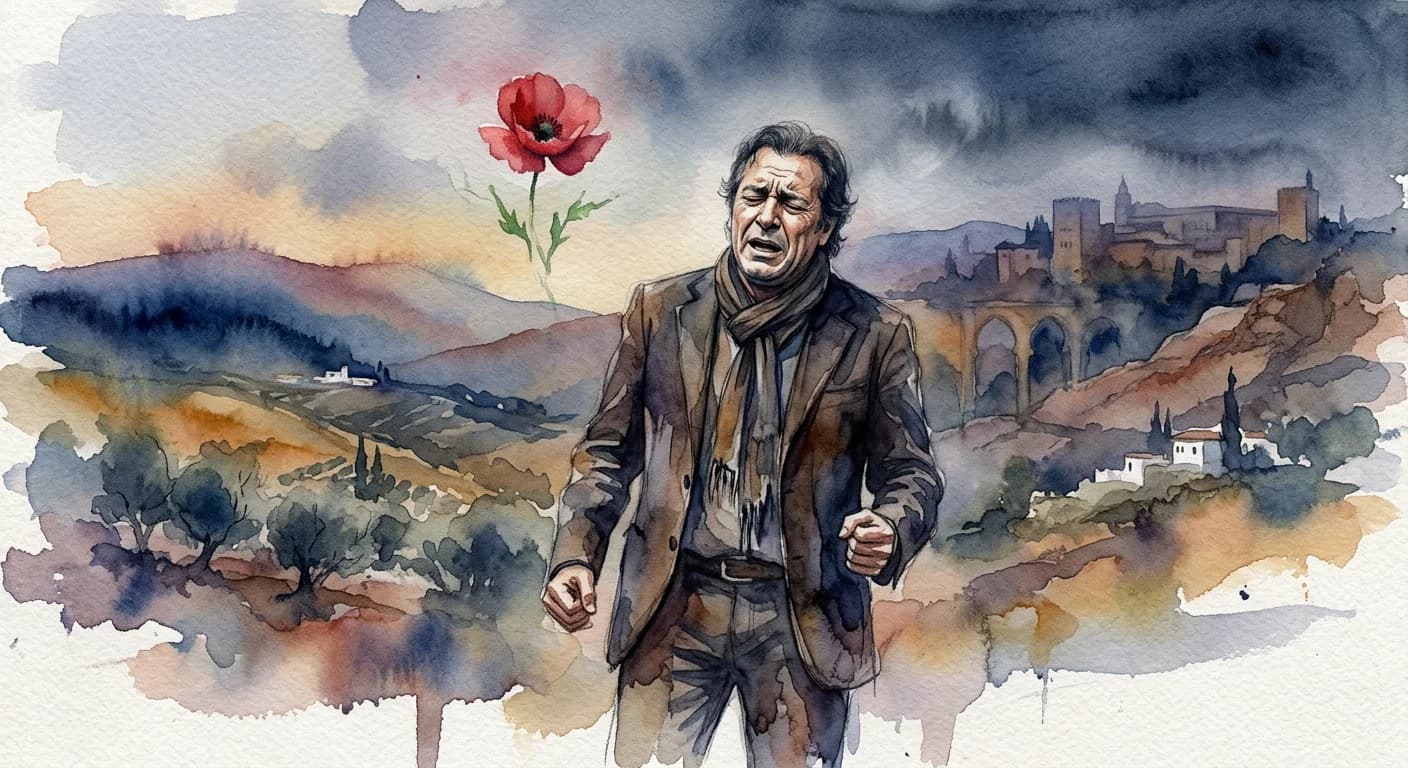
Cantaor
/kahn-tah-OHR/
Meaning
A 'cantaor' is the very soul of flamenco, an artist whose voice transcends mere singing to become a conduit for raw, distilled emotion. This revered title is bestowed upon male singers who master not only the intricate vocal techniques but also embody the profound 'duende' – a mystical, untamed spirit – that ignites the heart of flamenco. Through their guttural cries, melismatic adornments, and deep understanding of 'cante jondo' (deep song), they narrate tales of suffering, joy, and resilience, forging an unbreakable, cathartic connection with their audience.
Literal Translation
Singer (male)
The Story Behind the Word
The word 'cantaor' is steeped in the history of Andalusia, particularly among the Gitano (Romani) communities who were instrumental in shaping flamenco. Its existence reflects a culture that values profound emotional expression, storytelling through suffering, and a deep respect for tradition passed down through generations. The cantaor is not just an entertainer but a keeper of memory, a voice for the marginalized, and a spiritual guide, channeling the 'pena' (pain) and 'alegría' (joy) of a people. Their art is a vital part of cultural identity, a communal act of catharsis and affirmation that transcends mere performance, reflecting a worldview where life's deepest truths are found in raw, unfiltered emotion.
Experience It
Duende Unleashed
During a late-night 'juerga' in Seville, the cantaor Juanito El Faraón closed his eyes, his voice tearing through the smoky air. Each 'quejío' – a soulful cry – vibrated with decades of history, drawing gasps from the mesmerized audience as he poured his very soul into the 'seguiriyas'.
Passing the Torch
Old Man Paco, a revered cantaor, sat with his grandson, teaching him the subtle nuances of a 'soleá' melody. 'It's not just about hitting the notes, child,' he rasped, 'It's about feeling the centuries of tears and laughter in your throat. You must live the song.'
What Gets Lost in Translation
English speakers often mistake a cantaor for simply a 'flamenco singer,' missing the profound cultural weight and artistic mastery implied by the term. It's not just about vocal ability; it's about embodying the entire flamenco tradition, its history, its pain, and its spirit. The term implies a level of authenticity and emotional depth that a mere 'singer' does not convey, often leading to an underappreciation of their role.
Across Cultures
While not direct equivalents, other cultures have terms for performers who embody deep cultural and emotional expression. For instance, the 'griot' in West African cultures serves as a storyteller and musician, preserving history and tradition through song. Similarly, a 'bluesman' in American tradition often channels collective suffering and resilience through their music, sharing a raw, unvarnished emotional honesty akin to the cantaor's 'cante jondo.'
The Deeper Meaning
The cantaor embodies a philosophy that views art not as an aesthetic pursuit, but as a visceral, almost spiritual experience. It suggests that profound truth and catharsis are accessed not through intellectual understanding, but through the raw, unfiltered expression of human emotion – particularly pain and resilience. This worldview elevates suffering and passion to sacred components of existence, celebrated and understood through shared artistic vulnerability.
Did You Know?
Many cantaores traditionally avoided formal musical training, believing that the raw, untamed 'voz rota' (broken voice) was more authentic and essential for conveying true flamenco emotion.
How It's Used
Used to refer specifically to a male singer of flamenco music, particularly one who is highly skilled and respected.