Chusma
/CHOOS-mah/
Meaning
Chusma transcends mere gossip; it's the insidious hum of idle talk that dissects the private lives of others, often tinged with judgment, envy, or malice. It describes the specific social pathology of spreading rumors or engaging in speculative conversations about acquaintances, particularly within close-knit communities, where a lack of respect for personal boundaries fuels a collective indulgence in others' misfortunes or perceived flaws. This word paints a vivid picture of a social dynamic where curiosity morphs into a derogatory dissection of character, defining both the act and the people who partake in it.
Literal Translation
Gossip, rabble, riffraff
The Story Behind the Word
The existence of 'chusma' in Spanish culture, particularly in Spain, speaks volumes about the value placed on reputation and the inherent social fabric of tightly knit communities. Historically, in villages and neighborhoods, one's social standing was heavily influenced by public perception, making 'chusma' a powerful, albeit negative, social control mechanism. It highlights a cultural tension between communal intimacy and individual privacy. The word itself, sometimes linked to nautical terms referring to the lowest deck crew or 'rabble,' suggests a historical disdain for those who engage in such low-brow, unproductive talk. It reveals a society where social observation is pervasive, and where the collective 'we' often feels entitled to comment on the individual 'I.' The fear of being the subject of 'chusma' can subtly influence behavior, reinforcing social norms and expectations.
Experience It
Neighborhood Watch
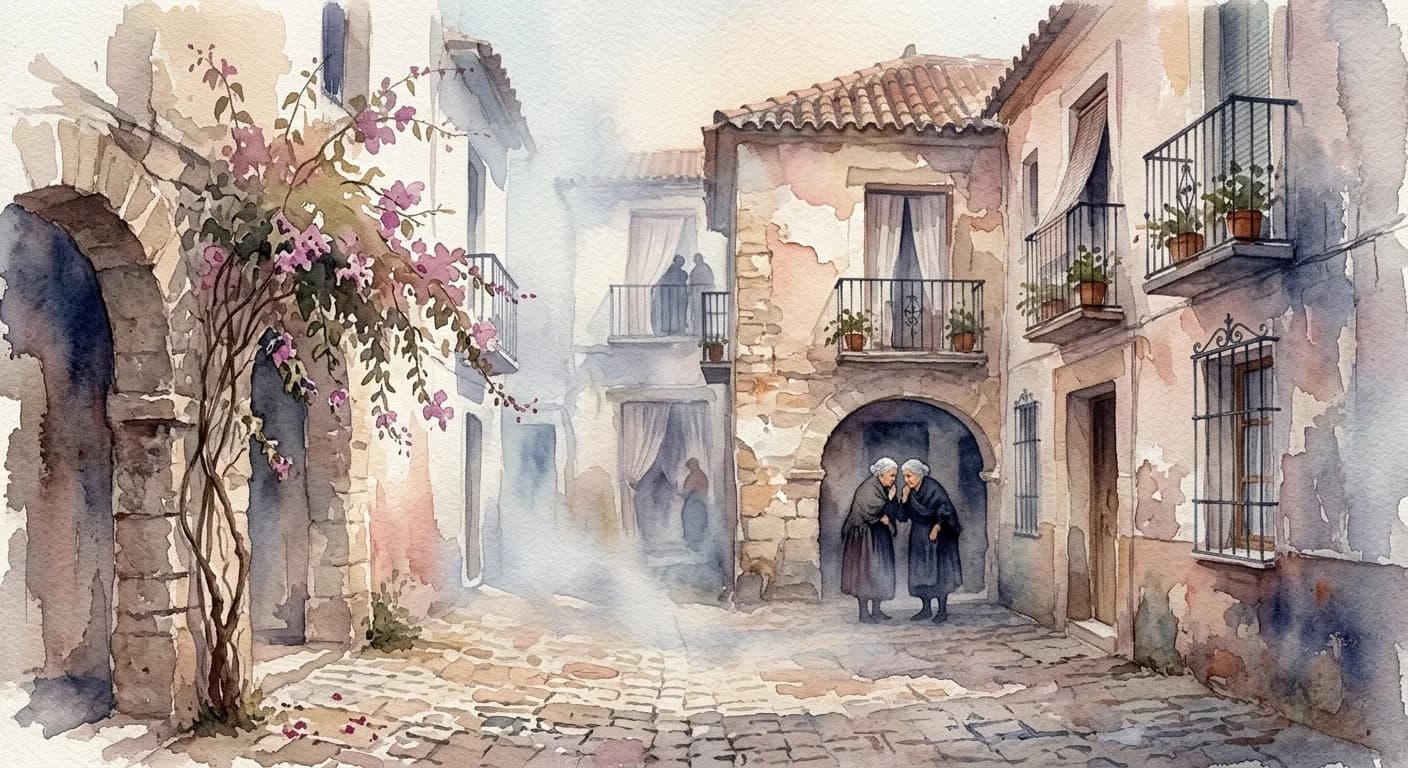
Doña Carmen peered through her blinds, watching the new neighbors unload their belongings. Later, at the market, she whispered to Ana, 'Did you see the car they drive? And those loud children! There's already so much chusma about them starting.'
Office Rumors
The moment the manager left, the office buzzed. 'Did you hear about Javier's promotion?' Elena asked, 'They say it's because he's friends with the director, not because of his work.' The chusma quickly spread, undermining Javier's achievement.
The Deeper Meaning
This word uncovers a profound cultural understanding of reputation as a communal commodity, rather than solely an individual's possession. It underscores the fragility of privacy in highly interconnected societies and the intrinsic human tendency to define oneself, in part, by observing and judging others. 'Chusma' reveals a subtle philosophy where community solidarity can, at times, inadvertently foster collective judgment and social pressure, blurring the lines between shared life and invasive scrutiny.
Did You Know?
While 'chusma' primarily refers to gossip, its etymological roots can be traced to terms describing the 'rabble' or 'riffraff,' highlighting a historical disdain for both idle talk and those who engage in it.
How It's Used
Used to describe people who engage in or spread gossip, or the gossip itself. It can be used in a derogatory way to label someone as a busybody or a nosy person, or to refer to the collective act of gossiping.