Cofradía
/koh-fra-DEE-ah/
Meaning
A "cofradía" is far more than a simple club; it's a profound social and spiritual fraternity, often centuries old, deeply interwoven with the fabric of Spanish community life. Members, or "cofrades," are bound by shared devotion to a patron saint, a religious mystery, or a charitable mission, fostering an unwavering sense of belonging and collective responsibility. Through participation in elaborate rituals, processions, and mutual aid, the cofradía cultivates a dynamic identity where individual well-being is intrinsically linked to the spiritual and social health of the collective, creating a cornerstone of local heritage and solidarity.
Literal Translation
Brotherhood/Guild
The Story Behind the Word
The cofradía's roots stretch back to medieval guilds and religious orders, evolving to become central to Spanish Catholic identity. They emerged as vital social safety nets, providing charity, healthcare, and burial services when state provisions were scarce. Beyond their practical functions, cofradías became custodians of local traditions, artistic expression (especially through religious imagery), and community memory. Their enduring presence, particularly visible during Holy Week, reveals a culture where faith is communal, public, and profoundly embodied, and where shared ritual reinforces social cohesion and historical continuity. They reflect a worldview where individual identity is often inseparable from collective affiliation and spiritual devotion.
Experience It
Holy Week Procession
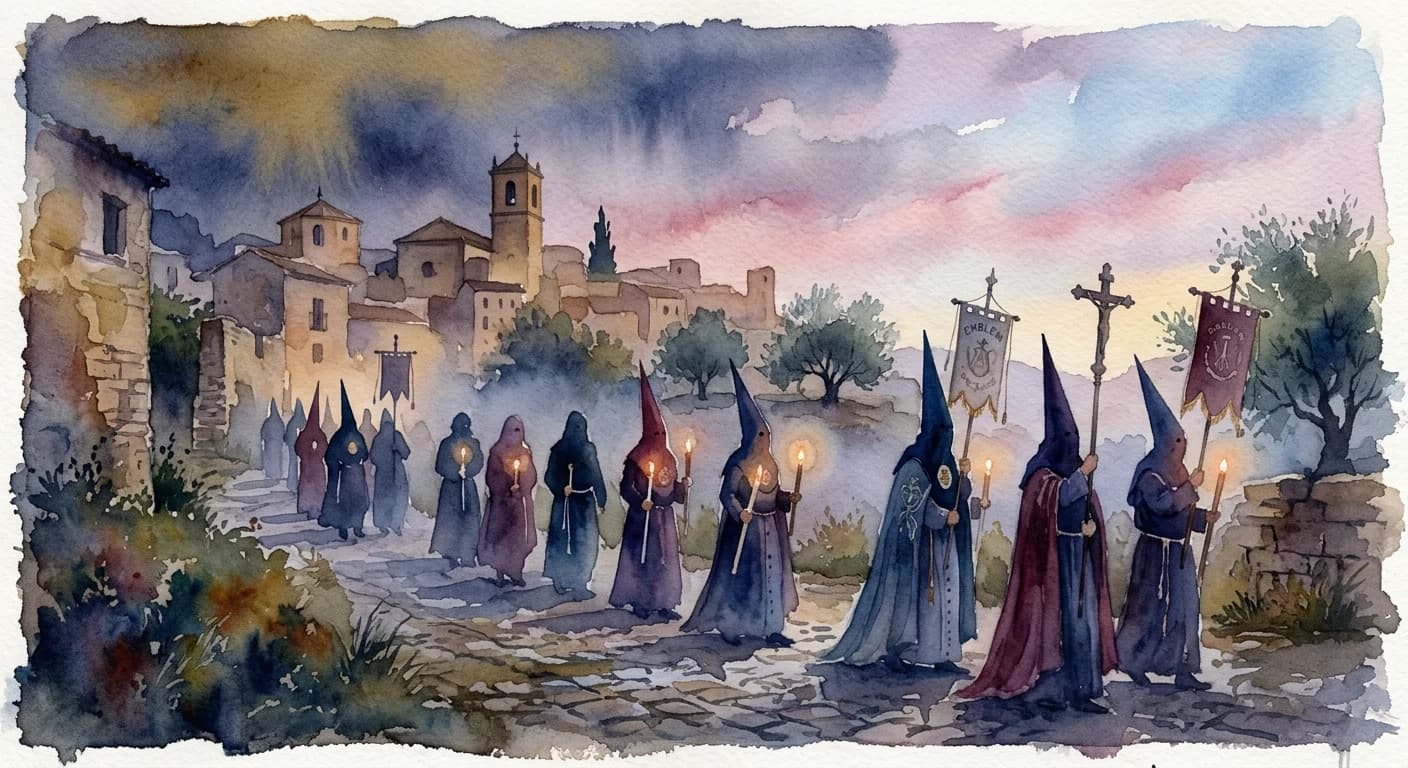
During Semana Santa, the Cofradía del Cristo de la Buena Muerte prepares for its solemn procession. Cofrades, clad in their distinctive robes and hoods, gather with a sense of sacred duty, knowing their ancestors have performed this same ritual for generations. They meticulously arrange the pasos, the elaborate floats bearing religious sculptures, and then, with slow, rhythmic steps, carry the heavy burdens through the ancient streets, their collective effort a public testament to their faith and shared heritage.
Community Aid
When a long-standing member of the Cofradía de Nuestra Señora de la Caridad falls ill and faces financial hardship, the other cofrades immediately rally. They organize meal rotas, contribute funds for medical expenses, and offer emotional support, demonstrating the profound network of mutual aid and solidarity that extends beyond religious duties into every aspect of their lives. The cofradía acts as a surrogate family, ensuring no member faces adversity alone.
The Deeper Meaning
The cofradía embodies a philosophy of 'communitas' over individualism, where shared identity, collective responsibility, and intergenerational continuity are paramount. It reveals a worldview where spiritual devotion is not merely personal but a public, performative act that reinforces social bonds and preserves cultural memory, suggesting that true belonging stems from shared sacrifice and collective purpose, transcending temporal concerns through faith and tradition.
Did You Know?
Some cofradías, particularly in Andalusia, have 'hermanos mayores' (senior brothers) who are elected for life, often coming from families with generations of involvement, showcasing deep lineage and commitment.
How It's Used
Used to describe religious brotherhoods, guilds, or associations, particularly those involved in charitable work or religious festivals.