Glander
/glahn-DER/
Meaning
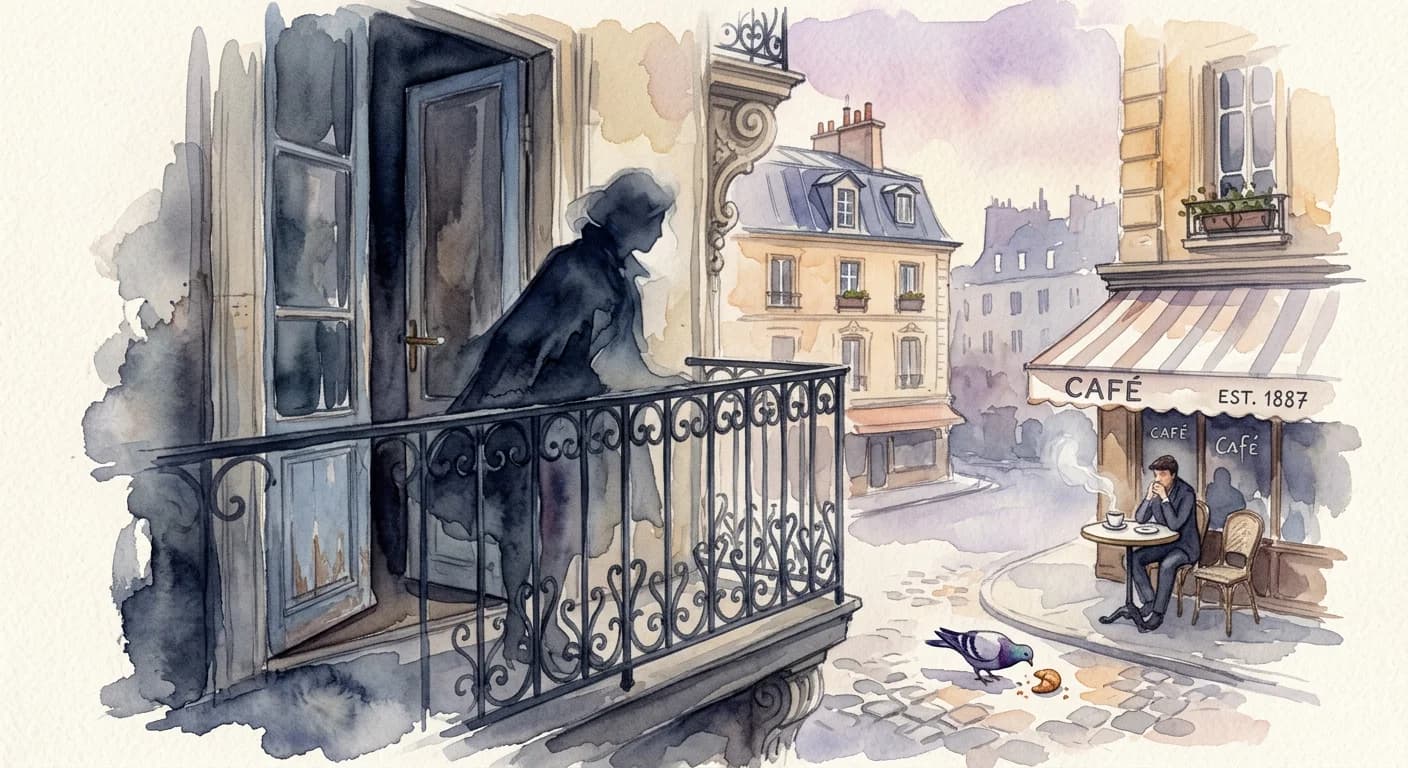
Glander encapsulates the art of subtle, often prolonged observation, far beyond a simple glance. It describes the act of discreetly studying someone or something, frequently with an undercurrent of amusement, critical assessment, or even a touch of playful malice. This clandestine watching implies an unvoiced commentary, a silent judgment, or an internal narrative unfolding as one takes in the scene, without ever directly engaging or drawing attention to the act of looking. It's a nuanced social maneuver, a silent appraisal that speaks volumes about the observer's inner world.
Literal Translation
To glance slyly (verb derivation)
The Story Behind the Word
The existence of 'glander' in French culture speaks to a society that values keen observation, social subtlety, and perhaps a certain delight in the unspoken. French social interactions often involve a sophisticated dance of perception and interpretation, where much is communicated through non-verbal cues and implied meanings. 'Glander' reflects a cultural appreciation for the art of reading between the lines, of discerning character or situation not through direct questioning, but through careful, unobtrusive visual assessment. This term highlights a cultural propensity for internal commentary and a nuanced understanding of social dynamics, where silent judgment or amusement is a common, if often concealed, part of daily life. It suggests a society that is acutely aware of appearances and the impressions people make, and where the act of observing others is a recognized, albeit discreet, pastime.
Experience It
Café Terrace Glander
Sitting at a Parisian café, Marie sips her coffee, her eyes subtly tracking the flamboyant hat of a woman across the street. She's not staring, but rather 'glandant,' amused by the sheer audacity of the headwear, her lips curving into a faint, unnoticeable smile.
Office Meeting Appraisal
During a particularly dull meeting, Jean-Luc pretends to be engrossed in his notes, but he's actually 'glandant' his new colleague's nervous habit of tapping their pen. He finds it both endearing and slightly irritating, forming a silent opinion without uttering a word.
The Deeper Meaning
The concept of 'glander' reveals a worldview where perception is an active, interpretative act, not merely a passive reception of stimuli. It underscores a philosophical stance that acknowledges the constant, often unspoken, evaluation occurring in social interactions. It suggests that much of human experience is filtered through an internal lens of judgment, amusement, or quiet critique, highlighting the rich inner life that accompanies even the most mundane observations. This word points to the idea that we are all, to some extent, both observers and observed, perpetually engaged in a silent dialogue of appraisal.
Did You Know?
While 'glander' specifically means to observe slyly, its root 'gland' can also be found in French slang meaning 'acorn,' or colloquially, someone who is a bit simple-minded, adding a layer of subtle, almost mocking, undertone to the act of observation.
How It's Used
Used to describe the act of secretly or slyly looking at someone or something, often with a sense of amusement or judgment.