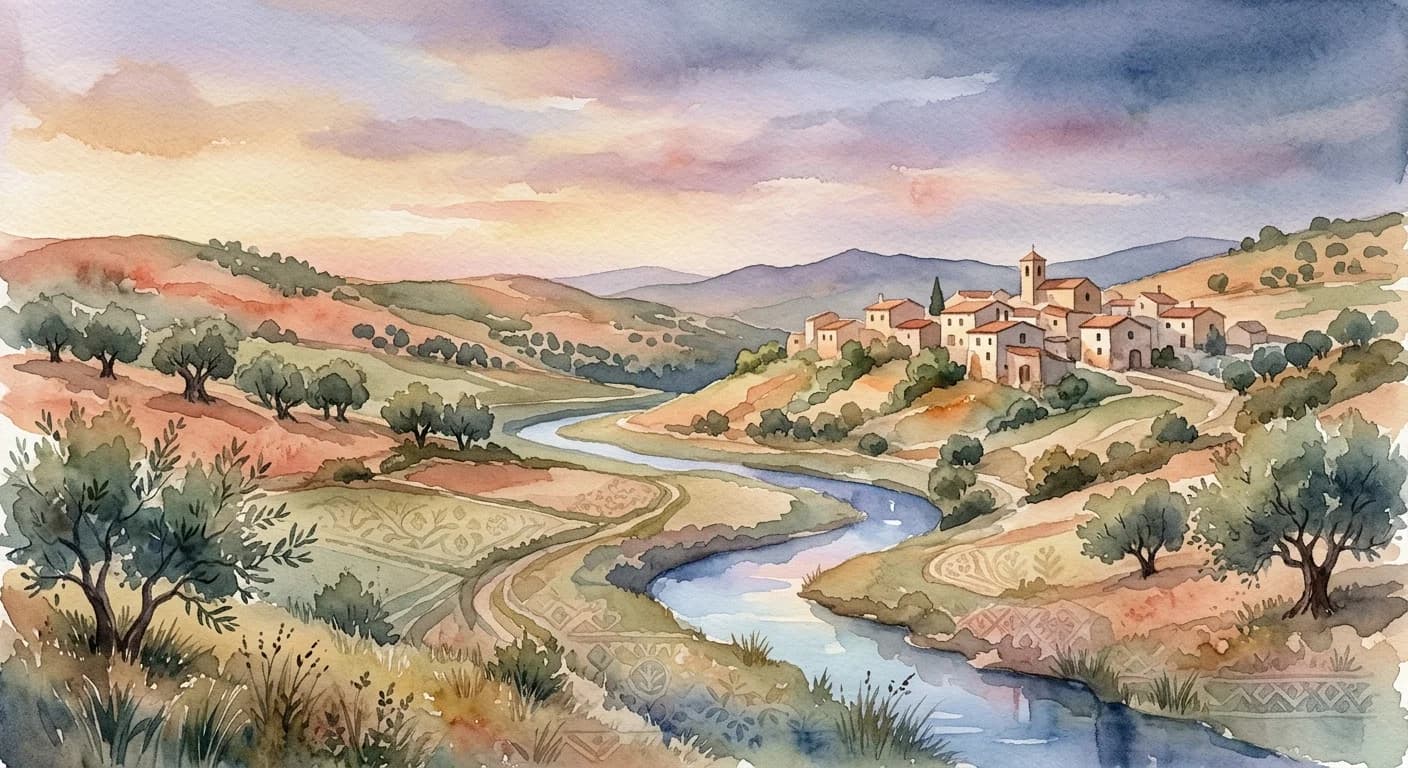
Comarca
/koh-MAHR-kah/
Meaning
A "comarca" transcends a mere administrative boundary; it embodies a living tapestry woven from shared history, distinctive geography, and deeply ingrained cultural practices. It represents a micro-nation within a nation, where inhabitants feel a profound sense of belonging forged by common traditions, unique dialects, and landscapes that have shaped their collective identity for centuries. This term encapsulates the intimate bond between people, their ancestral land, and the enduring heritage that sets their corner of the world apart.
Literal Translation
district, region, county
The Story Behind the Word
The concept of a "comarca" in Spain is deeply rooted in the country's long and often fragmented history, reflecting centuries of local governance, distinct regional identities, and varied geographical landscapes. Before the modern nation-state, local communities often developed independently, fostering unique customs, legal traditions (fueros), and even linguistic variations within their immediate surroundings. This historical legacy means that a comarca isn't just an arbitrary line on a map; it's an organic entity, often predating current provincial divisions, born from natural boundaries like mountain ranges or river basins, and sustained by shared agricultural practices, folklore, and a collective memory. It reveals a Spanish worldview that values the particular over the generalized, where identity is often fiercely local and tied to a specific patch of land and its ancestral stories.
Experience It
Ancestral Homecoming
During a family reunion, Elena proudly declares, "We're from the Comarca de La Vera, known for its paprika and cherry blossoms." She explains how her grandparents' traditions, from cooking methods to local festivals, are inextricably linked to the unique climate and agricultural heritage of that specific region, fostering a strong sense of shared identity among its inhabitants.
Local Identity
A journalist is interviewing farmers in rural Galicia. One farmer insists, "Our cheese isn't just Galician; it's from the Comarca de Arzúa-Ulloa. The specific pastures and traditional methods passed down through generations within this comarca give it its distinctive flavor and protected designation of origin." He emphasizes that this local distinction is crucial to their product's authenticity and cultural value.
The Deeper Meaning
The "comarca" reveals a profound Spanish philosophical inclination towards the particularity of place and the enduring power of local identity over broader national or administrative classifications. It underscores a worldview where human essence is not merely individual but deeply communal, shaped by the land, history, and shared customs of a specific, cherished locale, emphasizing rootedness and belonging.
Did You Know?
Many comarcas in Spain have their own distinct culinary traditions, local festivals, and even variations in dialect, making them true micro-cultural regions.
How It's Used
Used to denote a specific administrative, historical, or geographical region within a country, often highlighting its unique characteristics.