Cueca
/KWEH-kah/
Meaning
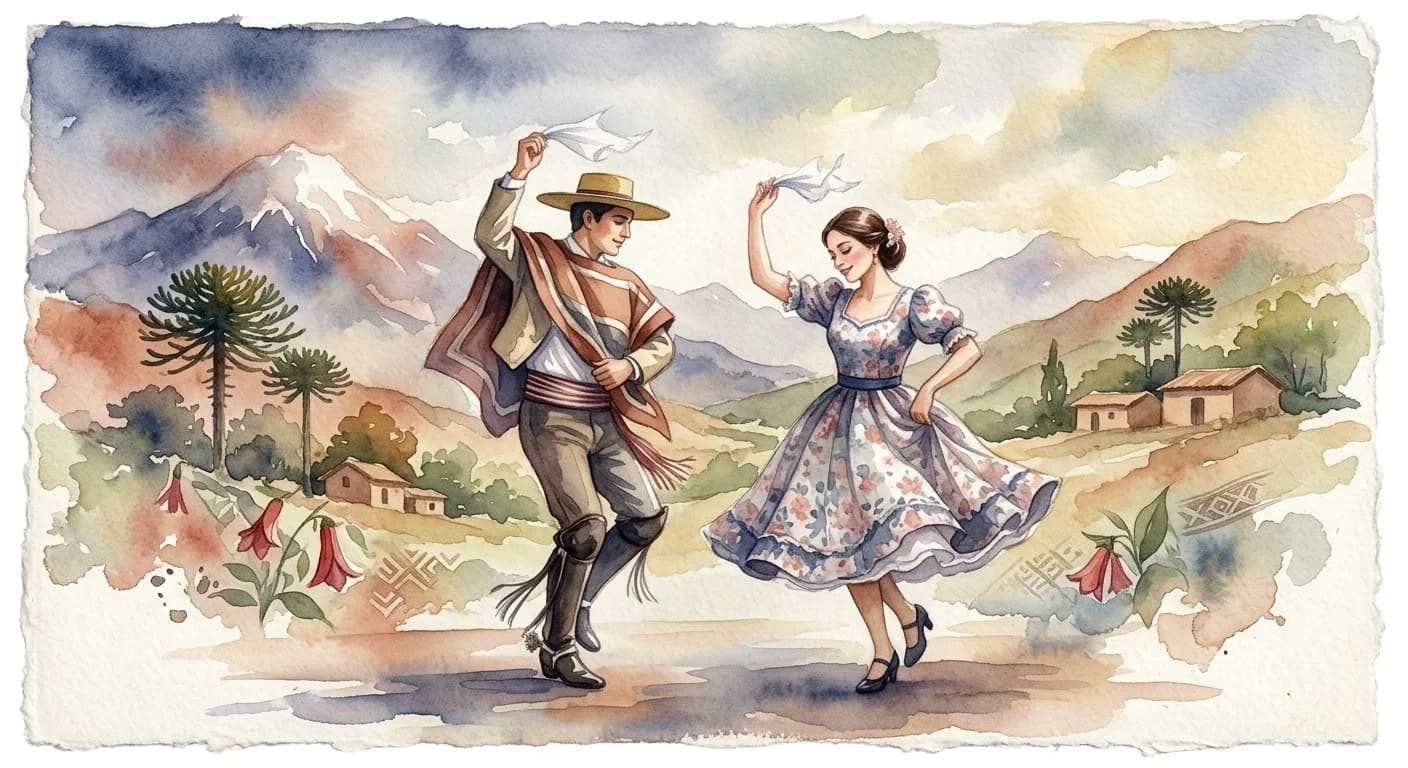
Cueca is far more than just Chile's national dance; it's a vibrant, theatrical courtship ritual that encapsulates the Chilean spirit. Performed by a couple, it's a flirtatious interplay of movements, handkerchief flourishes, and a rhythm that can be both lively and tinged with melancholy. This dance embodies a playful chase, reflecting a deep-seated national pride, romanticism, and an enduring connection to the country's rich historical and cultural tapestry, transcending a mere physical performance.
Literal Translation
The etymology is debated, but it is believed to derive from the Quechua word 'away q'allu,' meaning 'weaver's dance,' or from the Spanish word 'escueca,' which means 'dance.'
The Story Behind the Word
The Cueca's origins are debated, possibly stemming from indigenous Quechua traditions or Spanish folk dances, but its evolution in Chile solidified its status as a national emblem. Emerging in the 19th century, it became intrinsically linked with Chile's independence and identity, especially after being declared the national dance in 1979. It mirrors the Chilean character: resilient, passionate, and subtly romantic, with a touch of underlying saudade. The dance often tells a story of love, rejection, and persistence, echoing the nation's own historical struggles and triumphs. It's a living tradition that connects generations, a communal expression of joy and shared heritage that reveals a people who find profound meaning in ritual, connection, and the expressive power of movement.
Experience It
Fiestas Patrias Celebration
At a 'ramada' during Fiestas Patrias, the band strikes up a familiar tune. Juan, donning his ‘huaso’ attire, gracefully approaches María, offering his arm for the first 'vuelta'. Their handkerchiefs become extensions of their playful courtship, weaving a story of pursuit and evasion under the festive lights, each step a testament to their shared heritage.
Spontaneous Town Square
A small town square on a Sunday afternoon buzzes with activity. Suddenly, a guitar and 'pandero' begin. An older couple, without a word, rises and begins to dance the Cueca, their movements fluid and practiced. The younger generation watches, some tapping their feet, others learning the steps by observation, ensuring the tradition lives on.
The Deeper Meaning
The Cueca embodies a philosophy of life as a dynamic, flirtatious dance between individuals and with fate itself. It suggests that even in pursuit and potential rejection, there is beauty, dignity, and a profound connection. It highlights the importance of ritual and tradition as anchors for identity, allowing a community to express its collective spirit, resilience, and romantic essence through shared movement and music.
Did You Know?
During the Pinochet dictatorship, the 'Cueca Sola' emerged, performed by women whose loved ones had disappeared. They danced alone, holding photos, transforming the joyful courtship into a poignant protest and plea for justice.
How It's Used
The term 'cueca' refers to the national dance of Chile and is also the name for similar folk dances found in neighboring countries like Argentina, Bolivia, Peru, and Uruguay. It is performed at festivals, national holidays, and social gatherings, serving as a vibrant expression of cultural heritage.