Guinguette
/GAN-get/
Meaning
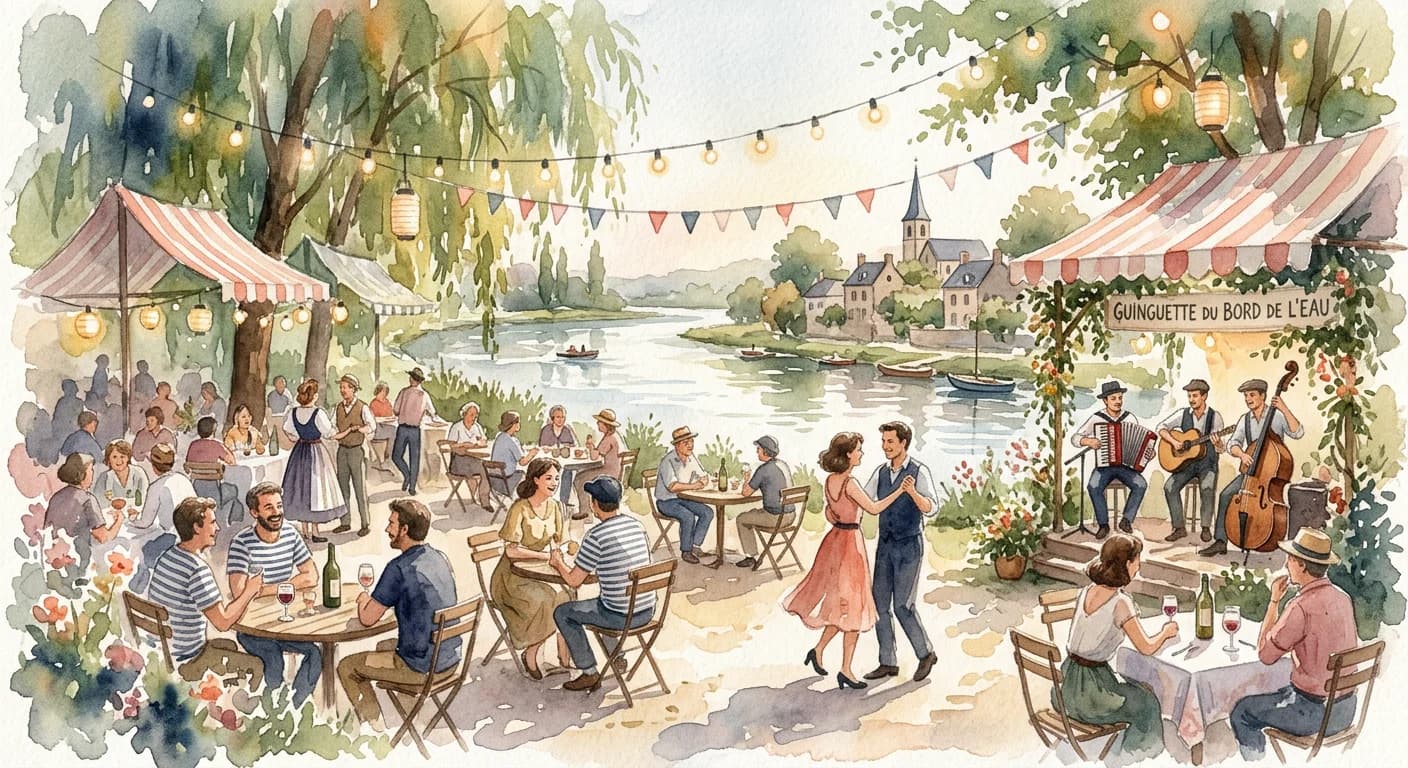
A "guinguette" is far more than a mere eatery; it embodies a cherished French tradition of informal, open-air riverside or canal-side establishments, particularly vibrant in the 19th and early 20th centuries. These charming spots offered simple, affordable food and drink, often accompanied by live music, dancing, and games. It evokes a specific, nostalgic atmosphere of carefree leisure, communal joy, and an escape from urban pressures, capturing the essence of a quintessential French summer day or evening.
Literal Translation
The origin of the word is debated, but it may derive from a type of light, sweet wine from Champagne or from the name of a fabric (gingham).
The Story Behind the Word
The guinguette emerged from the Parisian working class's need for accessible leisure outside the city walls, particularly during the industrial era when work was arduous and urban life often cramped. Beyond the city's tax boundaries, wine was cheaper, fostering a culture of joyous, uninhibited celebration. It reflects a deep-seated French appreciation for "joie de vivre" – the joy of living – emphasizing simple pleasures, good company, music, and the beauty of nature. The guinguette became a democratic space where social classes mingled, albeit informally, and where the pursuit of happiness was paramount. It's a testament to the French genius for creating convivial spaces that blend gastronomy, entertainment, and a profound connection to the landscape, offering a temporary reprieve from routine and a celebration of collective freedom.
Experience It
Sunday Dance by the Marne
Under the dappled light of plane trees, families gathered at a guinguette along the Marne. Accordion music swelled, drawing couples onto the makeshift dance floor, their laughter mingling with the clinking of glasses as children chased each other near the water's edge, embodying a perfect Sunday afternoon escape.
Evening Escape from Paris
After a long week in the city, friends would pile into a boat to reach a popular guinguette on the Seine. They'd share plates of fried fish and a carafe of chilled wine, the evening air filled with lively chatter and the promise of a moonlit waltz, forgetting the week's toil.
The Deeper Meaning
The guinguette reveals a profound French philosophy of leisure as a vital component of a well-lived life, not merely an absence of work, but an active pursuit of joy and social connection. It underscores the value of accessible, unpretentious pleasures and the importance of shared experiences in fostering community and well-being, suggesting that true happiness often lies in simplicity and conviviality, away from urban pretense.
Did You Know?
Many famous Impressionist painters, including Renoir, Sisley, and Monet, immortalized guinguettes in their works, capturing their vibrant atmosphere and the leisure activities of the French bourgeoisie and working classes.
How It's Used
Used to refer to a type of open-air café or bistro, especially one that offers dancing and entertainment, historically found on the outskirts of Paris and other French towns.