U.
HomeRegionsLanguagesEmotionsCollections
Find Your Word

“The limits of my language mean the limits of my world.”

— Ludwig Wittgenstein, Philosopher

Untranslatable

A curated collection of the world's most beautiful expressions—words that remind us language is humanity's greatest invention.

  • Home
  • Collections
  • Regions
  • Countries
  • Emotions
  • Tags
  • Contexts
  • Finder
  • Europe
  • Asia
  • Americas
  • Africa
  • Middle East
  • About
  • Contact
  • Privacy Policy
  • Terms of Service

2026 © Untranslatable. All rights reserved.

    /
    /
    1. Home
    2. /
    3. Europe
    4. /
    5. Fare la scarpetta
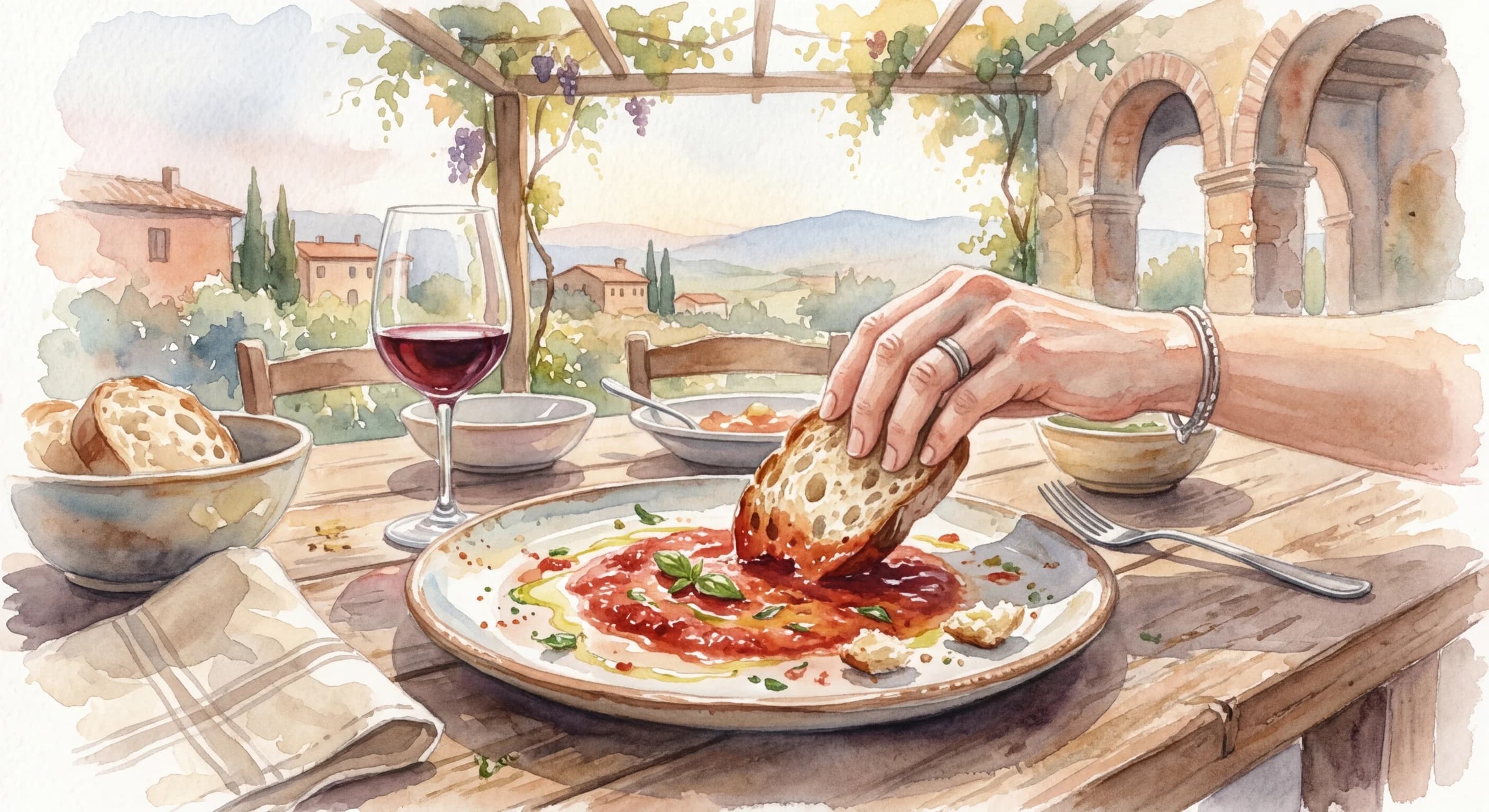
    Artistic representation of Fare la scarpetta
    Italian•
    🇮🇹Italy

    Fare la scarpetta

    /FAH-reh lah skahr-PET-tah/

    Meaning

    Fare la scarpetta is the quintessential Italian ritual of using a small piece of bread to meticulously collect and savor the last remaining drops of a delicious sauce from one's plate. More than just a practical act to avoid waste, it's a heartfelt gesture of appreciation for the chef and the meal, a moment of pure, unadulterated gastronomic pleasure. It transforms the end of a dish into a final, intimate communion with the food, celebrating the richness of flavor and the joy of shared sustenance.

    Literal Translation

    to make the little shoe

    The Story Behind the Word

    The act of 'fare la scarpetta' is deeply rooted in Italian domestic life and the country's culinary philosophy, which prizes both flavor and frugality. Historically, food was never wasted, and every last bit of a precious sauce, often the result of hours of simmering and careful preparation, was considered too valuable to leave behind. This practice reflects a profound respect for ingredients, the labor involved in cooking, and the communal experience of eating. It embodies the Italian concept of 'gusto' – taste and enjoyment – extending the pleasure of a meal to its very last drop. It also speaks to a culture where food is central to identity, family, and tradition, making the 'scarpetta' a small, yet significant, act of cultural affirmation.

    Experience It

    Family Sunday Lunch

    Nonno finishes his pasta al ragù, a contented sigh escaping him. Without a word, he tears a small piece of crusty bread, carefully sweeping it across his plate, ensuring not a single drop of the rich, slow-cooked sauce is left behind, a satisfied smile on his face.

    First Date Impression

    At a trattoria, Maria watches her date finish his osso buco. He hesitates, then, emboldened by the deliciousness, tears off a piece of focaccia and discreetly mops up the saffron risotto sauce. Maria smiles, thinking, 'He truly appreciates good food!'

    The Deeper Meaning

    This seemingly simple act reveals a philosophy of conscious consumption and deep appreciation. It's about extracting maximum joy and value from every experience, embodying a 'carpe diem' approach to food. It suggests that true pleasure lies not just in the main event, but in savoring even the smallest, often overlooked, details, fostering gratitude and mindfulness at the table.

    Did You Know?

    The 'little shoe' refers to the way the bread, when used to scoop up sauce, resembles a small slipper or shoe, often dragged across the plate's 'floor'.

    How It's Used

    Used during meals, specifically when there are sauces or gravies left on the plate after the main food has been consumed.

    Emotions
    belonging,comfort,gratitude,joy
    Contexts
    celebration,dining,family
    🇮🇹Italy

    by Sofia Rossi·Written Mar 10, 2026·Updated Apr 3, 2026

    Related Words

    Explore more
    HyggeDanish

    Hygge is more than mere coziness; it's a holistic embrace of comfort, warmth, and belonging that nourishes the soul. It describes the intentional creation of an intimate atmosphere where simple pleasures, genuine connection, and mindful presence converge, fostering a profound sense of contentment and well-being. It's about finding joy and peace in the small, everyday moments, often shared with loved ones.

    SaudadePortuguese

    Saudade encapsulates a profound, melancholic longing for something or someone cherished that is absent, often with the bittersweet knowledge that it may never return. It's a deep emotional state tinged with nostalgia, evoking a sense of loss for past experiences, places, or people, yet also holding a tender appreciation for the beauty of what once was. This yearning is not merely sadness, but a complex tapestry of desire, memory, and a poignant acceptance of absence, holding the beloved in a warm, persistent embrace within the heart.

    GezelligDutch

    Gezellig encapsulates a profound sense of warmth, belonging, and convivial comfort, extending beyond mere coziness to embrace the social and emotional atmosphere. It's the feeling of being truly at ease, surrounded by good company, laughter, and a shared sense of contentment. This untranslatable term describes not just a physical space, but a holistic experience where time seems to slow down, fostering genuine connection and a deep sense of well-being.

    Dolce far nienteItalian

    Dolce far niente captures the profound joy and effortless pleasure derived from simply existing without obligation or purpose. It's the art of savoring moments of pure, unadulterated idleness – lying in the sun, watching the clouds drift, or enjoying a leisurely coffee – not as a break from work, but as a valuable state in itself. This 'sweetness of doing nothing' is a conscious embrace of stillness and contentment, allowing the soul to breathe and the senses to fully engage with the present.

    Featured in 1 collection

    🙏Expressions of Gratitude