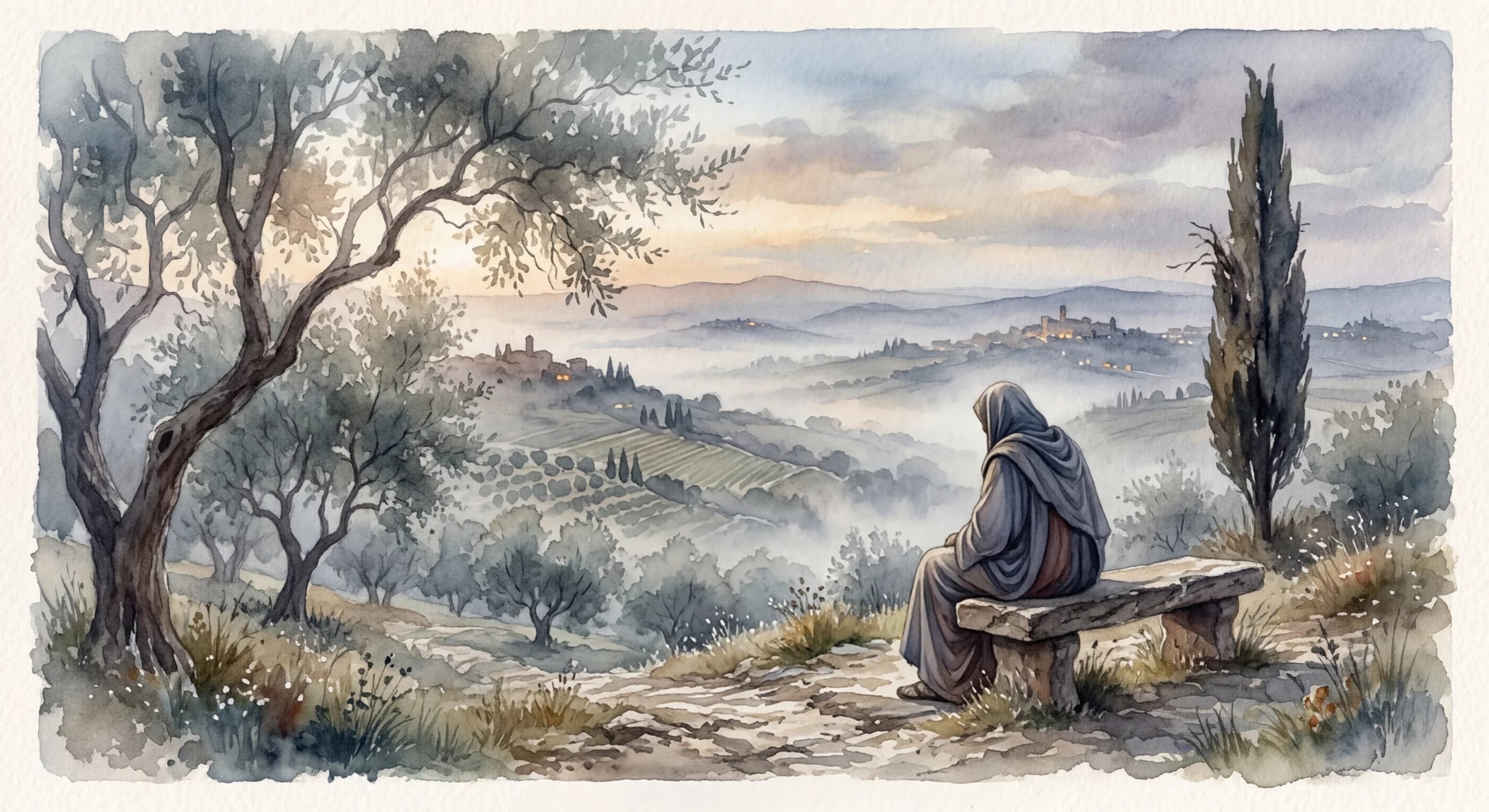
Accidia
/AT-CHEE-dee-ah/
Meaning
Accidia, or acedia, describes a profound spiritual and emotional torpor, a creeping apathy that saps the will to engage with life, faith, or one's duties. It's far more insidious than mere laziness, manifesting as a deep-seated indifference that can lead to despair, a feeling of existential emptiness, and a resistance to joy or divine grace. This state captures a complex blend of weariness, boredom, and spiritual desolation that leaves one listless and uninspired.
Literal Translation
Sloth, laziness (from Greek 'akedia')
The Story Behind the Word
The concept of accidia has deep roots in early Christian monasticism, particularly among the Desert Fathers, who recognized it as a demonic temptation that attacked monks during the "noonday demon" hours, leading to a desire to abandon their spiritual discipline. It evolved into one of the seven deadly sins, signifying not just idleness, but a spiritual sloth that neglected one's relationship with God and community. In Italian culture, influenced by centuries of Catholic theology, 'accidia' reflects a recognition of the soul's vulnerability to a profound disengagement. It highlights a cultural emphasis on active participation, both spiritually and socially, and views this passive disinterest as a serious impediment to a flourishing life, revealing a world where spiritual vitality is paramount.
Experience It
The Artist's Stagnation
A once-passionate painter finds himself staring blankly at a canvas for weeks, his brushes dry. He feels no urge to create, no joy in his art, just an overwhelming sense of 'accidia' that has stolen his inspiration and desire to engage with his craft.
Monk's Spiritual Dryness
A monk, usually devout, begins to dread morning prayers and finds his meditations empty. He feels an internal resistance to spiritual effort, a deep 'accidia' that leaves him cold and indifferent to the very practices that once sustained him, questioning the meaning of his vows.
The Deeper Meaning
Accidia reveals a worldview that values active engagement, purpose, and spiritual vitality. Its existence as a recognized state underscores the belief that human flourishing requires more than just physical activity; it demands a conscious and willing participation in life, meaning, and connection. It highlights the profound dangers of apathy not just for the individual, but for their spiritual and communal well-being, positioning it as a significant philosophical challenge to human potential.
Did You Know?
Historically, 'accidia' was sometimes called the 'noonday demon' because it was believed to be most potent during the quiet, hot hours of midday when monks were most susceptible to boredom and spiritual lassitude.
How It's Used
Accidia is used to describe a state of spiritual or emotional sloth, often in religious or philosophical contexts, referring to a deep apathy and lack of spiritual engagement.