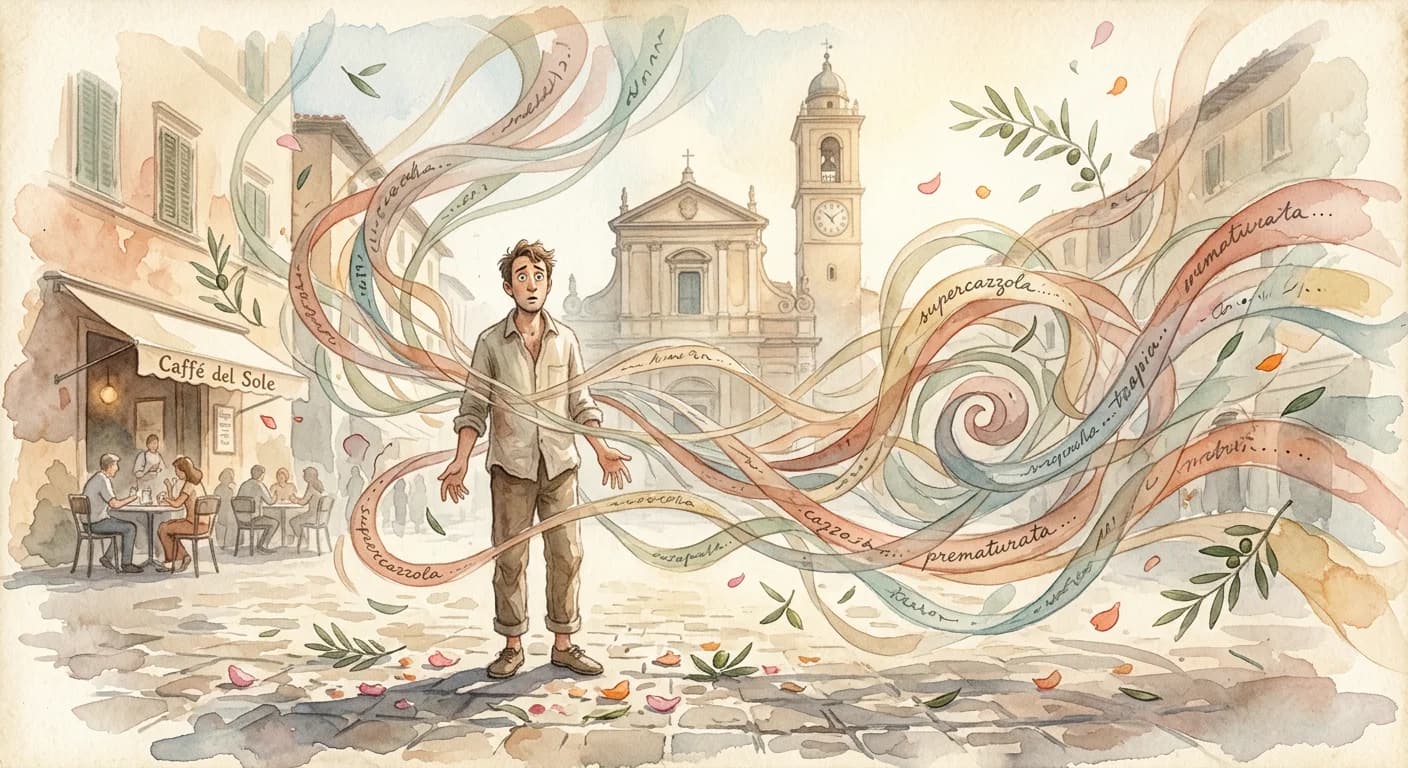
Supercazzola
/soo-per-CAT-soh-lah/
Meaning
A "supercazzola" is a masterful performance of verbal obfuscation, where an individual delivers a long, convoluted, and seemingly authoritative speech devoid of actual substance. It's a calculated act of linguistic acrobatics, designed to bewilder, impress, or simply evade direct answers, often characterized by elaborate phrasing and pseudo-intellectual jargon. This verbal smokescreen allows the speaker to project an image of profound knowledge while skillfully saying absolutely nothing meaningful, leaving the listener either amused, frustrated, or utterly confused.
Literal Translation
Super-penis-slap (this is a vulgar interpretation and not the true meaning)
The Story Behind the Word
The term "supercazzola" originates from the iconic 1975 Italian film "Amici Miei" (My Friends), a beloved comedy that perfectly captures a certain cynical and playful Italian spirit. In the movie, a group of middle-aged friends uses the "supercazzola" as a running gag, a form of elaborate, nonsensical banter to prank unsuspecting victims, authority figures, or each other. Its existence in Italian culture speaks to a societal appreciation for verbal wit, even when used for mischievous or satirical purposes. It also reflects a long-standing Italian tradition of rhetorical flair and the art of persuasion, where the 'how' something is said can sometimes be as important, if not more so, than the 'what.' This word encapsulates a uniquely Italian blend of irreverence, theatricality, and a healthy skepticism towards pompous authority, highlighting a cultural inclination to deflate pretension through clever linguistic play.
Experience It
Political Press Conference
During a heated press conference, a minister was asked about a recent policy failure. Instead of a direct answer, he launched into a five-minute monologue filled with bureaucratic jargon, economic theories, and historical precedents, concluding without ever addressing the actual question. The journalists exchanged knowing glances; it was a classic supercazzola.
University Lecture
A visiting professor, known for his eccentric style, was attempting to explain a complex philosophical concept. His explanation spiraled into a labyrinth of metaphors, obscure literary references, and self-referential asides, leaving the students more perplexed than enlightened. One student whispered, 'That was a pure supercazzola, he just talked in circles!'
The Deeper Meaning
The "supercazzola" subtly critiques the performative aspect of intelligence and authority. It reveals a cultural awareness that knowledge can be faked through rhetoric, and that genuine understanding often gets lost in verbose displays. It implicitly values clarity and substance over superficial eloquence, acting as a satirical mirror to those who prioritize appearance over truth.
Did You Know?
The term "supercazzola" was coined by the legendary Italian actor Philippe Noiret in the film "Amici Miei" and instantly entered the Italian lexicon, becoming synonymous with the art of verbal bluster.
How It's Used
Used informally to describe a situation where someone is talking at length without saying anything of substance, often to deceive or impress. It's commonly employed in political or social contexts where rhetoric can overshadow facts.