Ludus
/LOO-doos/
Meaning
In ancient Roman and Greek culture, 'Ludus' was a vibrant, multifaceted concept encompassing a space for playful learning and rigorous physical or artistic training. It was distinct from the formal 'schola', capturing a spirit of structured yet joyful engagement where skill development and delight were intrinsically linked. From the clang of gladiatorial schools to the rhythm of children's games and dance halls, Ludus signified a vital arena for holistic growth through enjoyable practice and the cultivation of martial, athletic, or artistic prowess, fostering both discipline and pleasure.
Literal Translation
Play, game, school, practice
The Story Behind the Word
The existence of 'Ludus' reveals a profound understanding in ancient Rome and Greece that play and rigorous practice were not antithetical, but rather complementary and essential for development. This word reflects a society that valued practical skill, physical excellence, and communal recreation alongside intellectual pursuits. The Romans, in particular, saw the Ludus as crucial for preparing citizens for war through gladiatorial training (Ludus Gladiatorius) or for civic life through rhetoric and performance. It was a space where the boundaries between education, entertainment, and preparation for life's challenges blurred, emphasizing a holistic approach to human development where 'play' could be a serious endeavor with significant societal implications. It underscores a worldview where mastery was achieved through dedicated, often competitive, but fundamentally engaging 'play'.
Experience It
Gladiator's Daily Grind
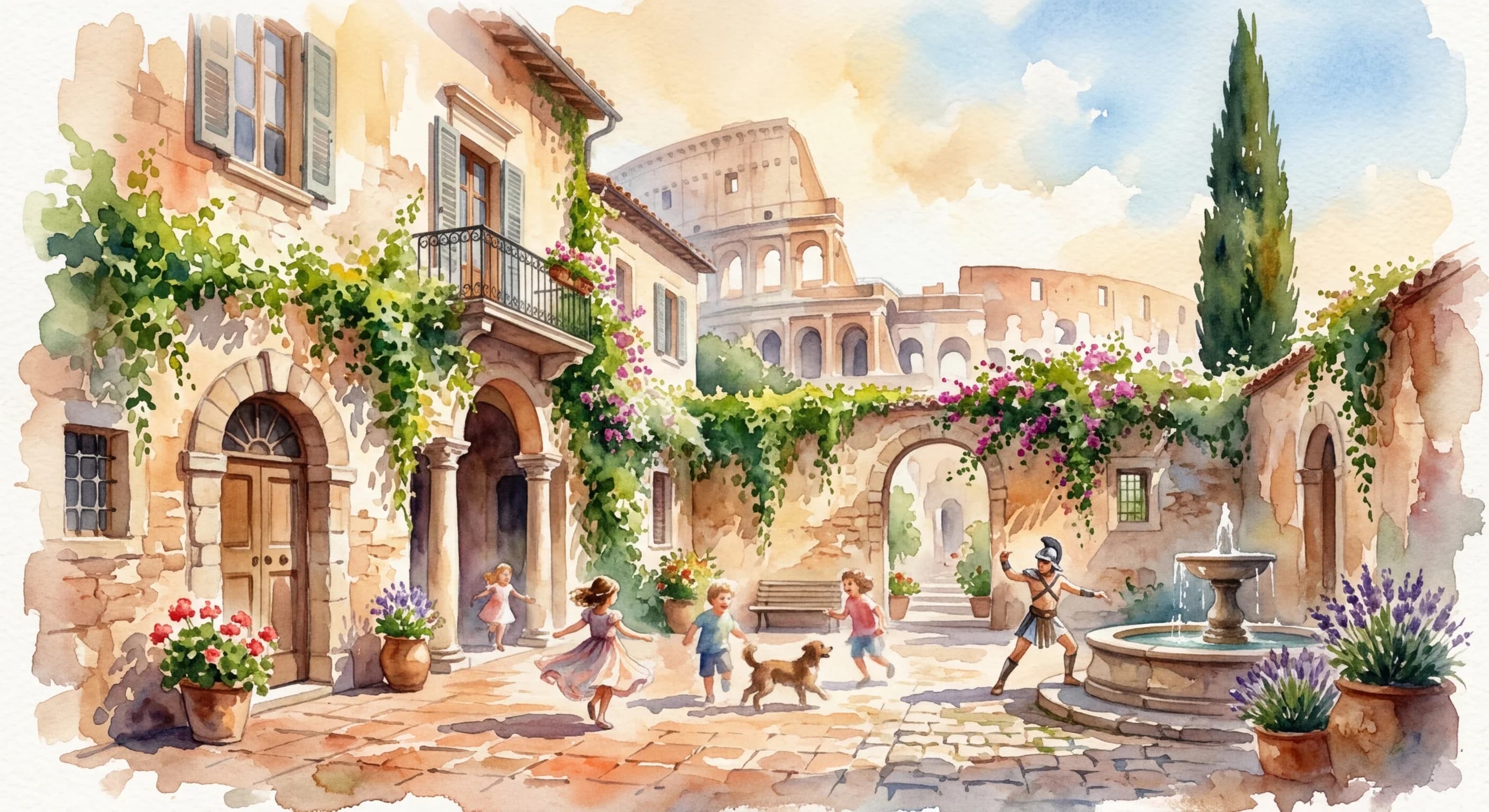
Young Marcus, a recruit at the Ludus Magnus, sweats under the Roman sun. His trainer, a grizzled veteran, barks orders as Marcus practices sword forms against a wooden post. This isn't just brutal drills; it's the 'play' of combat, honing deadly skills with a fierce sense of purpose and camaraderie among his fellow trainees.
Children's Lively Play
In a sun-dappled courtyard, a group of Roman children chase a ball, their laughter echoing. This informal 'ludus' is where they learn social cues, develop agility, and mimic adult roles through imaginative games. It's a spontaneous yet vital space for their physical and social education, preparing them for their future roles in society.
The Deeper Meaning
Ludus embodies a philosophy that recognizes the profound educational and developmental power of 'play' and 'practice'. It suggests that true mastery and growth are not solely achieved through rote memorization or formal instruction, but through engaged, often enjoyable, and repetitive activity. This worldview values embodied knowledge and skill acquisition as much as theoretical understanding, seeing disciplined 'play' as a fundamental pathway to personal and societal excellence.
Did You Know?
The famous Ludus Magnus, the largest gladiatorial school in ancient Rome, was directly connected to the Colosseum by an underground tunnel, allowing gladiators direct access to the arena!
How It's Used
Historically used to describe various institutions and spaces dedicated to learning, practice, and recreation, particularly in ancient Rome and Greece.