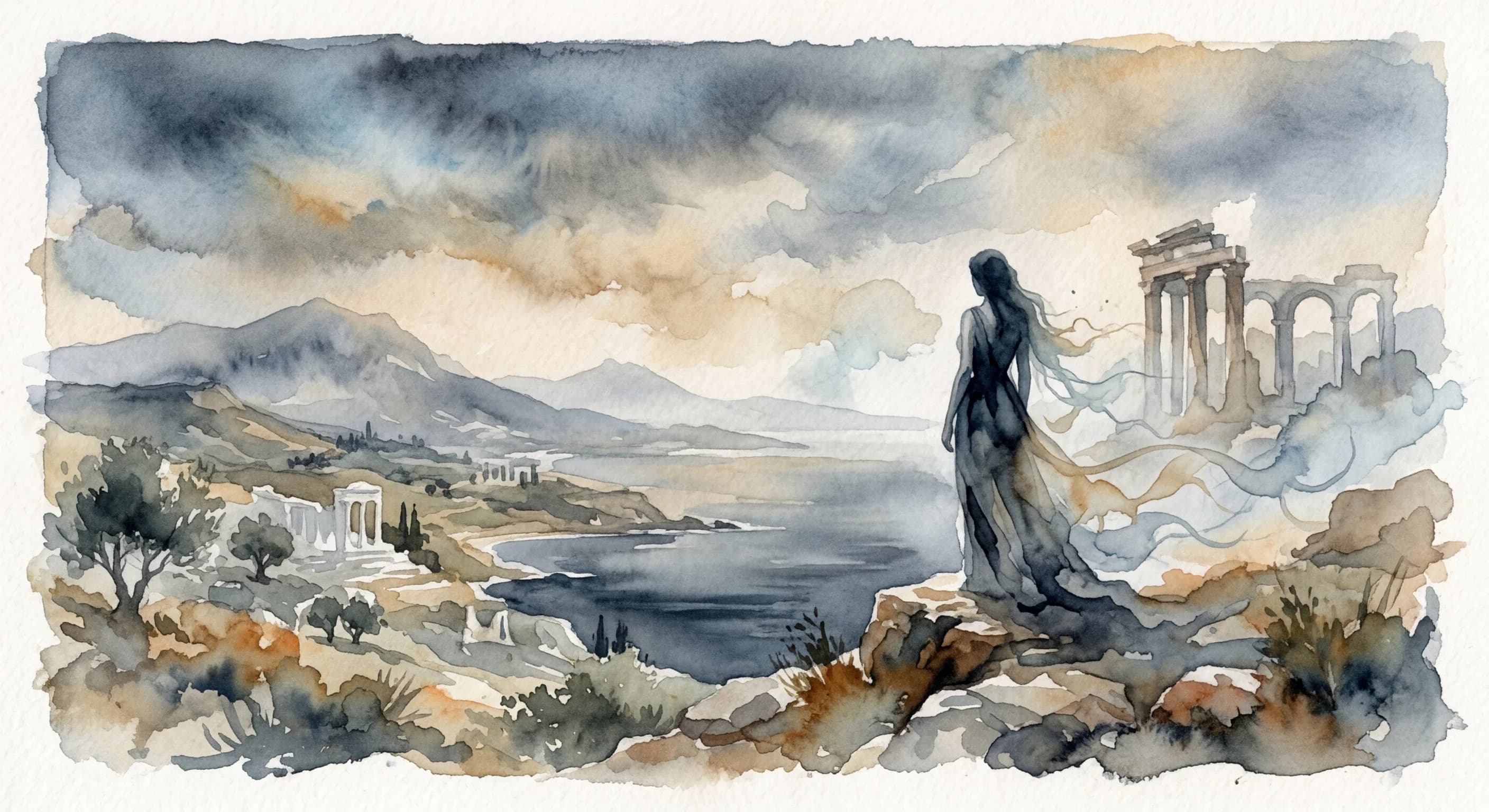
Ananke
/ah-NAHN-kee/
Meaning
Ananke embodies the primordial, unyielding force of necessity, fate, and compulsion that predates even the Olympian gods in ancient Greek thought. It represents the inherent, inescapable structure of existence, dictating the fundamental laws of the cosmos and the predetermined course of all events. More than mere obligation, Ananke signifies an absolute, cosmic inevitability, a relentless condition of being that shapes destinies, both human and divine, highlighting a worldview where ultimate control lies beyond any individual or deity.
Literal Translation
Necessity, Compulsion
The Story Behind the Word
In ancient Greek culture, Ananke was not merely a concept but a personified deity, often depicted as a primal goddess, born of Chaos and coiling around the universe with Chronos (Time). This mythological embodiment underscores the belief that necessity was a foundational, inescapable aspect of reality, even for the most powerful gods. Its existence reflects a deep-seated Greek understanding of fate (Moira) as an overarching principle that ultimately governed all actions and outcomes, suggesting a universe where free will, while present, operated within a larger, predetermined framework. The prominence of Ananke reveals a cultural acceptance of limitations and the recognition that certain forces are simply beyond human, or even divine, alteration.
Experience It
The Oracle's Unyielding Decree
A king consults the Oracle of Delphi, desperate to avert a prophecy of his city's destruction. Despite his fervent prayers and sacrifices, the Oracle's words echo with the cold certainty of Ananke, revealing that the city's downfall is an unavoidable consequence, a destined link in the chain of cosmic events.
Cosmic Order's Demand
Even Zeus, king of the gods, finds himself bound by the ancient laws of the cosmos. When a particular hero's fate is sealed by the threads spun by the Moirai, Zeus cannot intervene without disrupting the very fabric of existence, acknowledging the supreme, inescapable power of Ananke over even his divine will.
The Deeper Meaning
Ananke reveals a profound fatalistic undercurrent in Greek philosophy, suggesting that while humans may strive and gods may decree, there is an ultimate, primordial necessity that dictates the fundamental architecture of reality. This concept challenges notions of absolute free will, positing instead a universe governed by an unyielding, inherent order that even the most powerful entities cannot transcend, fostering a worldview of acceptance towards the inevitable.
Did You Know?
Ananke was sometimes considered the mother of the Moirai (Fates), further solidifying her role as the ultimate source of destiny and unavoidable cosmic order in Greek mythology.
How It's Used
Ananke is used primarily in philosophical and mythological contexts within Greek culture to discuss fate, destiny, and the unavoidable forces that shape the universe and human lives.