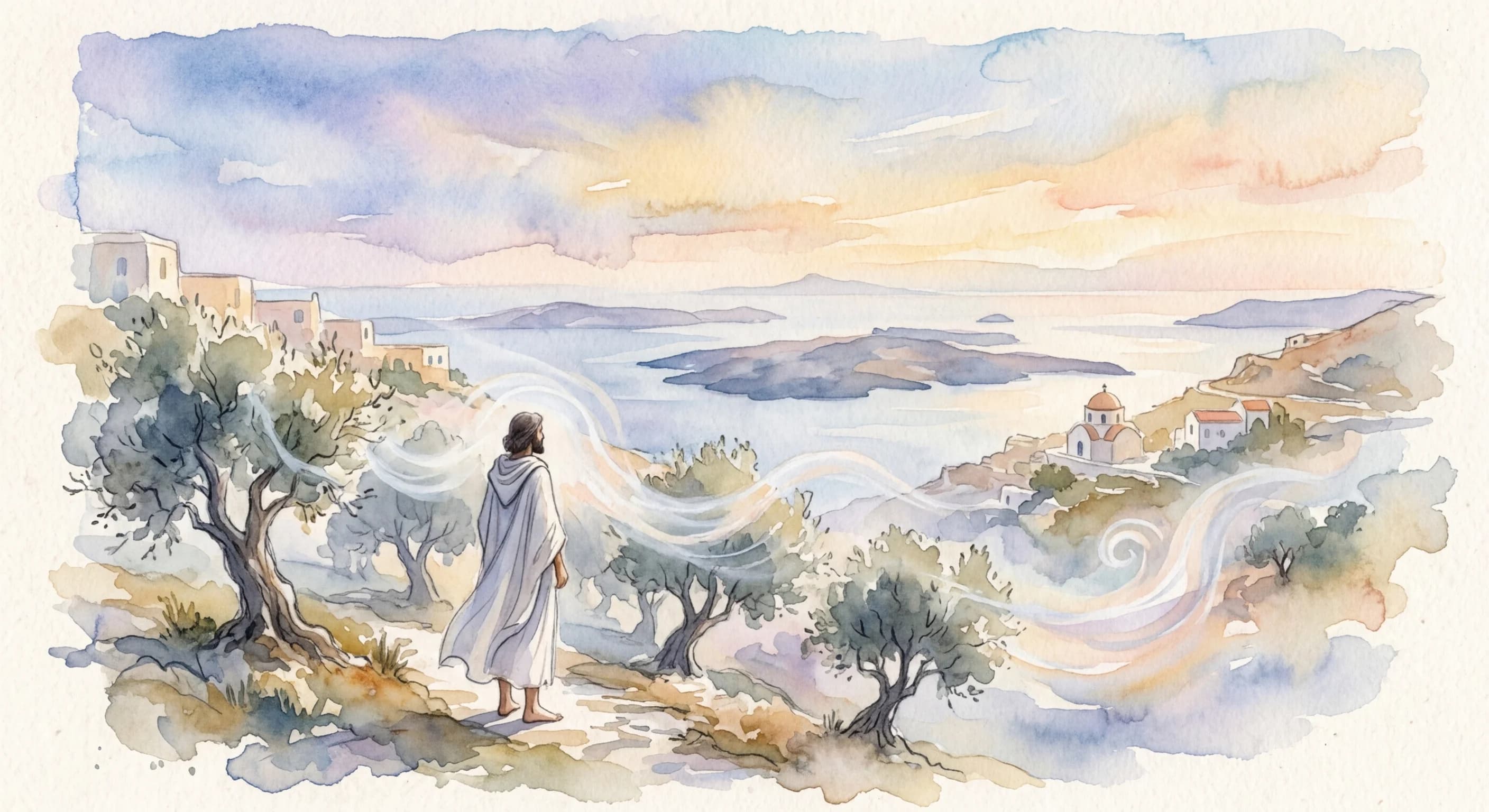
Pneuma
/NEE-oo-mah/
Meaning
Pneuma, for the Ancient Greeks, was far more than just 'breath' or 'wind'; it was the very animating principle of existence. It represented the invisible, dynamic force that infused life into all living things, from the smallest insect to the grandest cosmos. This vital spirit was considered the source of consciousness, intellect, and even divine inspiration, a pervasive energy that connected the physical and metaphysical realms. It embodied the intangible essence that distinguished a vibrant, thinking being from inert matter.
Literal Translation
breath, spirit, wind
The Story Behind the Word
The concept of pneuma is deeply embedded in the philosophical and religious fabric of Ancient Greece, reflecting a worldview where the material and spiritual were not rigidly separated. Early thinkers observed the breath of life leaving a dying body and naturally associated this invisible efflux with the departure of the soul or vital force. This led to philosophical inquiries into the nature of the soul (psyche) and its animating principle, with figures like the Stoics developing elaborate theories of a cosmic pneuma pervading and ordering the entire universe. It reveals a culture grappling with the fundamental questions of life, consciousness, and the divine, seeing an invisible, dynamic energy as the key to understanding existence. Its presence in early Christian theology, describing the Holy Spirit, further underscores its profound significance as a concept transcending mere physical respiration, becoming a cornerstone for understanding divine action and human vitality.
Experience It
Philosopher's Discourse
In the bustling Agora, a Stoic philosopher gestures emphatically, explaining to his students that the very stars above and the thoughts within their minds are all manifestations of the universal Pneuma. He describes it as the rational, fiery breath that orders the cosmos, connecting every living being in a grand, divine symphony of existence.
Warrior's Last Breath
On the battlefield, a wounded warrior gasps his last, his chest heaving. His comrades whisper that his Pneuma departs with his final exhalation, leaving behind an empty vessel. They believe his vital spirit, his animating force, has now rejoined the unseen currents of the world.
The Deeper Meaning
Pneuma reveals a profound ancient Greek understanding of life as an energetic, interconnected phenomenon, rather than a purely mechanical one. It suggests a universe animated by an intelligent, pervasive force that is both immanent in living beings and transcendent as a cosmic principle. This worldview emphasizes the continuous flow and interrelation between the physical body, the conscious mind, and the divine order, challenging a purely materialist perspective of existence.
Did You Know?
The word 'pneumatic' (relating to or using air or gas) in English directly derives from 'pneuma', highlighting its original connection to breath and wind, even in modern mechanical contexts.
How It's Used
The term 'pneuma' was primarily used in philosophical and religious contexts in Ancient Greece. It appeared in the writings of philosophers like Plato and Aristotle, and later in early Christian theology to describe the Holy Spirit or the animating principle of life.