Oikos
/OY-kos/
Meaning
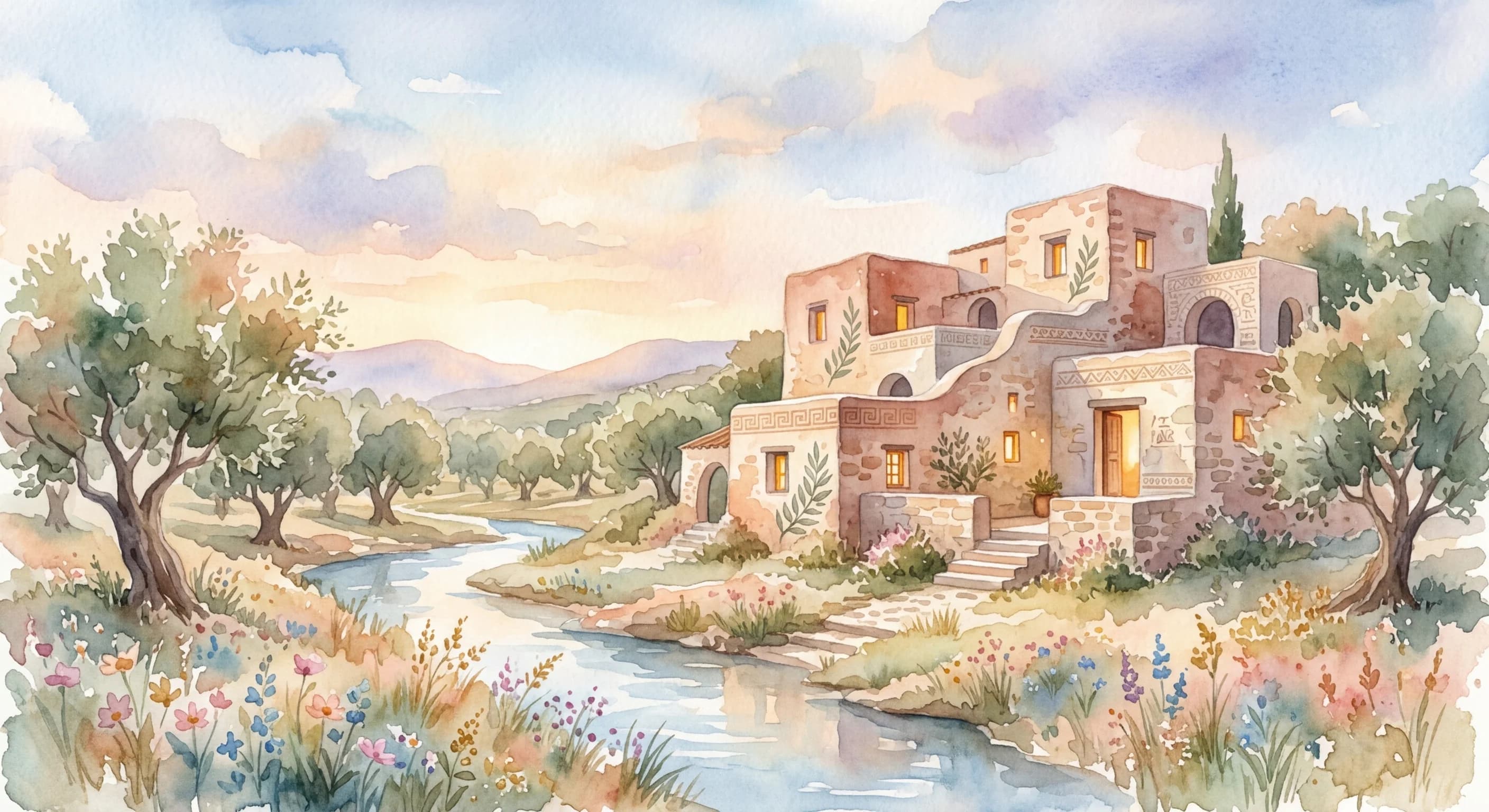
Oikos transcends the mere physical dwelling, representing the ancient Greek household as a living, breathing entity. It encompassed the entire family unit—blood relatives, slaves, property, and ancestral heritage—forming the bedrock of social and economic life. This self-sufficient microcosm was where individuals found their identity, responsibilities, and purpose, with its prosperity and reputation directly reflecting on the well-being of the wider polis. Managing one's oikos with wisdom and virtue was paramount, ensuring not only survival but also the perpetuation of lineage and societal order.
Literal Translation
house, household, family
The Story Behind the Word
The concept of Oikos is deeply rooted in ancient Greek societal structure, predating the rise of the polis. It reveals a world where individual identity was inextricably linked to the collective family unit and its ancestral lands. The Oikos was the primary site of production, consumption, and reproduction, functioning as a complete economic and social system. Its existence underscores the Greek value placed on lineage, continuity, and the careful stewardship of resources across generations. Maintaining the honor and prosperity of one's Oikos was a sacred duty, reflecting a worldview where personal success was measured by the strength and reputation of one's household rather than purely individual achievement. The proper ordering of the Oikos was seen as a prerequisite for a well-ordered polis, making it a foundational element of Greek ethics and political thought.
Experience It
Inheriting the Oikos
Upon his father's passing, young Theron inherited the family oikos. He not only gained control of the farm and slaves but also bore the immense responsibility of upholding his ancestors' honor, ensuring the welfare of his entire household, and producing a male heir to continue the lineage. His identity was now fully intertwined with the fate of his oikos.
Threat to the Oikos
A poor harvest threatened the very survival of Elara's oikos. The lack of grain meant her family, including her elderly parents and young children, faced hunger. She knew that failure to manage this crisis would not only bring shame but could lead to the dissolution of her ancestral home and the loss of her family's social standing within the community.
The Deeper Meaning
Oikos reveals a profound ancient Greek philosophical emphasis on the interconnectedness of individual, family, and state. It posits that a well-ordered society begins with a well-ordered household, where virtue, responsibility, and proper management are cultivated. This holistic view suggests that human flourishing is not an isolated pursuit but deeply embedded within the social fabric, with the stability and reputation of one's lineage forming a critical component of one's moral and civic identity.
Did You Know?
The modern English word 'economy' derives from the Greek 'oikonomia,' literally meaning 'management of a household' (oikos + nomos = law/management).
How It's Used
Used historically to describe the ancient Greek household, family, and estate. It is foundational to understanding ancient Greek social structure, economics, and philosophy.