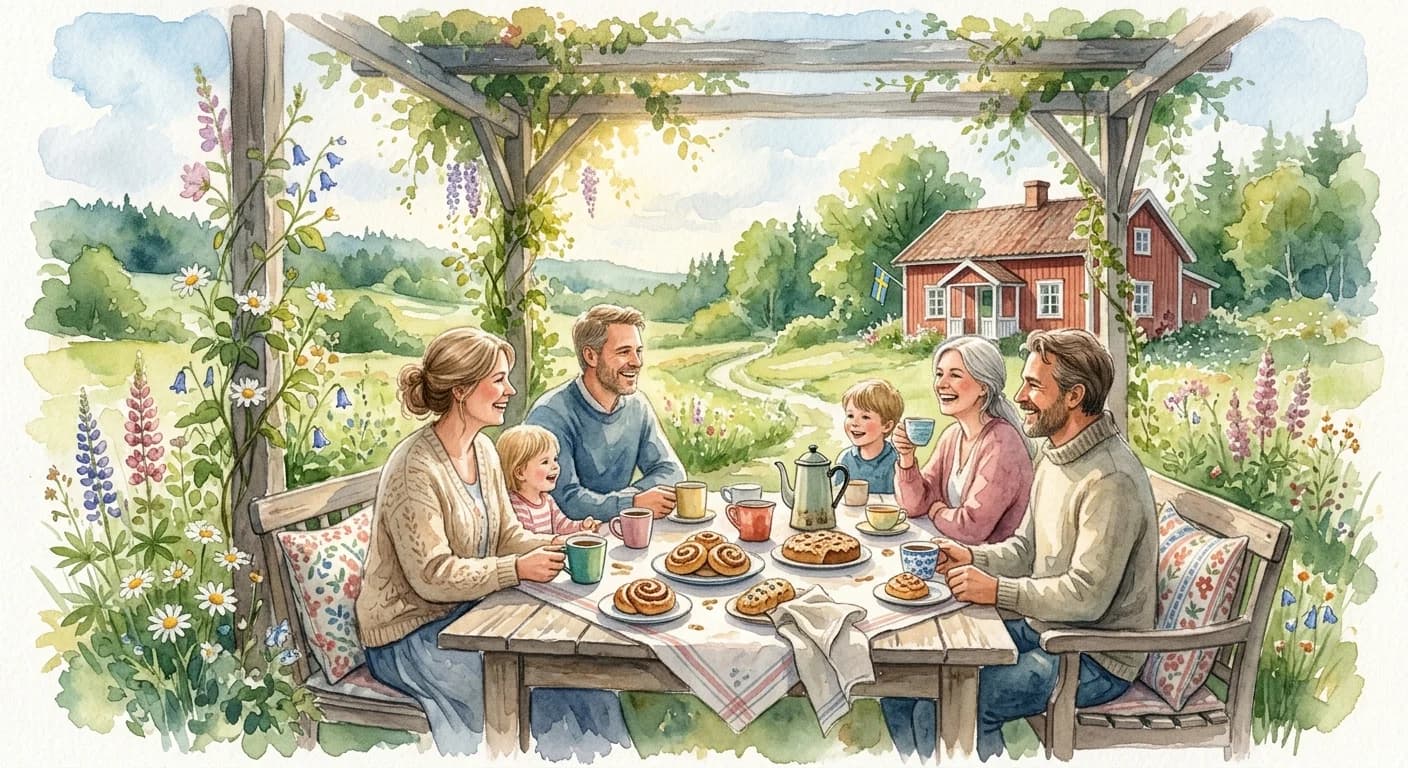
Fika
/FEE-kah/
Meaning
Fika transcends a simple coffee break; it's a cherished Swedish institution, a deliberate pause to foster connection and recharge. It involves enjoying coffee or tea, often accompanied by a pastry like a kanelbulle, in the convivial company of friends, family, or colleagues. This mindful deceleration is a sacred ritual, cultivating well-being and embodying a profound appreciation for the present moment, rejecting the relentless rush of modern life to truly connect with oneself and others.
Literal Translation
The origin of the word 'fika' is believed to be a slang inversion of the word 'kaffi', the old-fashioned way of saying coffee.
The Story Behind the Word
Fika's origins are deeply intertwined with Sweden's social democratic history and a cultural emphasis on equality, balance, and collective well-being. While the word itself is a slang inversion of 'kaffi' (coffee) from the 19th century, the concept gained prominence with the rise of coffee consumption and industrialization. It became a crucial mechanism for workers to socialize and de-stress, preventing burnout and fostering camaraderie, reflecting the Swedish value of 'lagom' – not too much, not too little. Fika is a cornerstone of Swedish daily life, symbolizing a commitment to work-life balance and the importance of shared moments over individualistic pursuits. It's a non-negotiable part of the workday and social gatherings, reinforcing community bonds and a relaxed, egalitarian approach to life.
Experience It
Workday Fika Break
At 10 AM sharp, the development team put down their keyboards. 'Fika, anyone?' Lars announced, heading to the kitchen. Soon, the aroma of freshly brewed coffee and cinnamon buns filled the air as colleagues chatted, sharing weekend anecdotes and lighthearted banter, genuinely disconnecting from their tasks for a precious twenty minutes.
Weekend Friend Catch-up
Anna met her old friend Sofia at a cozy café on a rainy Saturday afternoon. 'It's been too long, let's fika properly,' Anna smiled. Over steaming mugs of coffee and shared pastries, they spent hours catching up, discussing life's ups and downs, feeling refreshed and reconnected before heading their separate ways.
What Gets Lost in Translation
English speakers often mistake fika for just a coffee break. It's far more profound; it's a mandatory, often scheduled, social ritual emphasizing presence and connection, not just caffeine intake. Skipping it is often seen as rude or anti-social, undermining team cohesion or personal relationships.
Across Cultures
While no direct equivalent exists, similar concepts of social breaks include the British 'tea time,' the Spanish 'merienda' (afternoon snack), or the Japanese 'ochakai' (tea gathering). However, fika's institutionalized, almost mandatory nature in both work and social settings, coupled with its specific emphasis on slowing down and connecting, sets it apart.
The Deeper Meaning
Fika reveals a core Swedish philosophy centered on 'lagom' – the idea of 'just enough' or balance – and the profound value of human connection and mindfulness. It's a cultural antidote to extreme productivity, asserting that genuine well-being and effective collaboration stem from deliberate pauses, shared moments, and a balanced approach to life, rather than relentless work.
Did You Know?
The word 'fika' is believed to be a 'back slang' inversion of the old Swedish word for coffee, 'kaffi'. This playful origin highlights its informal, social nature from the very beginning.
How It's Used
Fika is used to describe the act of taking a break for coffee and conversation, and it can be both a noun and a verb. It is commonly practiced during the workday, in the late afternoon, or as a social gathering.