Litost
/LEE-tohst/
Meaning
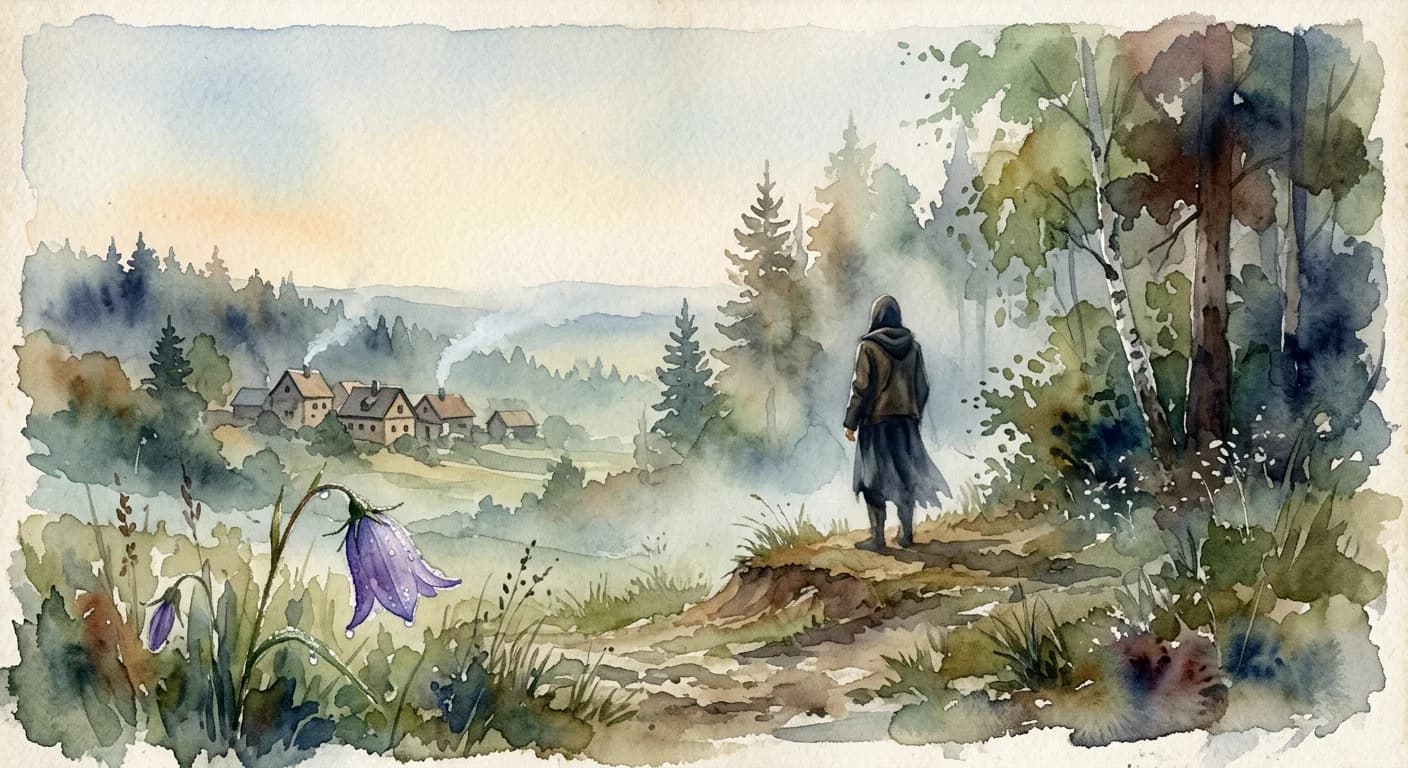
Litost is a uniquely Czech emotional state, a profound and often torturous self-awareness rooted in the sudden, painful recognition of one's own inadequacy, failure, or the futility of one's efforts. It's more than mere sorrow; it's a self-inflicted torment, a burning sense of shame and regret arising from the chasm between one's aspirations and imperfect reality. This complex feeling is often accompanied by a yearning for an idealized past or a better, unachieved self, making it a deeply melancholic and introspective experience.
Literal Translation
The literal meaning is difficult to pinpoint as it's more of a conceptual term; however, it's sometimes linked to 'sorrow' or 'grief' in its etymology, but its philosophical weight far exceeds these simple translations.
The Story Behind the Word
Milan Kundera, the renowned Czech-French writer, extensively explored and popularized 'litost' in his novel 'The Book of Laughter and Forgetting,' describing it as one of the most untranslatable Czech words. Its existence highlights a particular introspective and self-critical vein within Czech culture, perhaps shaped by centuries of complex historical experiences, including periods of foreign domination and political upheaval. This constant awareness of vulnerability and the gap between ideals and reality may have fostered a collective consciousness prone to such profound self-reflection. It suggests a culture that doesn't shy away from grappling with existential discomfort and the imperfections of the human condition, often with a melancholic or even darkly humorous twist.
Experience It
Missed Opportunity's Sting
After years of struggling, Jan finally received an invitation to exhibit his art, but his paralyzing fear kept him from preparing. Watching the successful opening of another artist he started alongside, he felt a crushing litost, not just sadness, but a searing regret for his own squandered potential and the self-sabotage that led him there.
Childhood Dream Fades
Pavel, now a middle-aged accountant, stumbled upon his childhood diary outlining his grand ambitions to be a concert pianist. As he read the innocent, hopeful words, a wave of litost washed over him – a painful recognition of the vast distance between that boy's dreams and his current, uninspired reality, accompanied by a bitter self-reproach.
The Deeper Meaning
Litost reveals a worldview deeply attuned to human imperfection and the inherent gap between aspiration and reality. It suggests a culture that embraces, rather than shies away from, profound self-criticism and the existential pain of unfulfilled potential. This emotional landscape points to a philosophical understanding where self-awareness, even when painful, is a significant part of the human experience, rather than something to be avoided or quickly remedied.
Did You Know?
Milan Kundera dedicated an entire chapter in 'The Book of Laughter and Forgetting' to explaining 'litost,' claiming it's a concept so uniquely Czech it cannot be accurately translated into other languages.
How It's Used
Used to describe a specific kind of existential angst or a profound sense of personal inadequacy, often triggered by a humbling experience or a moment of self-reflection.