U.
HomeRegionsLanguagesEmotionsCollections
Find Your Word

“The limits of my language mean the limits of my world.”

— Ludwig Wittgenstein, Philosopher

Untranslatable

A curated collection of the world's most beautiful expressions—words that remind us language is humanity's greatest invention.

  • Home
  • Collections
  • Regions
  • Countries
  • Emotions
  • Tags
  • Contexts
  • Finder
  • Europe
  • Asia
  • Americas
  • Africa
  • Middle East
  • About
  • Contact
  • Privacy Policy
  • Terms of Service

2026 © Untranslatable. All rights reserved.

    /
    /
    1. Home
    2. /
    3. Europe
    4. /
    5. Pomlázka
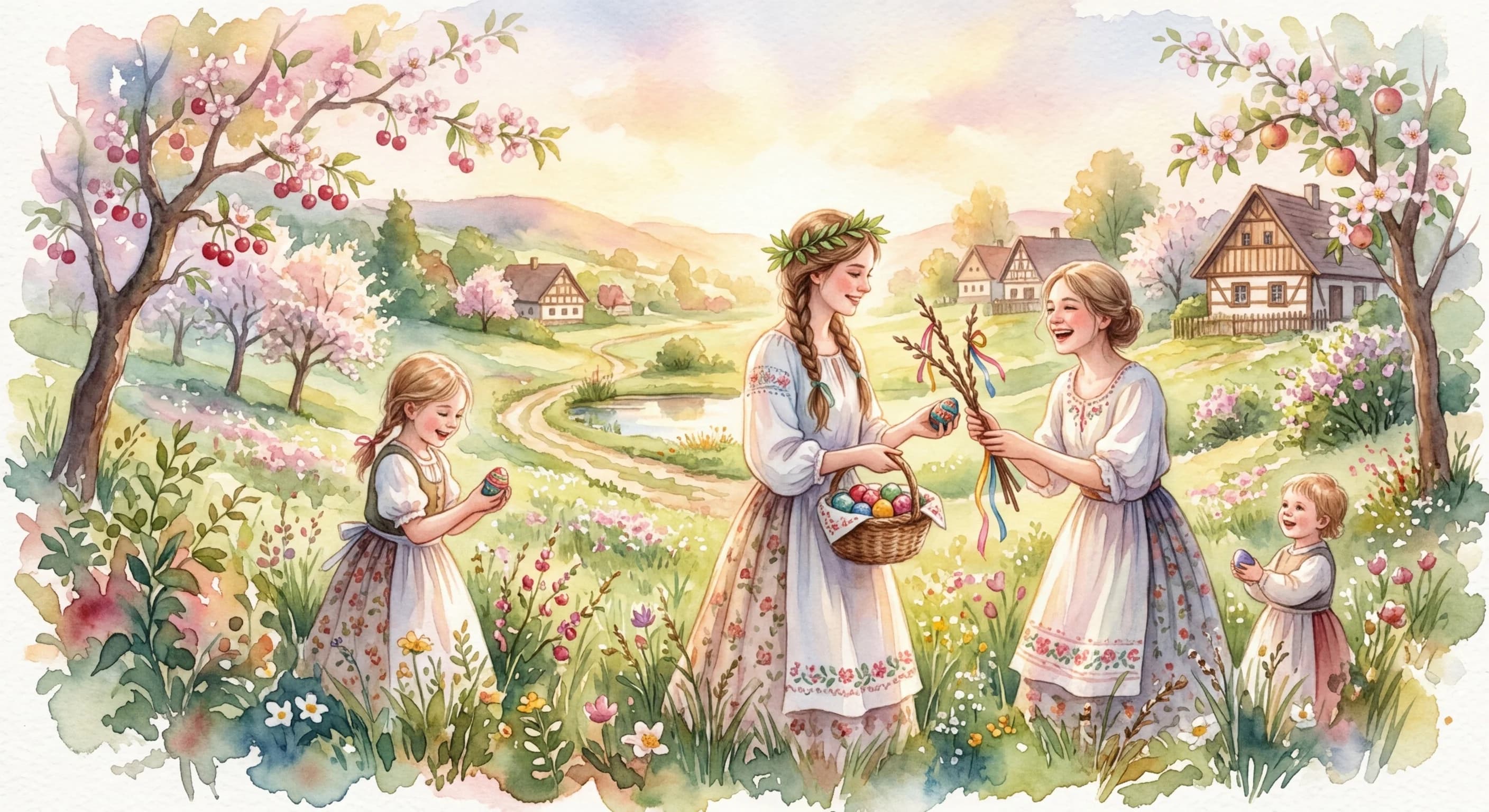
    Artistic representation of Pomlázka
    Czech•
    🇨🇿Czech Republic🇸🇰Slovakia

    Pomlázka

    /POM-laa-ska/

    Meaning

    Pomlázka embodies a vibrant Czech Easter tradition where young men, armed with intricately braided willow switches, playfully 'whip' women. Far from an act of aggression, this ritual is believed to transfer the willow's spring vitality, health, and fertility to the women. In a charming exchange, women reciprocate with beautifully decorated eggs, colorful ribbons, or sweet treats, celebrating renewal and the enduring cycle of life. It is both the name of this custom and the symbolic willow branch itself.

    Literal Translation

    Whipping or beating (derived from 'mlátit' - to beat)

    The Story Behind the Word

    The pomlázka tradition is deeply rooted in pre-Christian Slavic pagan beliefs surrounding spring equinox and fertility rites. The willow, being one of the first trees to bud in spring, was considered a potent symbol of life, growth, and generative power. The act of 'whipping' was not punitive but a magical transfer of this vital energy, ensuring health, beauty, and fertility for the coming year. It reflects a worldview closely tied to nature's cycles, where human well-being is intertwined with the earth's rejuvenation. This playful ritual also reinforces community bonds and intergenerational transmission of cultural heritage, marking the transition from winter's dormancy to spring's awakening.

    Experience It

    Easter Morning Visits

    On Easter Monday, little Honza, clutching his small, braided pomlázka, nervously knocks on his aunt's door. With a shy grin, he recites a traditional rhyme before gently tapping her legs, hoping for a chocolate egg in return.

    Village Square Festivities

    The village square buzzes with laughter as young men, some with elaborately long pomlázky, chase giggling women. Ribbons are tied to their switches, and baskets overflow with painted eggs, a testament to a day filled with playful tradition and community spirit.

    The Deeper Meaning

    Pomlázka reveals a profound connection to the cyclical nature of life and a belief in the inherent power of natural elements. It embodies a philosophy where human prosperity and fertility are not solely individual endeavors but are actively cultivated through communal ritual and a symbolic tapping into the Earth's regenerative forces. This tradition underscores the importance of renewal, not just seasonally, but within the human spirit and community bonds.

    Did You Know?

    The word 'pomlázka' literally translates to 'rejuvenator' or 'younger-maker,' highlighting its ancient purpose of bestowing youth and vitality upon those 'whipped' with the willow branch.

    How It's Used

    Performed on Easter Monday (Velikonoční pondělí) by men and boys, who visit women's homes to playfully 'whip' them with the pomlázka. It's also used as a term for the braided willow branch itself.

    Emotions
    gratitude,joy,warmth
    Contexts
    celebration,family,seasons,tradition
    🇨🇿Czech Republic🇸🇰Slovakia

    by Sofia Rossi·Written Mar 10, 2026·Updated Apr 3, 2026

    Related Words

    Explore more
    HyggeDanish

    Hygge is more than mere coziness; it's a holistic embrace of comfort, warmth, and belonging that nourishes the soul. It describes the intentional creation of an intimate atmosphere where simple pleasures, genuine connection, and mindful presence converge, fostering a profound sense of contentment and well-being. It's about finding joy and peace in the small, everyday moments, often shared with loved ones.

    SaudadePortuguese

    Saudade encapsulates a profound, melancholic longing for something or someone cherished that is absent, often with the bittersweet knowledge that it may never return. It's a deep emotional state tinged with nostalgia, evoking a sense of loss for past experiences, places, or people, yet also holding a tender appreciation for the beauty of what once was. This yearning is not merely sadness, but a complex tapestry of desire, memory, and a poignant acceptance of absence, holding the beloved in a warm, persistent embrace within the heart.

    GezelligDutch

    Gezellig encapsulates a profound sense of warmth, belonging, and convivial comfort, extending beyond mere coziness to embrace the social and emotional atmosphere. It's the feeling of being truly at ease, surrounded by good company, laughter, and a shared sense of contentment. This untranslatable term describes not just a physical space, but a holistic experience where time seems to slow down, fostering genuine connection and a deep sense of well-being.

    Dolce far nienteItalian

    Dolce far niente captures the profound joy and effortless pleasure derived from simply existing without obligation or purpose. It's the art of savoring moments of pure, unadulterated idleness – lying in the sun, watching the clouds drift, or enjoying a leisurely coffee – not as a break from work, but as a valuable state in itself. This 'sweetness of doing nothing' is a conscious embrace of stillness and contentment, allowing the soul to breathe and the senses to fully engage with the present.

    Featured in 1 collection

    🙏Expressions of Gratitude