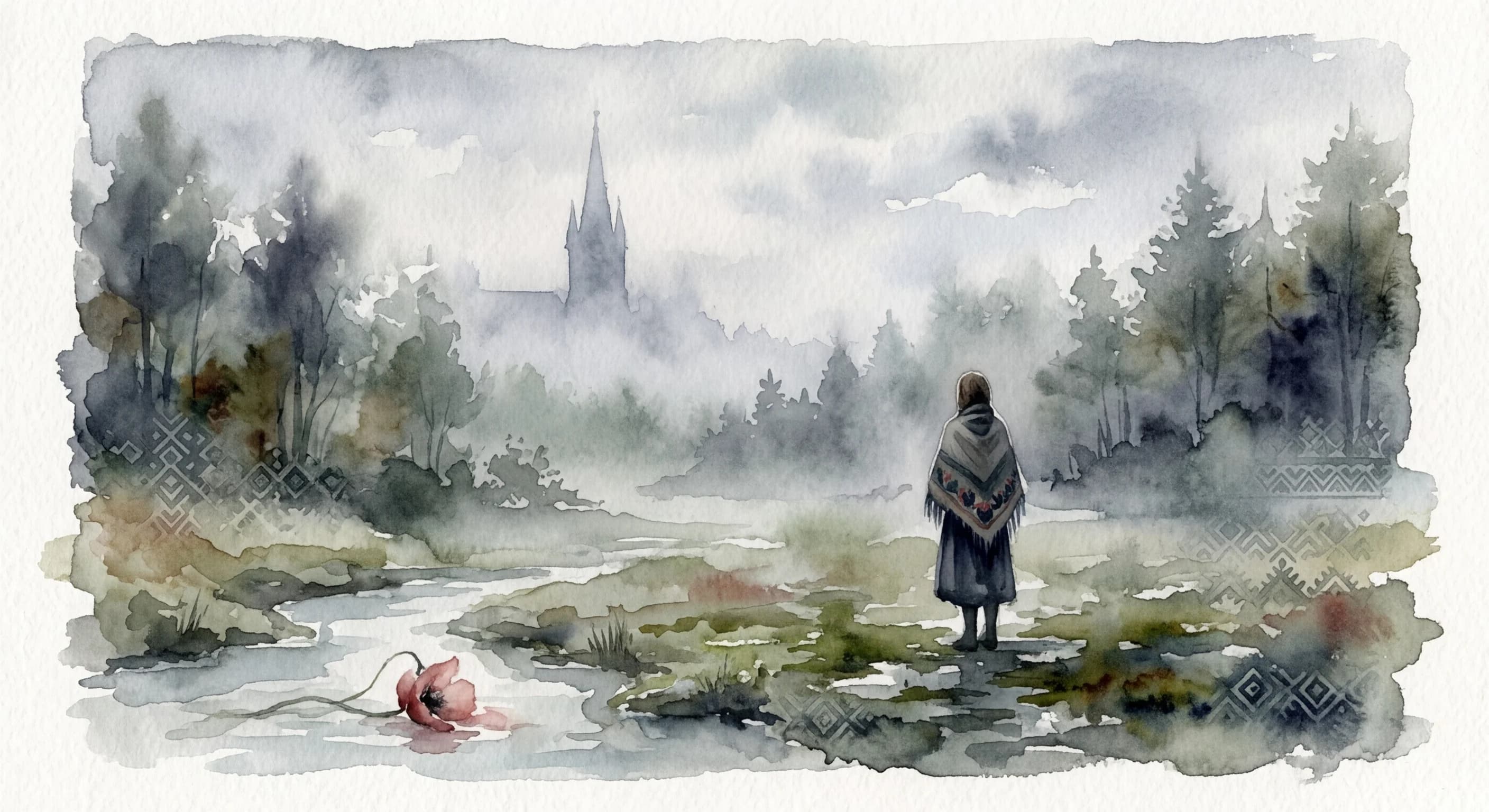
Żal
/ZHAL/
Meaning
Żal is a profound, aching lament for what is lost, what could have been, or what remains perpetually just out of reach. It's a complex tapestry woven from regret, sorrow, and a deep, wistful yearning, often tinged with a melancholic acceptance of life's inherent imperfections. More than mere sadness, żal carries a lingering emotional weight—a personal and sometimes collective mourning for unfulfilled dreams, past mistakes, or the bittersweet transience of happiness, encapsulating a poignant awareness of life's missed opportunities and enduring absences.
Literal Translation
regret, sorrow, pity, grief
The Story Behind the Word
The concept of żal is deeply embedded in Polish history and national character, reflecting centuries of hardship, foreign occupation, and repeated loss of sovereignty. This historical trauma has fostered a collective melancholy, a national psyche that often grapples with unfulfilled aspirations and a sense of what was unjustly taken. Żal speaks to an enduring resilience, too; it's not despair, but a recognition of suffering that coexists with a profound appreciation for beauty and fleeting joy. It reveals a worldview where life's struggles are acknowledged with a poignant, almost poetic, acceptance, shaping a people who understand deeply the cost of freedom and the pain of longing for an idealized past or future.
Experience It
Lost Homeland's Echo
An elderly Polish immigrant, far from his ancestral village, looks at old photographs. A deep żal washes over him—not just sadness for what's gone, but a profound regret for the life he left behind and the roots he can never fully reclaim, a wistful sorrow for a world that exists now only in memory.
Unfulfilled Artistic Dream
A talented musician, forced to abandon her passion for a stable career, hears a beautiful melody. She feels a sharp żal, a bittersweet pang of regret for the path not taken and a deep longing for the artistic life she once envisioned but could not pursue.
The Deeper Meaning
Żal speaks to a philosophical understanding of existence as inherently imperfect and often marked by loss. It suggests that true wisdom lies not in avoiding pain, but in acknowledging and integrating regret, sorrow, and longing as fundamental aspects of the human experience. This acceptance allows for a deeper appreciation of fleeting joys, understanding them as precious precisely because they are transient and potentially subject to żal.
Did You Know?
Żal can also be used ironically or sarcastically in Polish, like saying 'Co za żal!' (What a pity/shame!) when something minorly inconvenient happens, highlighting its versatility.
How It's Used
Used to express a deep feeling of regret, sorrow, or wistful longing for something lost or unattainable.