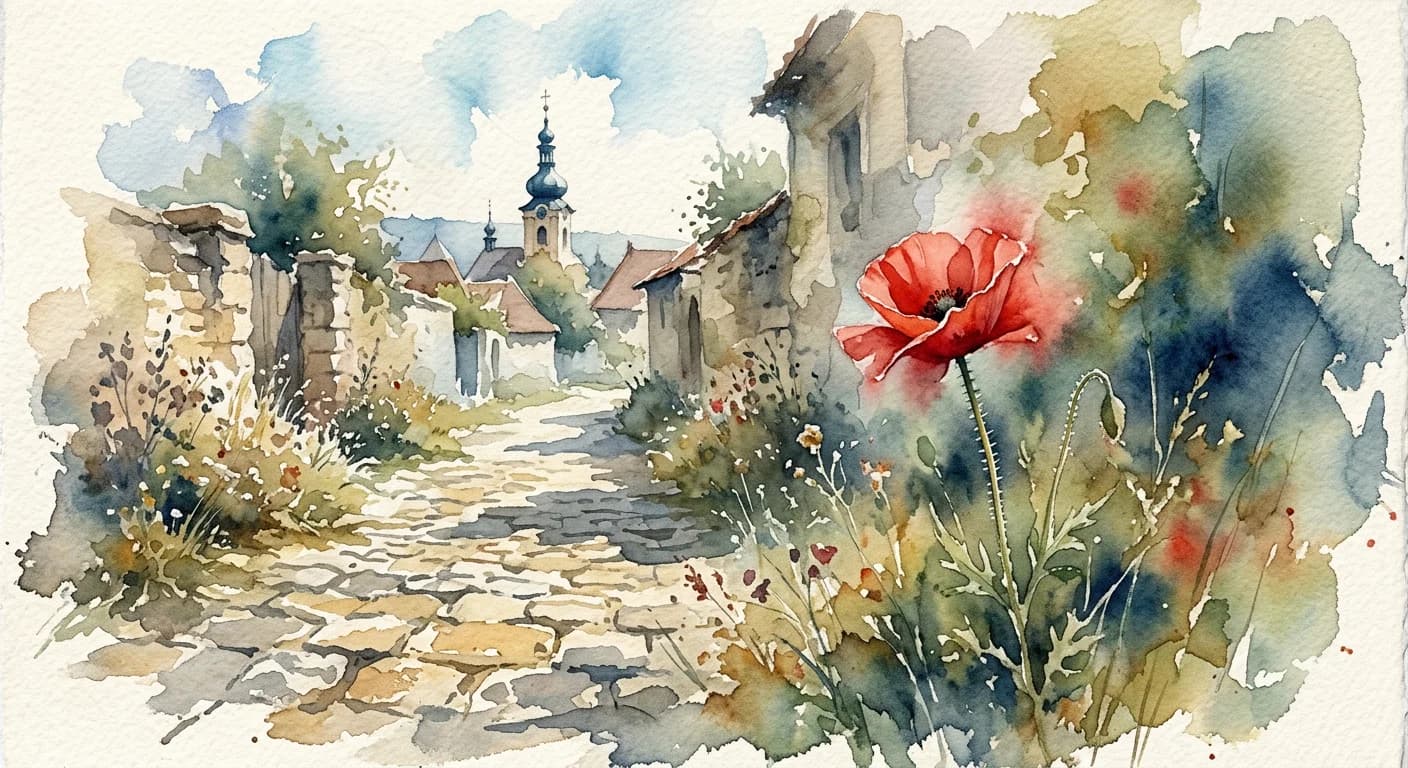
Staronový
/STAR-oh-nova-vee/
Meaning
Staronový describes the captivating essence of something that simultaneously embodies ancient tradition and fresh innovation. It's the profound sensation of encountering an object, idea, or even a person that resonates with deep historical roots yet feels remarkably current and relevant. This duality creates a comfortable familiarity intertwined with an exciting sense of novelty, offering a rich tapestry where the wisdom of the past beautifully informs and invigorates the vibrancy of the present. It's not merely old made new, but a seamless, integrated existence of both states.
Literal Translation
Old-new
The Story Behind the Word
The concept of "staronový" is deeply embedded in Czech culture, which has a long and complex history marked by periods of both profound cultural flourishing and significant upheaval, including occupations and political shifts. This constant negotiation with the past – preserving heritage while adapting to new realities – has fostered a worldview that values continuity and resilience. Czechs often look to their rich artistic, architectural, and literary traditions, finding ways to reinterpret and revitalize them for contemporary society without losing their core identity. This word reflects a national character that respects its foundations but is also pragmatic and forward-looking, seeking evolution rather than outright revolution. It speaks to a cultural preference for thoughtful integration over abrupt severance, a belief that the strength of the new often lies in its mindful connection to the old.
Experience It
Modernized Historic Cafe
Stepping into the renovated Grand Cafe, Marek felt a distinct 'staronový' vibe. The high vaulted ceilings and ornate chandeliers whispered tales of centuries past, yet the sleek, minimalist furniture and innovative espresso bar gave it a vibrant, contemporary pulse, making the historical space feel alive again.
Folklore-Inspired Fashion
The young designer's collection was truly staronový. She took traditional Moravian embroidery patterns, rich with historical symbolism, and seamlessly integrated them into modern, urban silhouettes, creating garments that felt both deeply rooted in Czech heritage and utterly cutting-edge on the runway.
The Deeper Meaning
Staronový reveals a philosophical stance that rejects a strictly linear view of time, instead embracing a cyclical or layered perspective where past, present, and future are not discrete but interwoven. It suggests that true progress isn't about discarding the old, but about understanding, reinterpreting, and integrating its wisdom into new forms. This fosters a sense of enduring identity and resilience, where innovation draws strength from heritage, and heritage remains vital through adaptation.
Did You Know?
The most famous example of 'staronový' in Czech culture is likely the 'Staronová synagoga' (Old New Synagogue) in Prague, one of Europe's oldest active synagogues, built in the 13th century, embodying this very paradox in its name.
How It's Used
Used to describe things that have been revived or reinterpreted in a way that respects their origins while making them feel contemporary. This can apply to art, architecture, fashion, or even concepts.