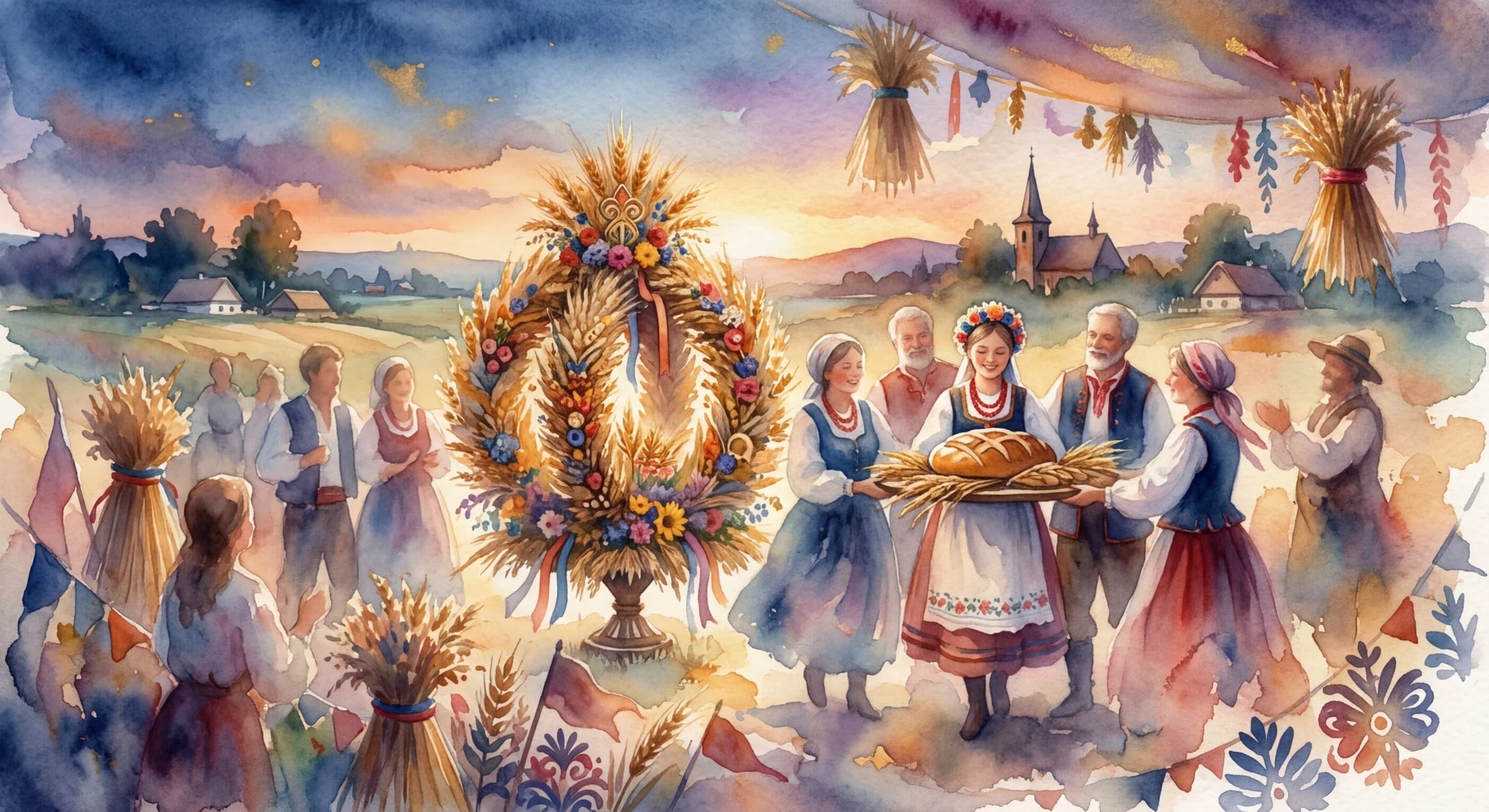
Dożynki
/doh-ZHIN-kee/
Meaning
Dożynki transcends a simple harvest festival; it is a vibrant, ancient Polish celebration marking the successful culmination of the agricultural year. It's a profound expression of collective gratitude to the earth for its bounty and deep reverence for the tireless labor of farmers. Adorned with intricate grain wreaths, accompanied by lively folk music and dancing, the festival culminates in the ceremonial sharing of the first bread from the new harvest, embodying a cyclical renewal and an unbreakable bond between humanity, land, and community.
Literal Translation
harvest-home
The Story Behind the Word
Dożynki's roots stretch back to Slavic pagan traditions, where agrarian rites were central to survival and spiritual life. It reflects a worldview deeply intertwined with the rhythms of nature, where the harvest wasn't just an economic event but a sacred act of provision from Mother Earth. The festival incorporates elements of thanksgiving, appeasement of spirits, and communal solidarity. It underscores the historical importance of agriculture in Polish society, where the farmer (chłop) was the backbone of the nation. The elaborate wreaths, often depicting religious symbols alongside agricultural motifs, exemplify the syncretism of ancient beliefs with later Christian traditions, highlighting a continuous respect for the land's generosity and the hard work required to sustain life. It reveals a culture that values interdependence, cyclical time, and a deep, almost spiritual, connection to its agrarian heritage.
Experience It
Village Dożynki Parade
The village square buzzed with excitement as the Dożynki procession began. Farmers, dressed in traditional attire, proudly carried their intricately woven grain wreaths, some depicting the Virgin Mary, others a bountiful cornucopia, all swaying to the lively polka music played by the local band.
First Bread Ceremony
At the heart of the celebration, the oldest farmer, his hands gnarled from years of labor, presented the starost (festival elder) with the first loaf of bread baked from the new grain. The collective cheer that erupted symbolized not just a meal, but the promise of sustenance for the coming year, shared among all.
The Deeper Meaning
Dożynki embodies a philosophy of gratitude, humility, and cyclical existence. It acknowledges human dependence on natural cycles and the earth's generosity, fostering a profound respect for both nature and labor. It underscores the communal aspect of survival, emphasizing that bounty is a shared blessing, and hard work a collective endeavor, reinforcing social cohesion and an enduring connection to ancestral ways of life.
Did You Know?
The largest and most ornate Dożynki wreaths can take weeks to create, often involving entire families, and are considered works of art, sometimes even competing in national contests for their beauty and craftsmanship.
How It's Used
Dożynki is celebrated annually in late summer or early autumn, typically in rural communities and villages across Poland. It is a public holiday and a significant cultural event, often involving local authorities and widespread participation.