U.
HomeRegionsLanguagesEmotionsCollections
Find Your Word

“The limits of my language mean the limits of my world.”

— Ludwig Wittgenstein, Philosopher

Untranslatable

A curated collection of the world's most beautiful expressions—words that remind us language is humanity's greatest invention.

  • Home
  • Collections
  • Regions
  • Countries
  • Emotions
  • Tags
  • Contexts
  • Finder
  • Europe
  • Asia
  • Americas
  • Africa
  • Middle East
  • About
  • Contact
  • Privacy Policy
  • Terms of Service

2026 © Untranslatable. All rights reserved.

    /
    /
    1. Home
    2. /
    3. Europe
    4. /
    5. Opłatek
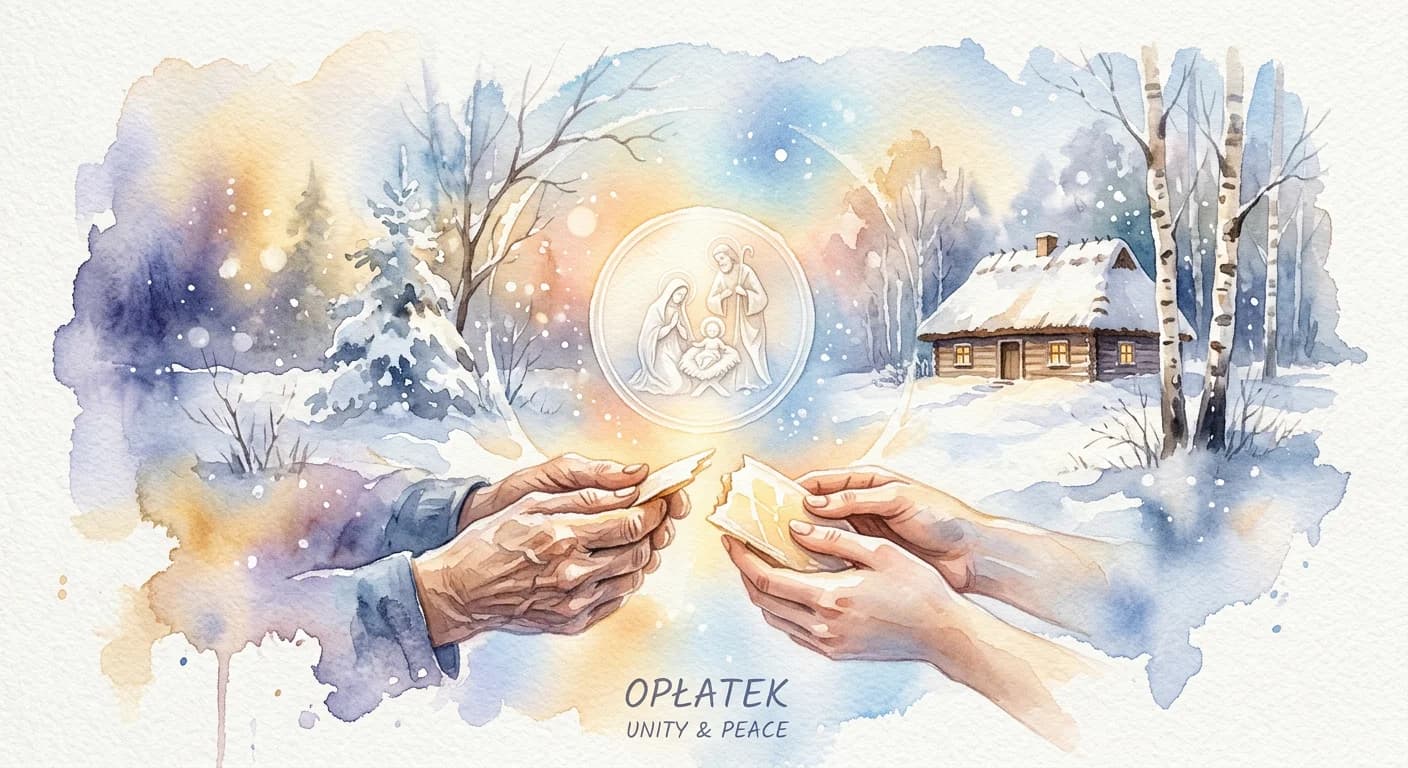
    Artistic representation of opłatek
    Polish•
    🇵🇱Poland

    Opłatek

    /oh-PWAH-tek/

    Meaning

    The opłatek is a delicate, unleavened wafer, meticulously prepared from flour and water, that forms the heart of the Polish Christmas Eve (Wigilia) celebration. More than mere sustenance, it embodies a profound ritual of reconciliation, forgiveness, and unity, echoing the sacred act of breaking bread. As families gather, pieces are lovingly shared, accompanied by heartfelt wishes and blessings, creating an indissoluble bond of spiritual and familial warmth that defines the Polish Christmas experience.

    Literal Translation

    wafer

    The Story Behind the Word

    The tradition of the opłatek is deeply rooted in Poland's Catholic heritage, intertwining pre-Christian harvest rituals with Christian symbolism. Its origin can be traced to early Christian practices of sharing blessed bread, evolving over centuries into this distinct form. For Poles, the opłatek signifies the family's communion with Christ and with each other, particularly poignant in a country that has endured centuries of foreign occupation and division. It reinforces the importance of family bonds, mutual respect, and the act of looking past grievances, reflecting a national psyche that values unity and perseverance in the face of adversity. The sharing of the opłatek before the Wigilia supper is not just a custom; it's a spiritual act that purifies the home and prepares hearts for the joy of Christmas, embodying hope and collective resilience.

    Experience It

    Family Reconciliation

    Aunt Maria and Uncle Jan, who hadn't spoken since a disagreement last summer, tentatively approach each other during Wigilia. As they break off pieces of the opłatek, Maria looks into Jan's eyes and whispers, "Niech Bóg ci błogosławi" (May God bless you), a silent understanding and forgiveness passing between them, mending old wounds.

    Blessing a New Generation

    Little Zosia, barely four, clutches her small piece of opłatek. Her বাবcia (grandmother) kneels, gently helping Zosia offer a piece to her parents, who in turn offer theirs to Zosia, showering her with wishes for health, happiness, and kindness, initiating her into this sacred family tradition.

    The Deeper Meaning

    The opłatek ritual profoundly illustrates a philosophy of active reconciliation and community building. It underscores the belief that true celebration requires prior forgiveness and the conscious effort to mend relationships. It reveals a worldview where spiritual well-being is intrinsically linked to interpersonal harmony, emphasizing humility, empathy, and the enduring power of shared grace as foundational elements of human connection.

    Did You Know?

    Traditionally, a colored opłatek (often pink or yellow) is also given to farm animals on Christmas Eve, symbolizing peace and blessings for all of God's creatures.

    How It's Used

    Shared on Wigilia (Christmas Eve) in Poland, where individuals break off pieces of the opłatek and exchange blessings and good wishes with family and friends.

    Emotions
    belonging,gratitude,peace,warmth
    Contexts
    celebration,dining,family,seasons
    🇵🇱Poland

    by Sofia Rossi·Written Mar 10, 2026·Updated Apr 3, 2026

    Related Words

    Explore more
    HyggeDanish

    Hygge is more than mere coziness; it's a holistic embrace of comfort, warmth, and belonging that nourishes the soul. It describes the intentional creation of an intimate atmosphere where simple pleasures, genuine connection, and mindful presence converge, fostering a profound sense of contentment and well-being. It's about finding joy and peace in the small, everyday moments, often shared with loved ones.

    SaudadePortuguese

    Saudade encapsulates a profound, melancholic longing for something or someone cherished that is absent, often with the bittersweet knowledge that it may never return. It's a deep emotional state tinged with nostalgia, evoking a sense of loss for past experiences, places, or people, yet also holding a tender appreciation for the beauty of what once was. This yearning is not merely sadness, but a complex tapestry of desire, memory, and a poignant acceptance of absence, holding the beloved in a warm, persistent embrace within the heart.

    GezelligDutch

    Gezellig encapsulates a profound sense of warmth, belonging, and convivial comfort, extending beyond mere coziness to embrace the social and emotional atmosphere. It's the feeling of being truly at ease, surrounded by good company, laughter, and a shared sense of contentment. This untranslatable term describes not just a physical space, but a holistic experience where time seems to slow down, fostering genuine connection and a deep sense of well-being.

    Dolce far nienteItalian

    Dolce far niente captures the profound joy and effortless pleasure derived from simply existing without obligation or purpose. It's the art of savoring moments of pure, unadulterated idleness – lying in the sun, watching the clouds drift, or enjoying a leisurely coffee – not as a break from work, but as a valuable state in itself. This 'sweetness of doing nothing' is a conscious embrace of stillness and contentment, allowing the soul to breathe and the senses to fully engage with the present.