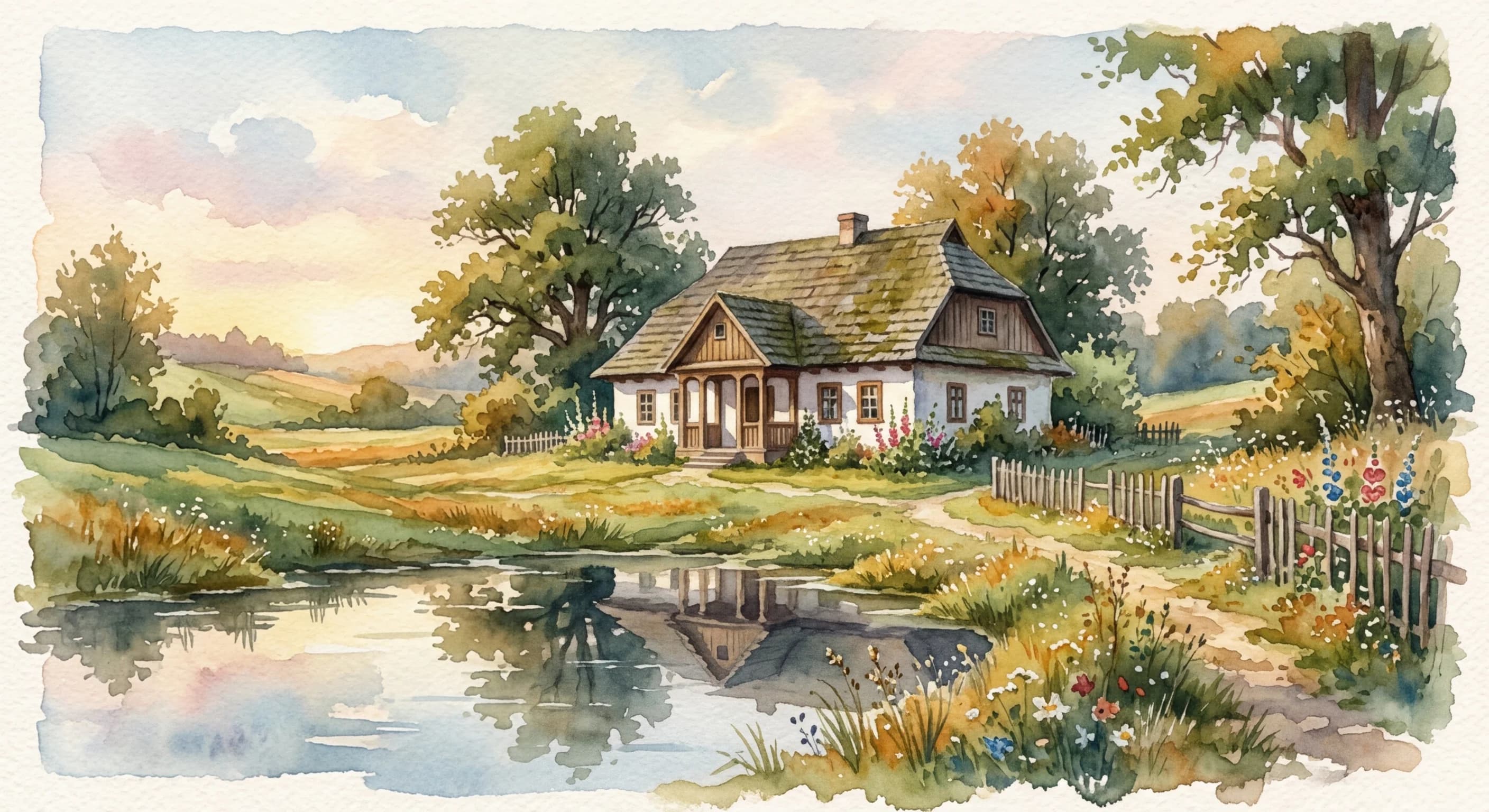
Dworek
/DVO-rek/
Meaning
A 'dworek' is more than just a small manor house; it's a cherished symbol of Polish identity, evoking a serene, pastoral ideal. These often ancestral country estates, characterized by their modest elegance and harmonious integration with the landscape, embody a romanticized vision of gentry life. It conjures images of tranquil rural existence, a deep connection to lineage, and a profound sense of heritage, standing as a nostalgic counterpoint to modern complexities.
Literal Translation
small manor house
The Story Behind the Word
The 'dworek' emerged as a distinct architectural and social phenomenon in Poland, particularly from the 16th to the 19th centuries, becoming the heart of the Polish gentry's (szlachta) life and culture. It represents a deeply ingrained ideal of 'sarmatism' – a worldview emphasizing noble virtues, independence, and a connection to the land. This word exists because the 'dworek' was the physical manifestation of Polish nationhood during periods of statelessness, serving as a bastion of Polish language, traditions, and Catholicism. It reveals a cultural emphasis on rootedness, continuity, and a romanticized past where honor, hospitality, and a simpler, agrarian lifestyle were paramount, shaping the collective memory and national self-image.
Experience It
Family Reunion
Grandma pointed to an old, faded photograph. 'That's our ancestral dworek,' she said, her eyes twinkling with distant memories. 'Every summer, the whole family would gather there, the scent of apple blossoms filling the air as we ran through the fields.'
Artist's Retreat
Seeking inspiration, the painter rented a charming dworek nestled in the rolling hills of Kazimierz Dolny. Its whitewashed walls and red-tiled roof, surrounded by ancient trees, offered the perfect tranquility for his landscape masterpieces.
The Deeper Meaning
The 'dworek' embodies a philosophy of 'rootedness' and 'organic community,' where identity is intrinsically linked to the land and ancestral heritage. It reflects a worldview that values tradition, continuity across generations, and a harmonious relationship with nature over rapid progress or individualistic pursuits. It speaks to a yearning for a life of quiet dignity, where personal and national identity are intertwined with the physical space and its history.
Did You Know?
Many dworki feature a characteristic columned portico, reminiscent of ancient Greek temples, a nod to the gentry's perceived classical heritage and noble lineage.
How It's Used
Used to describe a type of traditional Polish country manor house, often evoking a sense of nostalgia for historical Polish aristocratic or gentry life.