Gawęda
/GAH-venda/
Meaning
Gawęda describes a uniquely Polish style of oral narrative, less a formal story and more a meandering, heartfelt conversation that draws listeners into a shared, intimate world. It's characterized by its rambling, anecdotal nature, often enriched with personal reflections, local color, and gentle humor, creating a spontaneous and deeply engaging experience. The teller, a 'gawędziarz,' masterfully weaves seemingly disparate threads into a warm, familiar fabric, fostering connection and embodying the enduring spirit of communal storytelling and shared heritage.
Literal Translation
storyteller, tale-spinner
The Story Behind the Word
The concept of 'gawęda' is deeply rooted in Poland's oral tradition, particularly from times when literacy was less widespread and entertainment often revolved around communal gatherings. It flourished in rural settings, within families, and among friends, serving as a vital means of transmitting history, values, and local lore across generations. It reflects a cultural appreciation for interpersonal connection, the art of listening, and the value placed on shared experience over rigid narrative structure. The 'gawędziarz' wasn't just an entertainer but a keeper of collective memory and a unifier of the community, highlighting a Polish inclination towards introspection, a love for their land, and a resilient spirit often expressed through shared narratives.
Experience It
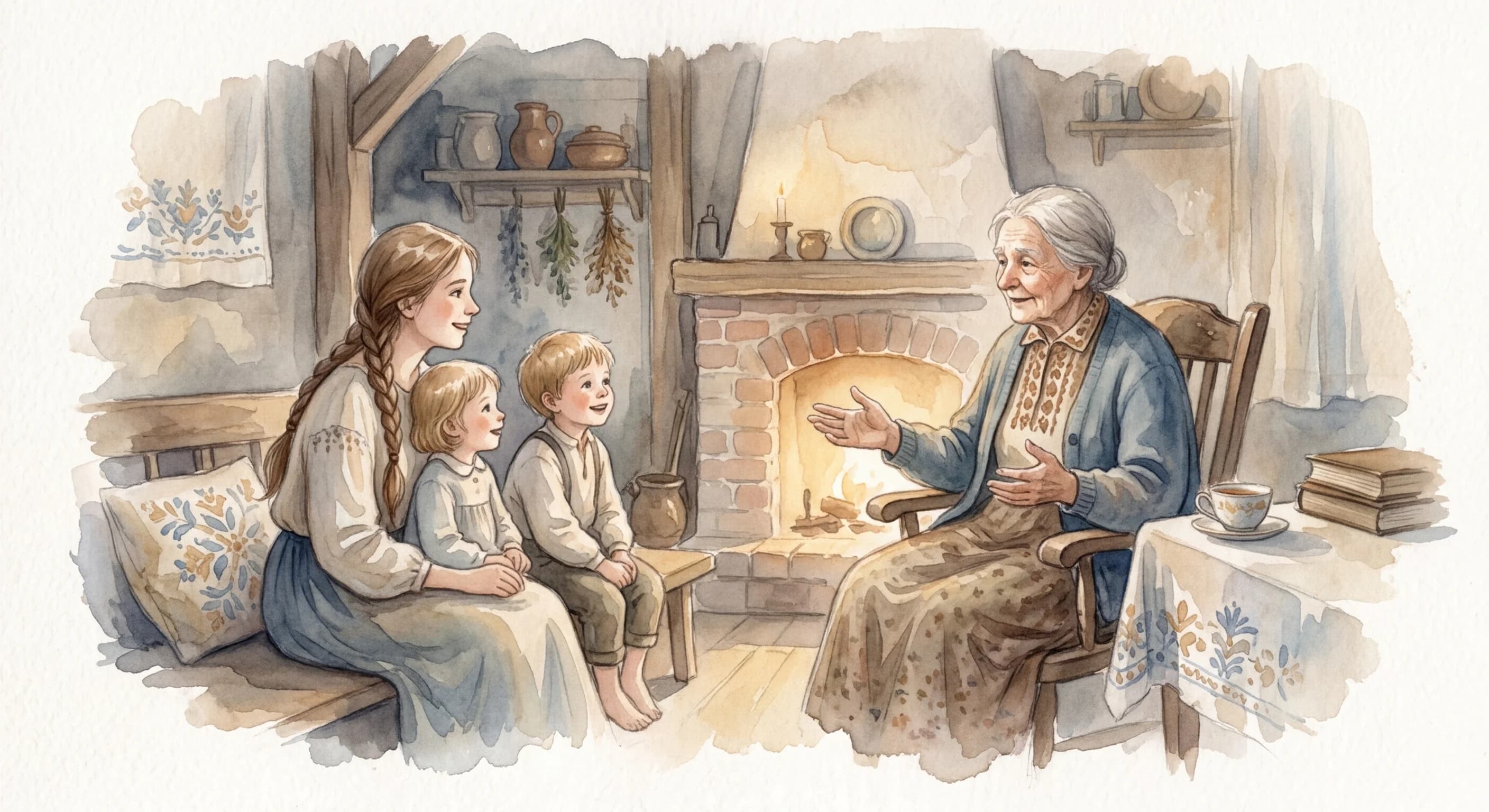
Fireside Family Gathering
Grandpa, settling into his favorite armchair by the crackling fireplace, began recounting tales from his youth, seamlessly blending childhood mischief with reflections on wartime resilience. His voice, warm and familiar, wove through the room, punctuated by laughter and sighs, as the family hung on every word, feeling more connected with each passing anecdote.
Village Market Chat
At the weekly market, an old woman selling apples started a 'gawęda' with a young customer about the changing seasons, the quirks of local villagers, and a funny incident involving a runaway pig from decades ago. What began as a simple transaction transformed into a rich, unhurried exchange, filled with the flavor of local life and shared humanity.
The Deeper Meaning
Gawęda reveals a philosophy that values the journey of communication over a specific destination, prioritizing shared human connection and the transmission of collective memory through an unhurried, empathetic exchange. It underscores the belief that truth and understanding are often found in the meandering pathways of personal experience and communal narrative, rather than in rigid, factual accounts.
Did You Know?
The word 'gawęda' also refers to a specific literary genre in Polish Romanticism, where authors like Henryk Rzewuski imitated the oral, anecdotal style to evoke a nostalgic, aristocratic past.
How It's Used
Used to describe a person who tells such stories, or the story itself, often in informal social gatherings like evenings by the fire or casual meetings with friends and family.