Poshlost'
/POSH-lost/
Meaning
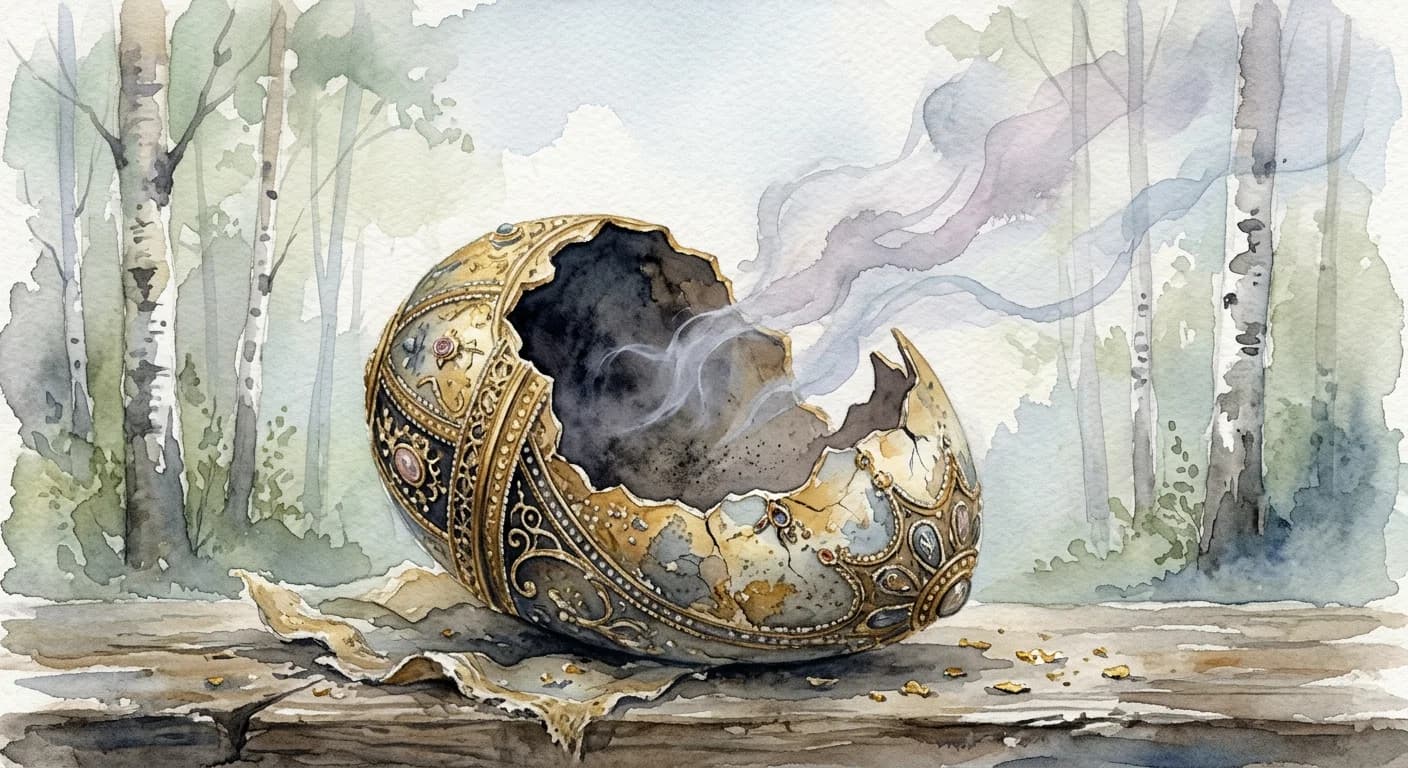
Poshlost' is a profound descriptor for the vulgarity that masquerades as sophistication, the spiritual void cloaked in superficial charm, or the cheap imitation parading as genuine artistry. It captures the unsettling dissonance when something strives desperately for impressiveness but only reveals its inherent shoddiness, pretentiousness, and lack of true substance. It's the aesthetic and ethical repulsion evoked by hollow grandeur, a kitsch imitation of beauty that lacks any authentic soul. This term encapsulates the deep discomfort with inauthenticity and spiritual emptiness.
Literal Translation
Often translated as 'shoddy,' 'vulgarity,' 'banality,' or 'tinsel,' but these don't fully capture the essence.
The Story Behind the Word
The concept of poshlost' is deeply ingrained in Russian intellectual and cultural history, reflecting a long-standing societal critique of superficiality, spiritual emptiness, and uncritical imitation. Its prominence grew particularly in the 19th and 20th centuries, as Russian thinkers grappled with national identity, modernization, and the perceived imitation of Western styles without genuine understanding or adaptation. Writers like Gogol, Dostoevsky, and Nabokov masterfully explored poshlost' through characters and situations, using it to satirize the banality and moral decay beneath polished exteriors. It reveals a cultural emphasis on genuine depth, spiritual integrity, and a profound skepticism towards outward show or material pretense. For Russians, detecting poshlost' is often seen as a sign of discernment and a rejection of the superficial, reflecting a desire for authentic experience and meaning in a world often perceived as prone to artifice.
Experience It
The Gaudy Mansion
A new oligarch builds a sprawling mansion, adorned with gold-plated fixtures, faux marble, and a collection of mass-produced 'art' designed to look expensive. The overall effect is overwhelming, lacking any cohesive style or genuine taste, screaming 'new money' without true elegance. Locals dismiss it as pure poshlost'.
The Empty Speech
A politician delivers a passionate speech, full of grandiloquent phrases and emotional appeals, yet it's entirely devoid of concrete plans or genuine empathy. The audience is left with a feeling of unease, recognizing the hollow rhetoric and calculated performance as a classic example of poshlost'.
The Deeper Meaning
Poshlost' unveils a profound philosophical concern with authenticity and the human condition. It suggests that true value lies not in outward display or material possessions, but in spiritual depth, genuine artistry, and sincerity. The term implies a moral judgment against those who prioritize superficiality over substance, revealing a worldview that values inner truth and integrity above all else, and sees pretension as a form of moral and aesthetic decay. It challenges individuals to look beyond the surface and discern true worth.
Did You Know?
Vladimir Nabokov, a master of the Russian language, dedicated an entire chapter in his book 'Nikolai Gogol' to dissecting 'poshlost',' calling it 'not only the obviously trashy but also the falsely important, the falsely beautiful, the falsely clever, the falsely attractive.'
How It's Used
Used to describe anything perceived as cheap, vulgar, pretentious, or lacking in genuine artistic or spiritual value, often in the context of art, literature, fashion, or social behavior.