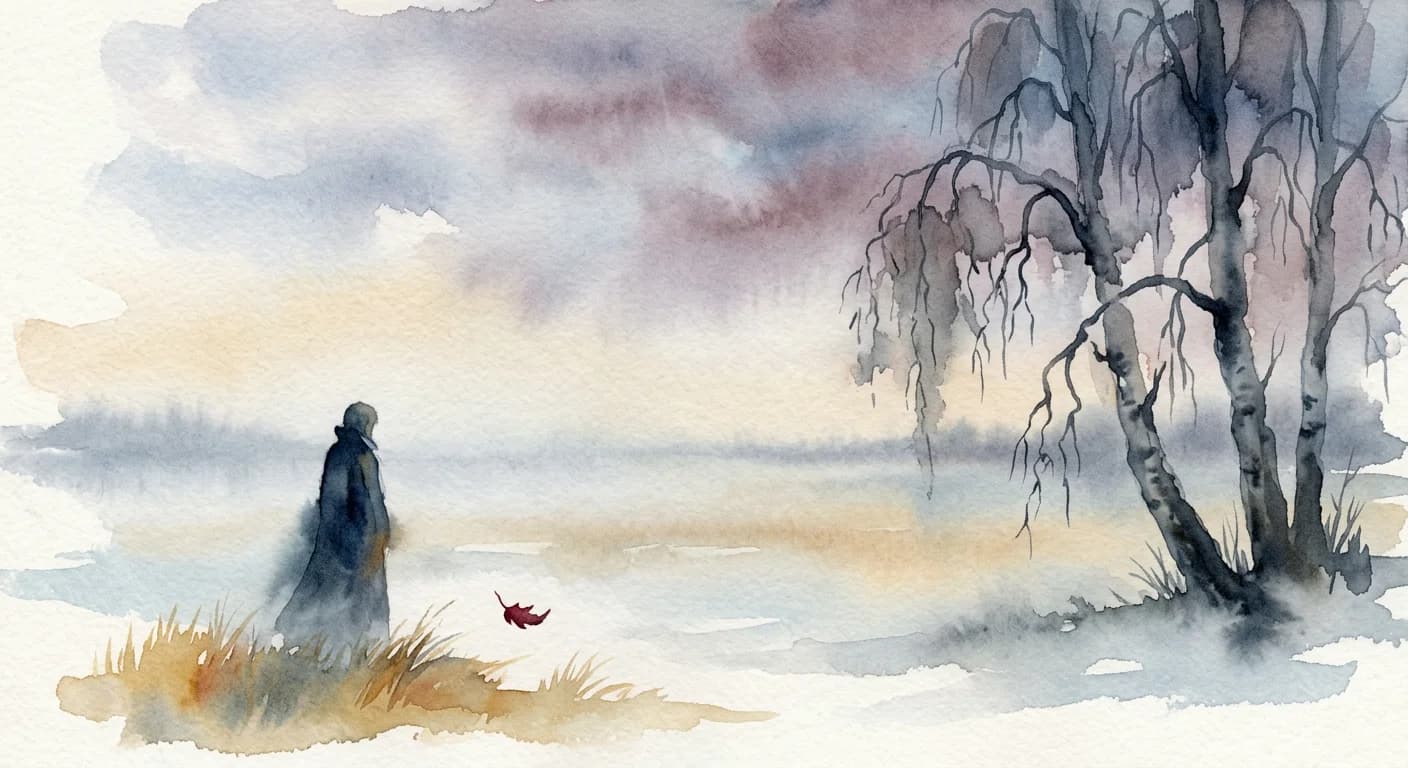
Nadryv
/NAHD-riv/
Meaning
Nadryv describes a profound, often self-inflicted emotional rupture, a soul-wrenching anguish born from an acute sense of injustice, moral compromise, or overwhelming inner torment. It transcends mere sadness, manifesting as a visceral, soul-shattering experience that leaves one feeling exposed and fundamentally broken. This word encapsulates the intensity of internal suffering arising from deep moral or spiritual crisis, frequently culminating in a dramatic outburst or a persistent, debilitating despair that resists easy comfort or rationalization, reflecting a distinctly Russian engagement with profound suffering.
Literal Translation
tear, rupture, strain
The Story Behind the Word
The concept of nadryv is deeply embedded in Russian literary and philosophical traditions, particularly in the works of Fyodor Dostoevsky, who masterfully explored its nuances in characters like those in 'The Brothers Karamazov.' It reflects a worldview that often glorifies suffering as a path to spiritual enlightenment or a necessary component of the human condition. For centuries, Russian culture has grappled with immense societal upheavals, political repression, and existential questions, fostering an environment where internal struggle and dramatic emotional expression are not only understood but often seen as authentic and noble. Nadryv speaks to a national psyche that values profound emotional depth, even if it leads to self-destruction, and views the soul's capacity for intense suffering as a hallmark of true humanity and moral integrity.
Experience It
The Artist's Confession
After years of compromising his artistic vision for commercial success, the painter experienced a profound nadryv. He destroyed all his recent works, weeping openly as he confessed to his mentor that he had betrayed his own soul, feeling an unbearable weight of artistic dishonesty.
A Mother's Burden
Confronted with her son's unjust imprisonment, the mother fell into a state of nadryv. Her anguish was not just sorrow, but a tearing of her very being, a spiritual wound from the perceived violation of justice that left her physically ill and inconsolable, unable to find peace.
The Deeper Meaning
Nadryv reveals a philosophical inclination towards examining the darkest recesses of the human soul, suggesting that profound suffering, rather than being merely negative, can be a crucible for spiritual transformation or a testament to one's moral depth. It implies that true understanding of self and others often emerges from confronting raw, unbearable emotional pain, challenging simplistic notions of happiness and well-being. This perspective underlines a belief in the inherent drama and complexity of human existence.
Did You Know?
Dostoevsky is often credited with popularizing 'nadryv,' exploring it as a complex psychological state where characters intentionally push themselves to emotional extremes, sometimes for self-purification, sometimes for self-destruction.
How It's Used
Used to describe intense emotional suffering, moral anguish, or a soul-shattering experience often resulting from a profound inner conflict or a perceived injustice.