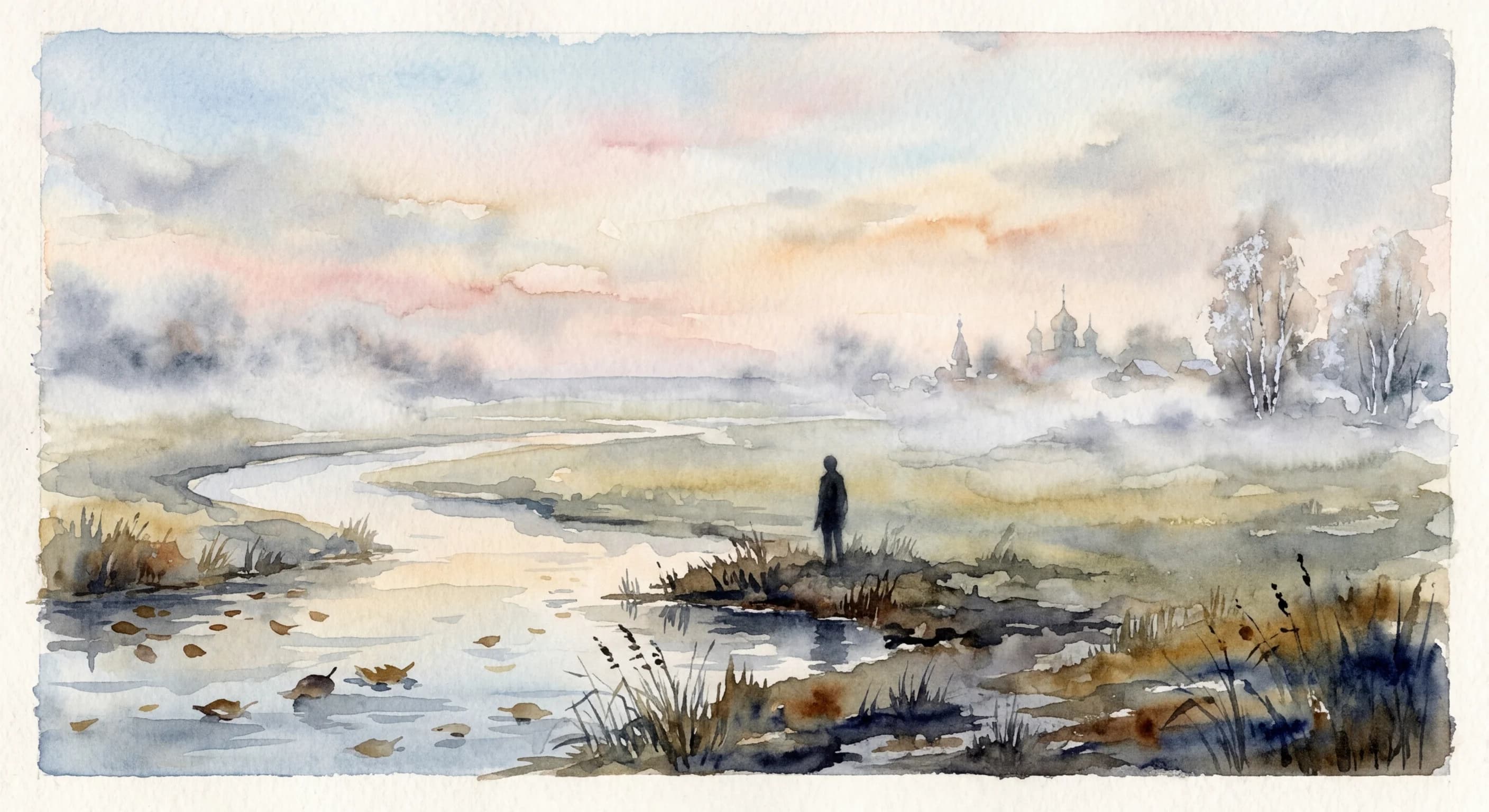
Sud'ba
/SOOD-bah/
Meaning
Sud'ba is the profound, often mystical, tapestry of one's life, an overarching destiny woven by forces beyond individual control. It's not merely a series of events, but the inherent narrative and preordained path that shapes major milestones, relationships, and even character. This concept imbues life's journey with a sense of inevitability, fostering a complex interplay of acceptance, resignation, and a deep-seated belief in a grander design, even amidst life’s most unexpected turns.
Literal Translation
fate, destiny
The Story Behind the Word
The concept of sud'ba is deeply rooted in Russian Orthodox Christianity and pre-Christian Slavic pagan beliefs, where life's events were often seen as divinely ordained or influenced by ancestral spirits. This worldview fostered a sense of fatalism, leading to a cultural acceptance of hardship and a belief that certain outcomes are simply 'meant to be.' Russian literature, from Tolstoy to Dostoevsky, is replete with characters grappling with their sud'ba, highlighting the internal struggle between free will and predestination. It reflects a society that has historically experienced significant external pressures and upheavals, making the idea of an immutable, guiding force a comforting, albeit sometimes disempowering, framework for understanding existence.
Experience It
Unexpected Life Path
After years of dreaming of a career in music, Anya found herself working as a doctor, a path she never envisioned. She often sighed, 'Такова моя судьба' (Such is my sud'ba), accepting that this was the life course laid out for her, despite her earlier aspirations.
Fated Encounter
Dmitri met his future wife on a chance encounter during a snowstorm, far from his usual routine. He later mused, 'Это была судьба' (It was sud'ba) – a profound conviction that their meeting was not accidental but a predetermined, significant event in his life's narrative.
The Deeper Meaning
Sud'ba reveals a fundamentally deterministic worldview, where individual agency is often secondary to a larger, preordained cosmic plan. It encourages a form of stoicism and acceptance in the face of adversity, suggesting that while one can strive, the ultimate trajectory of life is largely set. This perspective can lead to both a profound sense of peace and a melancholic resignation, reflecting a deep engagement with the mysteries of existence and the limits of human control.
Did You Know?
The Russian word 'sud'ba' shares a root with 'sud' (court/judgment), hinting at an ancient connection between destiny and a higher, judging power.
How It's Used
Used when discussing the predetermined course of a person's life, major life events, or the perceived hand of fate.