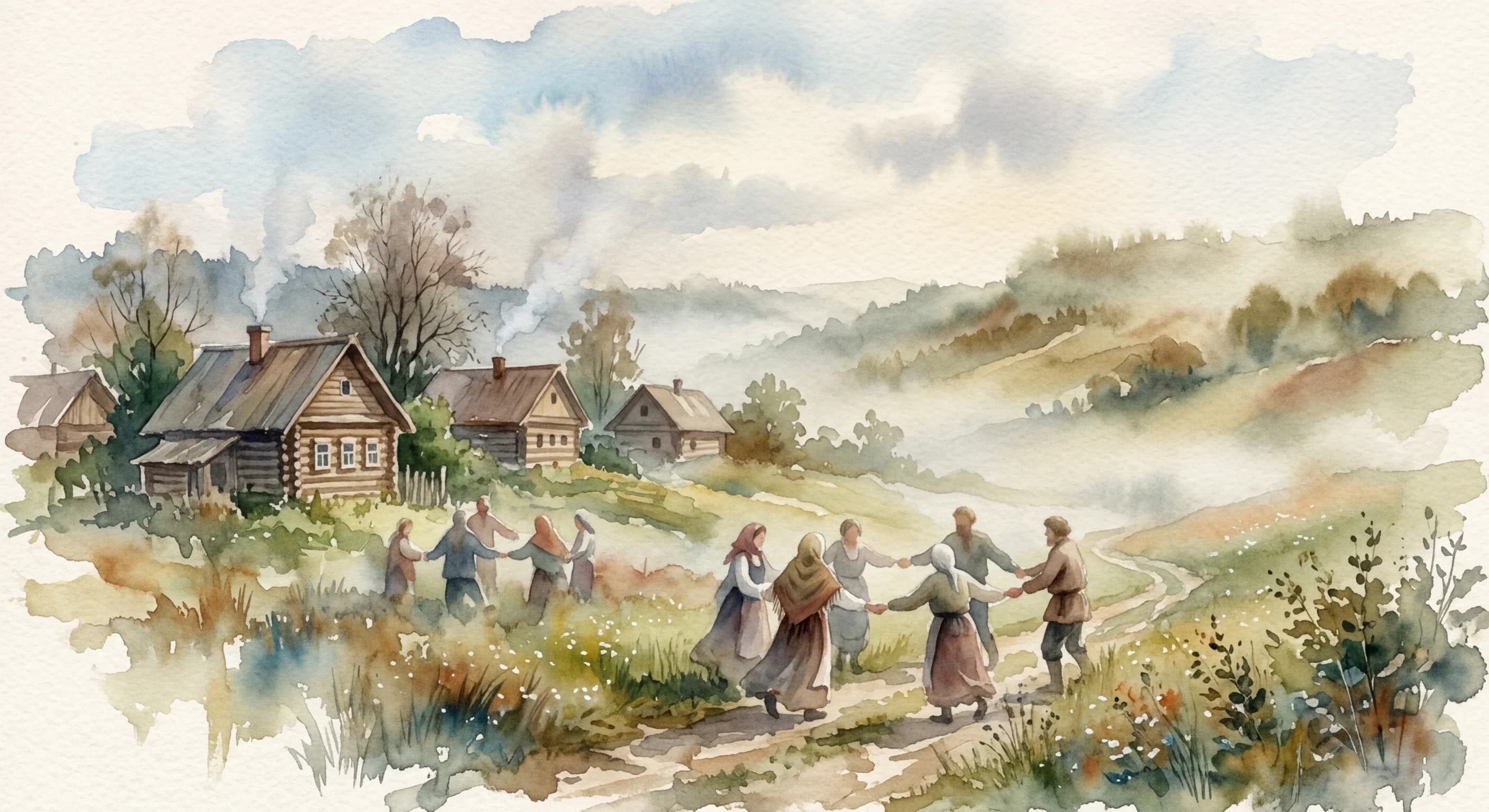
Obshchina
/OB-shh-ee-na/
Meaning
Obshchina refers to the traditional Russian rural commune, a vibrant, self-governing collective where land and resources were held in common, fostering a profound sense of shared responsibility. It was the beating heart of village life, embodying mutual support and collective decision-making, where individual well-being was inextricably linked to the prosperity of the entire group. This communal spirit provided a social safety net and a strong sense of belonging, starkly contrasting with Western individualism.
Literal Translation
common, shared
The Story Behind the Word
The obshchina emerged from the practical necessities of Russian agricultural life, particularly the challenges of the harsh climate and the need for collective labor to survive. Philosophically, it reflects a deep-seated Russian value of collectivism over individualism, where the 'mir' (world/community) often held moral authority over the individual. This system existed for centuries, enduring serfdom and providing a framework for peasant self-governance. It was seen by some 19th-century Slavophiles as a uniquely Russian path to socialism, distinct from Western models, embodying a spiritual unity and organic social order. Its eventual dismantling under Stolypin's reforms and later Soviet collectivization marked a profound shift away from this ancient social fabric, leaving a legacy of communal memory and a longing for shared responsibility.
Experience It
Village Harvest Planning
The elders of the village gathered in the izba, their faces etched with the wisdom of seasons past. They were discussing the allocation of the communal fields for the upcoming harvest, ensuring each family received a fair share of the best plots, a decision made collectively for the good of the entire obshchina.
Supporting a Widow
When Anna's husband passed, leaving her with young children, the obshchina immediately rallied. Neighbors tilled her fields, shared their meager food, and helped repair her roof, embodying the deep-seated principle that no member of the community would be left to suffer alone.
The Deeper Meaning
The obshchina reveals a worldview where collective survival and well-being superseded individual ambition. It underscores a philosophy of interconnectedness, where the 'I' is always understood within the context of 'we,' fostering a moral economy based on reciprocity, shared burdens, and an inherent trust in communal solidarity as the ultimate source of strength and resilience.
Did You Know?
Before the 1861 emancipation of serfs, the obshchina often served as the primary tax-collecting unit for the state, holding its members collectively responsible for dues and obligations.
How It's Used
Used to describe the traditional rural communal living and land-owning system prevalent in Russia and other Slavic countries, particularly before the collectivization efforts of the Soviet era.