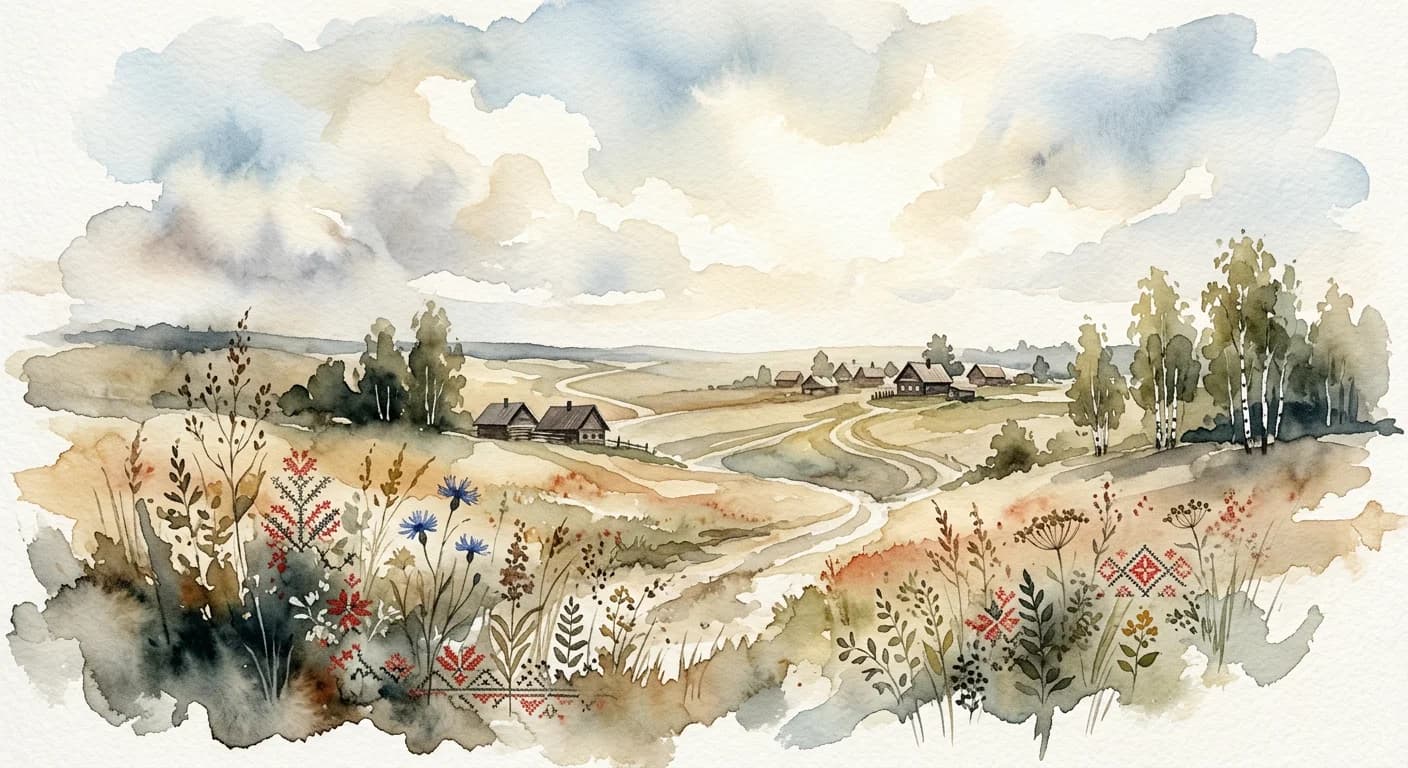
Rodina
/ROH-dee-nah/
Meaning
Rodina transcends a mere geographical location; it is the sacred wellspring of identity, a profound, almost spiritual connection to one's ancestral land, culture, and language. It evokes a deep, visceral sense of belonging, inextricably intertwined with historical memory, the landscapes of childhood, and the collective spirit of a people. This term carries immense emotional weight, often expressed with a mixture of fierce protectiveness, enduring pride, and a poignant nostalgia for a shared past and an idealized future. It embodies a spiritual attachment that far surpasses simple patriotism, forming the bedrock of national self-perception.
Literal Translation
homeland, motherland
The Story Behind the Word
The concept of Rodina is deeply rooted in Russia's historical experiences, marked by centuries of invasions, resilience, and a struggle for national identity. From the Mongol Yoke to the Great Patriotic War, the land itself became a symbol of survival and unity. This fostered a worldview where the land is not just territory, but a living entity, a 'Mother' (Мать-Родина, Mother-Rodina) that nourishes and protects, demanding loyalty and sacrifice in return. Orthodox Christianity also subtly influences this, with its emphasis on sacred land and the collective soul. Rodina reveals a culture that prioritizes collective identity over individualistic pursuits, where personal destiny is often seen as interwoven with the fate of the nation. It reflects a profound cyclical view of history, where past struggles inform present sacrifices and future aspirations, all bound to the immutable essence of the land.
Experience It
Returning to the Soil
After decades abroad, an elderly émigré finally returned to her small village in Russia. As her feet touched the familiar earth, tears welled up. "Ah, Rodina," she whispered, feeling an almost physical embrace from the land, a connection she’d yearned for her entire life, finally home amongst the birch trees of her youth.
Defending the Homeland
During a particularly harsh winter, the villagers rallied together to protect their collective farm from a devastating flood. One old man, surveying the rising waters, declared, "We cannot let Rodina be consumed. This land has fed our families for generations; we must protect it with all our strength." Their collective effort was fueled by this deep-seated devotion.
The Deeper Meaning
Rodina embodies a collectivist philosophical stance, where individual identity and purpose are deeply integrated with the collective fate of the nation and its history. It suggests that true self-realization is found not in isolation, but through belonging to, and serving, this sacred ancestral land. This worldview often emphasizes duty, sacrifice, and continuity, viewing the past as a living force shaping the present and future, with the land as the eternal anchor.
Did You Know?
The iconic Soviet-era statue 'The Motherland Calls!' (Родина-мать зовёт!) in Volgograd is a powerful visual representation of Rodina, depicting a woman with a sword, symbolizing the nation's call to arms.
How It's Used
Used to refer to one's homeland, often with a deep emotional and cultural significance, encompassing the land, people, and history.