Qvevri
/KVEH-vree/
Meaning
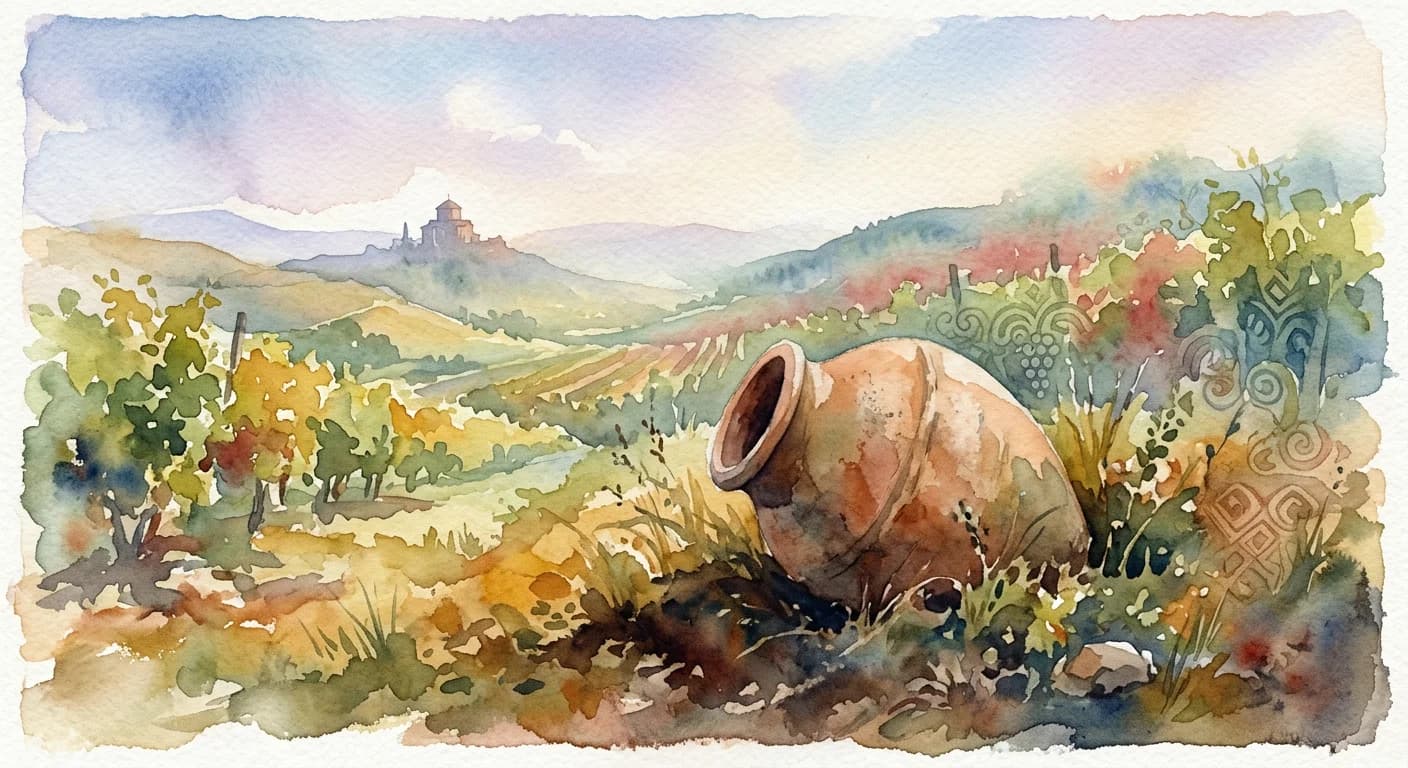
A qvevri is much more than a vessel; it is the ancient heart of Georgian winemaking. These monumental, handcrafted clay amphorae are meticulously shaped, fired, and then lovingly buried deep within the earth. This subterranean embrace allows for natural temperature stability, facilitating a unique fermentation and aging process that infuses the wine with profound complexity, distinctive tannins, and an inimitable character. It embodies a living tradition, connecting modern Georgians to millennia of their viticultural heritage.
Literal Translation
Vessel
The Story Behind the Word
The qvevri is a cornerstone of Georgian identity, symbolizing resilience, continuity, and a profound reverence for nature's rhythms. Its existence for over 8,000 years speaks to an enduring relationship between Georgians and their land, where winemaking is not merely agriculture but a spiritual practice. The act of burying the qvevri reflects a deep trust in the earth to nurture and transform, mirroring the Georgian ethos of perseverance and finding strength in deep roots. It reveals a culture that values tradition, craftsmanship, and the slow, deliberate unfolding of natural processes over rapid, industrialized methods, seeing wine as a living entity shaped by its earthen cradle. The wine from a qvevri is often seen as embodying the very soul of Georgia.
Experience It
Unearthing the Harvest
After months of patient waiting, Giorgi carefully began to unearth the top of his qvevri. The earthy scent of the soil mingled with the rich, yeasty aroma of fermenting wine, a promise of the amber liquid that lay within, connecting him to generations of his ancestors.
A Toast to Tradition
At the supra, Tamada raised his horn. 'Gamarjoba to our ancestors, who taught us the way of the qvevri!' he declared, as the deep orange wine, drawn directly from the buried vessel, was poured, each sip carrying the weight of history and the taste of Georgian soil.
The Deeper Meaning
The qvevri embodies a philosophy of patient co-creation with nature. It represents a trust in the earth's wisdom, allowing natural processes to guide transformation rather than imposing human control. This deep connection to the land and its cycles reflects a worldview where tradition is not static, but a living, evolving dialogue with the past that shapes the present and future.
Did You Know?
Archaeological evidence suggests qvevri winemaking dates back to 6,000 BC, making Georgia arguably the birthplace of wine and the qvevri its original incubator.
How It's Used
Refers to the specific type of clay amphora used in traditional Georgian winemaking, and by extension, the method of winemaking itself.